Most corporate meeting budgets do not break because of one big expense. They erode through small overruns: a catering count that crept up, a vendor deal signed too late, badges printed for people who never came. Event cost control is the habit of catching those leaks while there is still time to act, instead of finding them on the final invoice.
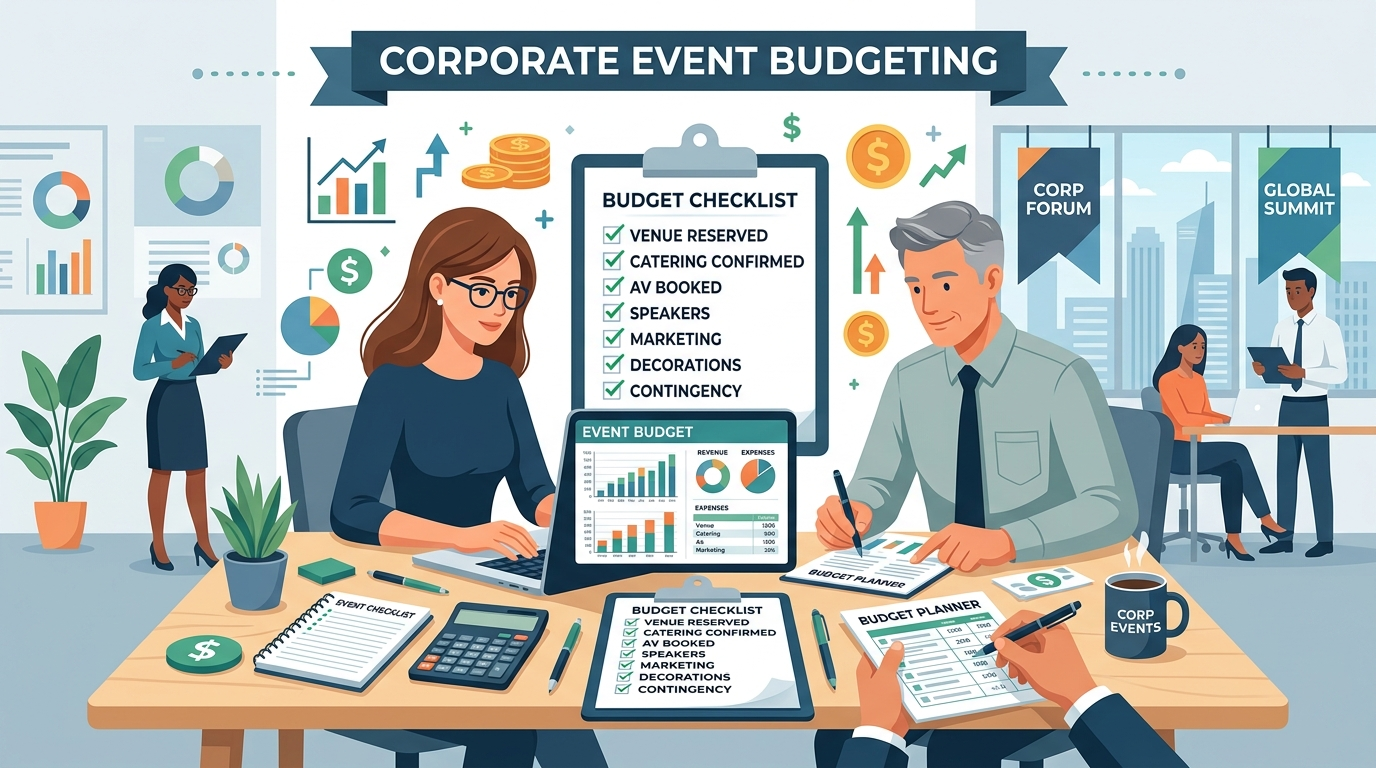
This guide focuses on savings tactics rather than spreadsheet structure: how to build a risk-adjusted contingency fund, lock key vendors in early, cut waste from registration and badging, and choose platforms without bloated overhead. If you also need the spreadsheet itself, start with our corporate event budget template.
The Hidden Costs and Pain Points of Corporate Event Budgets
Most corporate event budgets do not fail because planners forgot to list major expenses like venue rental or catering. Instead, budgets collapse under the weight of hundreds of small, unmonitored variable charges, dynamic rate schedules, and unasked questions. When planning a corporate event, understanding where leaks occur is the first line of defense against costly overruns.
The core administrative challenge of event budget management lies in distinguishing between static and dynamic expenses, identifying vendor pricing structures early, and predicting how attendee behavior affects resource consumption. Without a professional corporate event budget template, planners are forced to rely on scattered emails, historical guesswork, and static spreadsheets that fail to update in real time as planning progresses.
Fixed vs. Variable Cost Categories
To establish control over event finances, you must separate your budget into two primary buckets: fixed costs and variable costs. This simple distinction helps your financial model flex with changing registration numbers and prevents sudden cash-flow deficits:
- Fixed Costs: These expenses remain identical whether you have 10 attendees or 500. Examples include venue rental fees, keynote speaker honorariums, audio-visual (AV) equipment packages, and event liability insurance. These must be secured and locked in early.
- Variable Costs: These expenses scale directly with your final registration count. Examples include per-head catering packages, printed name badges, personalized corporate swag, and hands-on workshop materials. Knowing your variable costs allows you to make quick adjustments as RSVP numbers fluctuate.
Comprehensive Line-Item Categories for Corporate Event Budgets
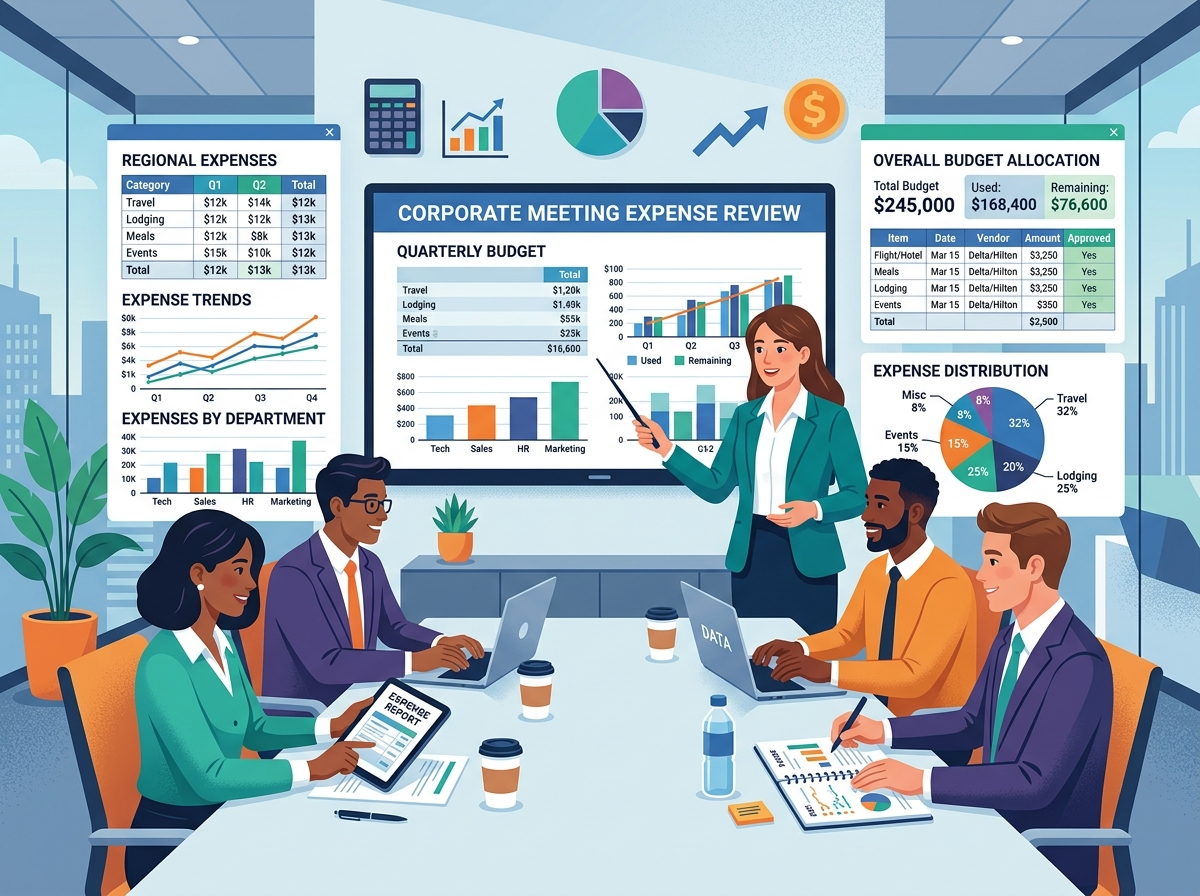
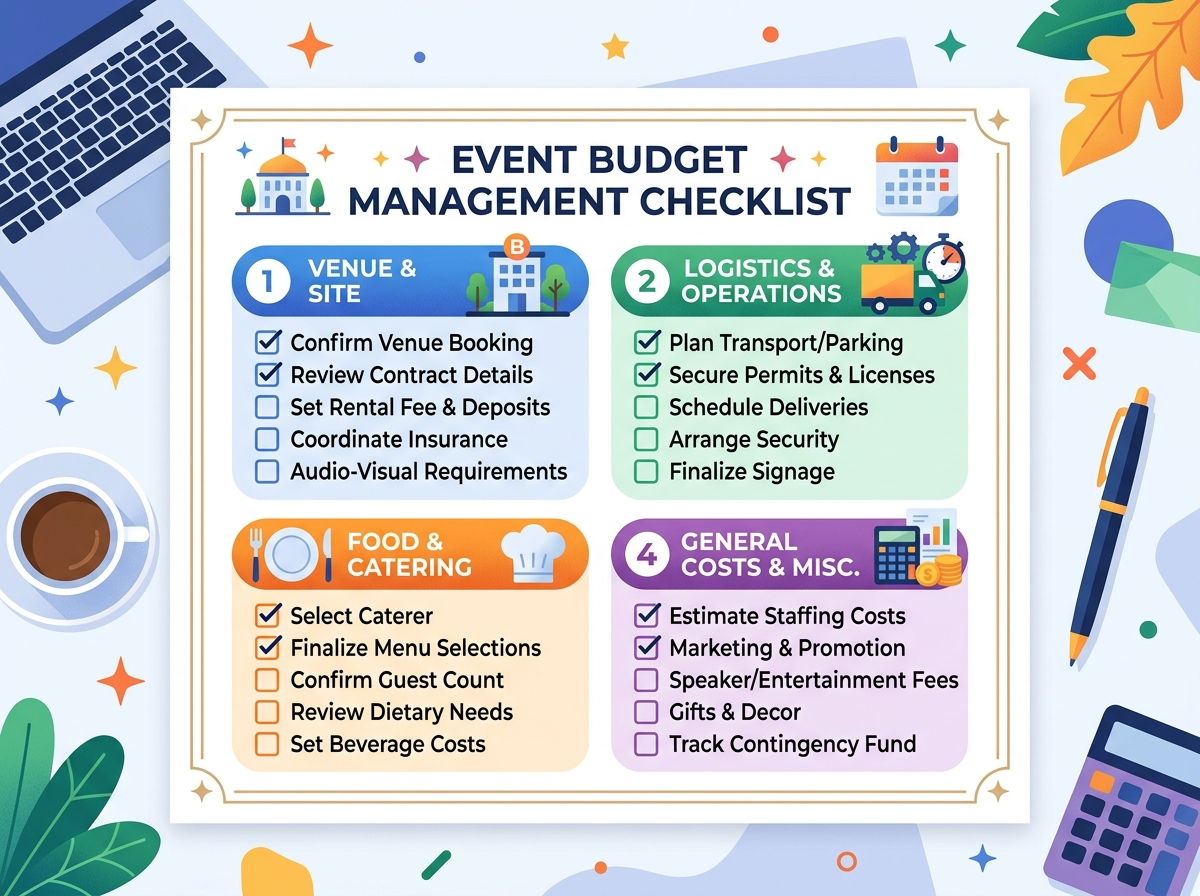
To avoid costly surprises, professional planners rely on a comprehensive list of expense categories. When building your budget, ensure every single one of these line-items is documented with both estimated and actual cost columns:
1. Venue, Space Rentals, and Hidden Fees
The venue is typically the largest single expense in any corporate meeting budget. Planners must look closely at contract agreements to spot additional fees such as mandatory service charges, setup and breakdown labor fees, overtime rates if presentations run long, and required in-house AV or security staff. Ask for a complete fee schedule before signing to avoid adding 20% to 30% to your base rental rate.
2. Catering and Food Service Logistics
Food costs extend far beyond the standard price-per-plate menu. Planners must factor in local taxes, gratuities (which can range from 18% to 24%), bar set-up fees, and specialty labor costs. Additionally, dietary restrictions (such as gluten-free, vegan, or allergy-conscious selections) can carry substantial price premiums but are non-negotiable for inclusive corporate environments.
3. Audio-Visual (AV) Technology and Production
From high-definition screens and professional lighting to microphones and live streaming components, AV costs can quickly escalate. A common pitfall is relying on standard venue Wi-Fi for highly interactive corporate meetings; planners must often purchase dedicated, high-bandwidth internet connections to support hundreds of concurrent devices and prevent connection drops during key presentations.
4. Travel, Logistics, and Speaker Honorariums
External industry experts and keynote speakers bring immense value to corporate meetings, but their costs include more than just speaking fees. Planners must budget for first-class or business travel, premium hotel accommodations, ground transportation, and specific rider requests. Shipping physical displays and corporate materials also requires early quotes to avoid expedited freight surcharges.
Proactive Cost Control Strategies for Corporate Planners
How do elite planners keep their events on time and under budget? It comes down to active management, continuous communication, and the right digital tooling. Implement these five operational strategies to safeguard your next corporate event:
1. Build a Risk-Adjusted Contingency Fund
Rather than setting aside a generic “miscellaneous” fund, allocate a dedicated contingency fund of 10% to 15% of your total projected budget. If you are working with outdoor venues, complex custom AV setups, or new suppliers, push that buffer closer to 20%. This fund should be guarded closely and used only for unexpected operational emergencies, not for last-minute upgrades.
2. Lock in Key Vendor Agreements 6 to 9 Months Early
Securing major agreements early is the easiest way to combat inflation and rising venue rates. Booking venues, main caterers, and key speakers far in advance allows planners to secure off-season pricing or early-bird promotions, saving up to 20% compared to short-term bookings made closer to the event date.
3. Modernize Your Registration and Badging Workflow
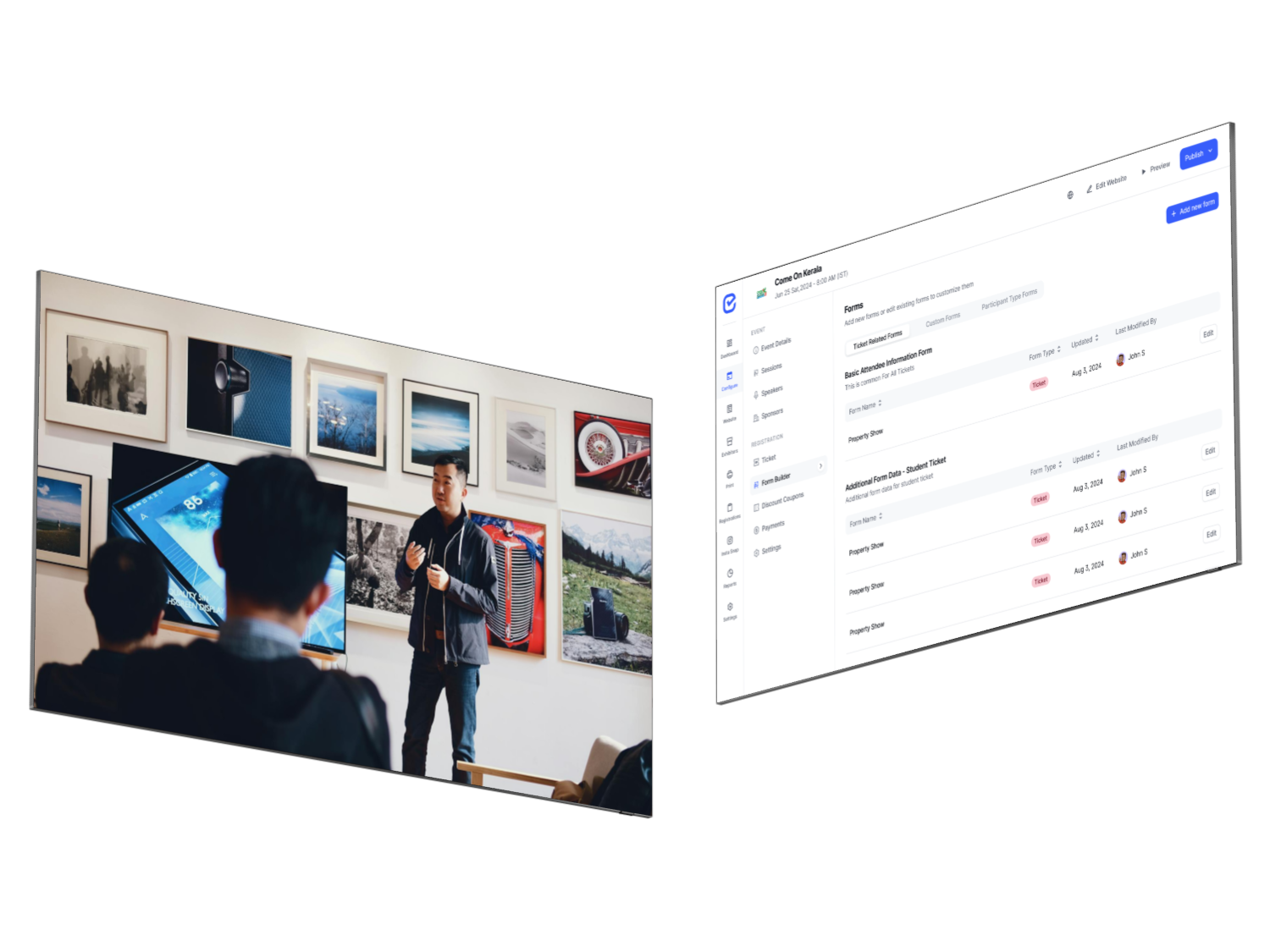
Administrative time is money. Instead of relying on manual lists and slow email response tracking, automate the initial touchpoints of your meeting. Incorporating modern booking platforms is the key to accurate planning. By integrating automated solutions like EventHex Registration, planners get instant, real-time access to accurate RSVP numbers, helping caterers adjust food orders and minimizing waste from empty seats.
When attendees arrive on-site, a slow check-in desk creates a terrible first impression and wastes expensive staff hours. Transitioning to a streamlined, digital system such as EventHex On-site Check-in & Badge Printing reduces registration lines, cuts labor costs, and eliminates the need to pre-print hundreds of wasteful badges that never get claimed. This on-demand check-in model directly reduces printing overheads while delivering a slick, high-tech experience to corporate stakeholders.
4. Leverage Innovative Event Platforms Without Bloated Overhead
In the past, running highly interactive corporate events required purchasing expensive, fragmented software suites. Today, savvy planners utilize a unified, lightweight framework that keeps costs low while elevating the overall attendee experience. The EventHex Home Page details how an all-in-one registration, badging, and user engagement workflow can eliminate redundant SaaS subscriptions, giving planners a clean, high-impact toolset that integrates seamlessly into corporate budgets.
Frequently Asked Questions (FAQ)
How much should I allocate for an event contingency fund?
For most standard corporate meetings, setting aside a contingency fund of 10% to 15% of the total budget is standard. For outdoor events, international locations, or highly complex technical assemblies, increase this buffer to 20% to manage unexpected shifts in weather or travel schedules.
How can I reduce variable catering costs without sacrificing quality?
You can effectively manage catering budgets by monitoring real-time registration data to avoid over-ordering. Opting for buffet or family-style service instead of formal plated dinners reduces labor costs. Additionally, choosing local, seasonal ingredients and custom-designed menus can lower ingredient costs while supporting regional businesses.
Why are pre-printed badges a major budget leak for corporate events?
Pre-printing badges forces event planners to pay for printing, paper, and shipping materials for every single registered attendee, regardless of whether they actually show up. Typically, 10% to 15% of corporate registrants fail to attend. On-demand badge printing at check-in ensures you only print for active attendees, saving thousands in physical printing materials and reducing environmental waste.
Event Cost Control: Summary & Guidelines
Cost control in corporate event planning is not about stripping away the elements that make your meeting engaging or memorable; it is about establishing complete operational visibility and utilizing smart, automated workflows. By separating fixed and variable costs, identifying hidden fees early, and automating check-in logistics with lightweight software solutions like EventHex, planners can deliver outstanding, seamless experiences to corporate stakeholders without ever fearing a budget overrun.