When a medical emergency happens at an event, the first few minutes decide the outcome. A fainting attendee in a packed hall, an allergic reaction at the catering line or an injury near the stage all need the same things: the right equipment, people who can be reached quickly and a clear way to find the person in need. That is what event first aid and medical readiness is about, and it is a planning job, not something to sort out on the day.
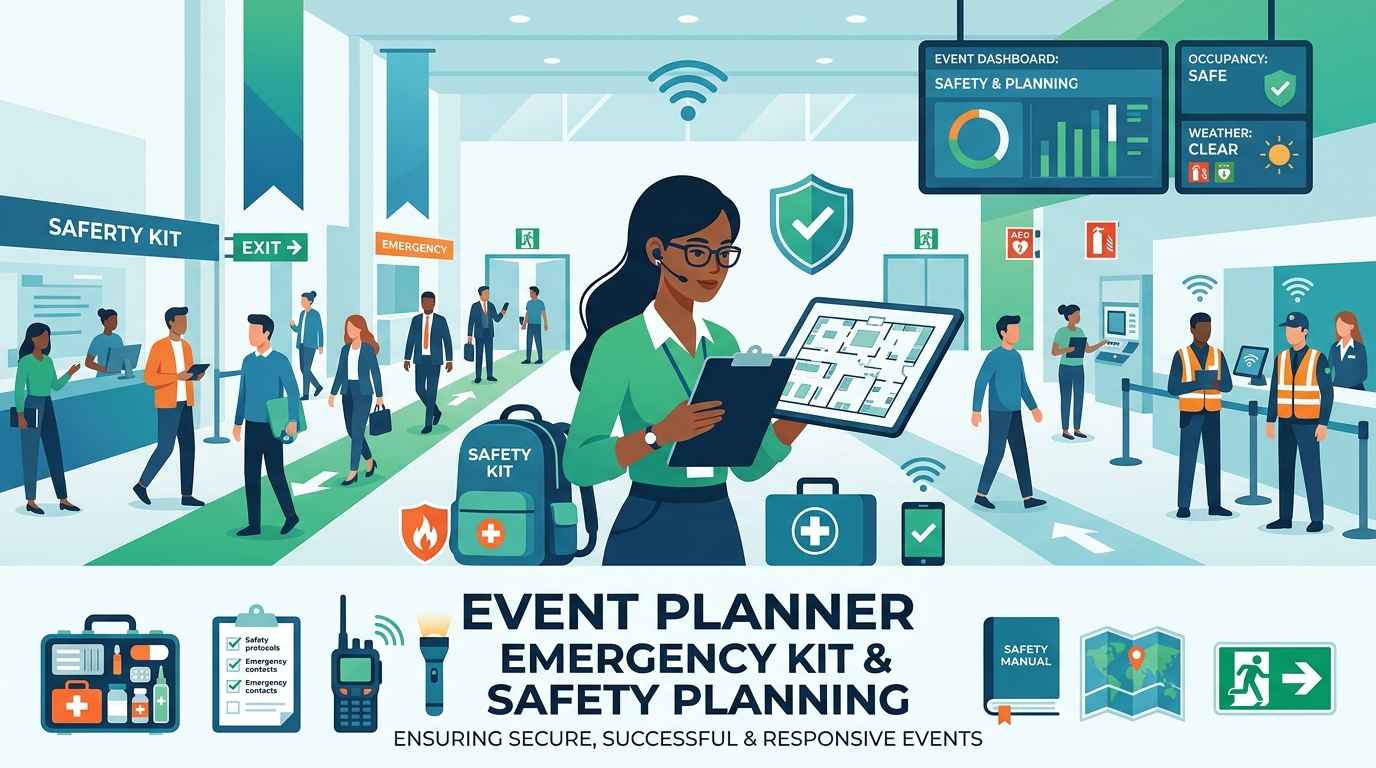
This guide focuses on the medical side of on-site safety: first aid kits and defibrillators, attendee emergency details captured at registration, radios that reach your medical coordinators, badges that make responders easy to spot, and headcounts that tell you who is in the building. For the complete list covering power, evacuation and crowd limits, see our on-site event emergency checklist.
Below are ten items that support a strong medical response, starting with the first aid kit itself and showing how modern event technology works alongside these physical safeguards.
1. The Comprehensive First Aid and Medical Kit
A physical, clearly marked first aid kit is the absolute foundation of any on-site safety protocol. In a crowded venue, minor incidents like cuts, sprains, or allergic reactions are almost guaranteed to occur. Your medical kit should exceed standard retail offerings and include professional-grade wraps, over-the-counter pain relief, epinephrine auto-injectors (for severe allergic reactions), and automated external defibrillators (AEDs) positioned strategically across the venue floor.
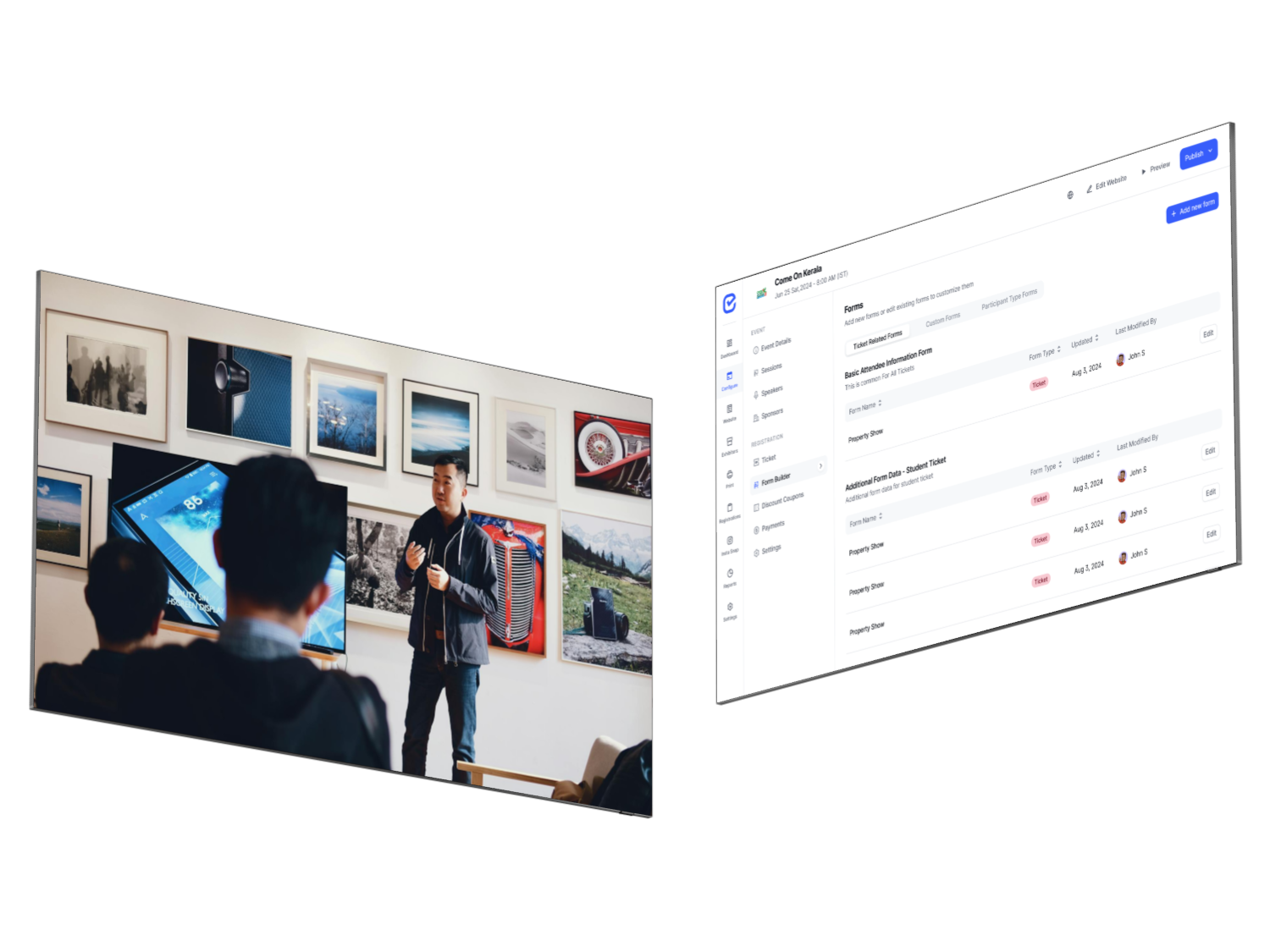
However, physical medical equipment is only as good as the administrative system supporting it. During a medical emergency, every second counts. Planners need immediate access to attendees’ critical medical declarations, emergency contacts, and special requirements. Rather than wasting precious minutes digging through paper logs, a modern system like EventHex allows organizers to capture emergency details securely during the initial registration process. Medical personnel can instantly access non-sensitive safety declarations on-site, ensuring rapid and accurate medical intervention.
2. Dedicated Communication Hardware and Backup Power
When an emergency occurs, standard mobile networks frequently collapse due to local cell tower congestion. Relying solely on cellular phones for staff coordination is a dangerous vulnerability. A reliable event emergency checklist must specify two-way radios (walkie-talkies) operating on dedicated, pre-tested frequencies for all key personnel, security staff, and medical coordinators.
Alongside radios, backup power banks and heavy-duty portable charging stations are essential. If your team’s mobile devices, check-in tablets, or scanning terminals run out of battery, your access gates will grind to a halt. Power plans should include uninterruptible power supplies (UPS) for primary networking hubs and high-capacity portable batteries distributed directly to on-site gate managers.
3. Digital Check-In Failsafes and Live Attendee Verification
A sudden loss of internet connectivity is one of the most common on-site event disasters. If your registration system relies entirely on a continuous cloud connection, a minor router malfunction can completely lock out your check-in team. Attendees will quickly pile up at the entrance, creating a severe crowd control hazard and a terrible first impression.
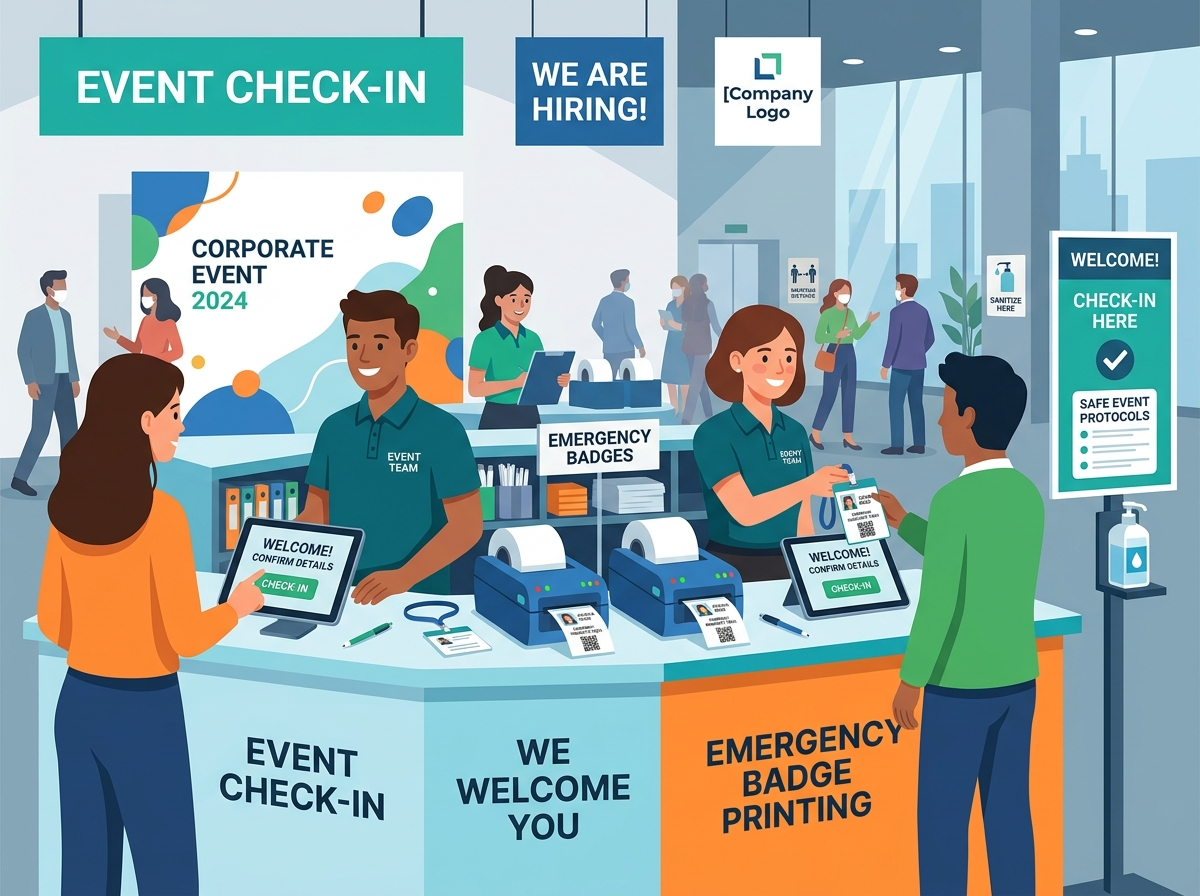
To prevent this administrative nightmare, organizers must utilize an offline-first check-in system. By using the EventHex Event Check-In platform, check-in devices download and synchronize the attendee list locally. If the venue’s Wi-Fi drops, the check-in tablets continue scanning QR codes and validating credentials without interruption. Once the connection is restored, the local databases automatically sync back to the master cloud database, ensuring real-time data integrity across all entry gates.
4. Custom On-Site Emergency Badge and Credentials Designer
In a crisis, security personnel must be able to immediately distinguish between regular attendees, VIPs, event staff, and emergency responders. Standard, generic lanyards or paper wristbands are easily forged and fail to provide the high-visibility identification required during an evacuation or lockdown.
Your emergency protocol should include a localized badge printing station capable of producing highly visible, color-coded credentials on demand. Using the EventHex Badge & Certificate Designer, organizers can design custom, high-contrast badges before the event. If emergency staff or temporary local volunteers are onboarded at the last minute, new badges can be instantly formatted, printed, and distributed on-site, maintaining a strict chain of security throughout the venue.
5. Localized Digital Venue Check-in & Headcount Tracking
If a venue must be evacuated due to fire, structural hazards, or severe weather, how do you verify that every attendee has safely exited? Relying on physical sign-in sheets is functionally impossible for larger crowds. Without real-time tracking, emergency services may have to risk entering a hazardous area to search for individuals who have already safely left the premises.
Implementing a localized venue check-in protocol at key transition points allows organizers to maintain an active digital headcount. With secure scanning devices placed at main zone transitions and exits, event staff can monitor real-time room capacity. This live data feed provides emergency coordinators with an exact, zone-by-zone breakdown of who is currently inside the building, vastly accelerating evacuation roll-calls and coordinating seamlessly with first responders.
6. Hard-Copy Venue Evacuation Maps and Physical Signage
While digital tools are indispensable, physical failsafes remain a core component of event safety planning. If a severe power outage disables digital screens and lighting systems, attendees must be guided to exits using analog, highly visible methods. Your event planning emergency kit should contain heavy-duty, high-visibility directional signage and physical floor plan maps laminated to withstand moisture.
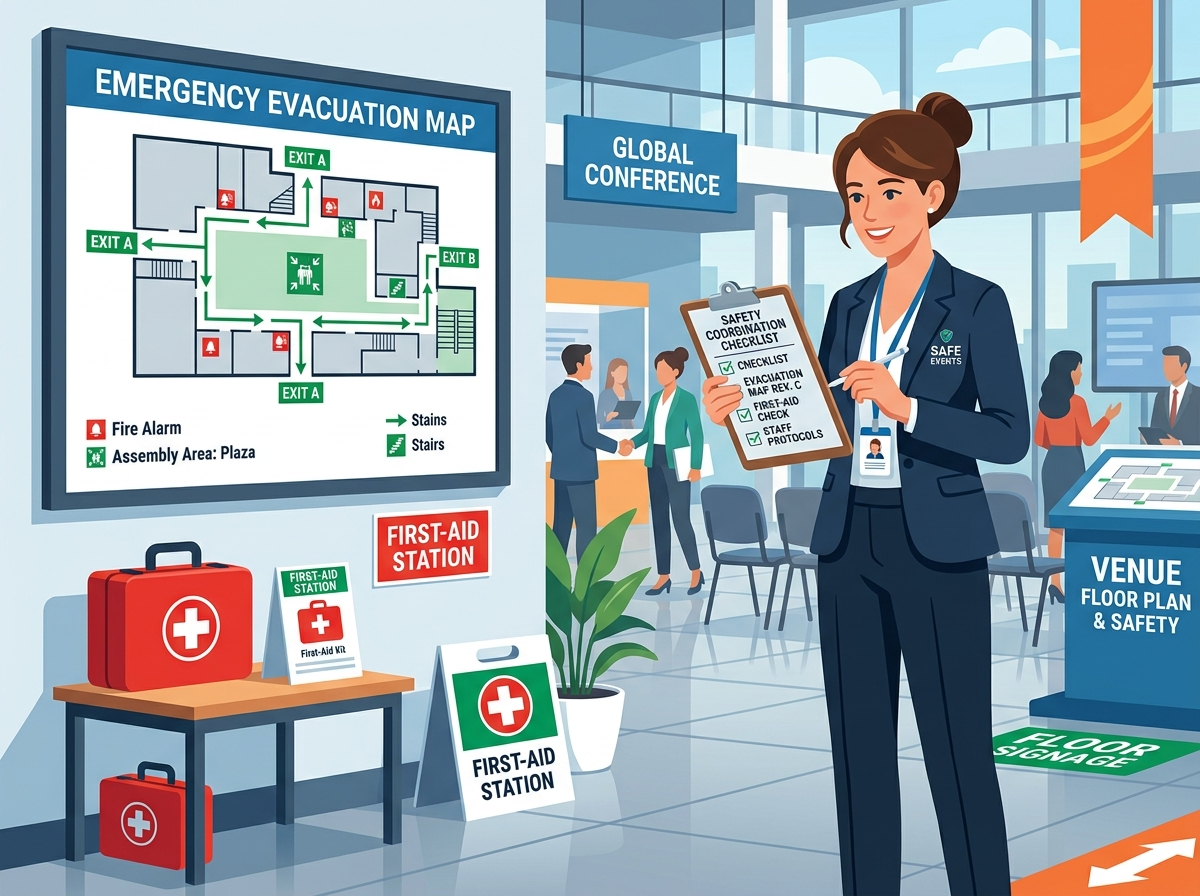
Every major intersection and entry point must have clear, physical signage displaying the nearest evacuation exits and assembly points. Staff must be equipped with physical flashlights and megaphones to direct the crowd safely, ensuring that panic is minimized and traffic flows smoothly toward safe zones.
7. Weather Radio and Active Meteorological Monitoring Tools
For outdoor events, sudden severe weather—such as lightning storms, flash flooding, or extreme high winds—represents a major threat to structural rigging and attendee safety. A professional event planner does not rely on consumer weather applications. Your checklist must include a dedicated NOAA Weather Radio on-site, providing automated, real-time alerts directly from national meteorological services.
Furthermore, establishing a clear “trigger policy” is crucial. Your team must predetermine exact thresholds (e.g., wind speeds exceeding 35 mph or lightning within a 6-mile radius) that automatically initiate pre-approved safety protocols, such as securing heavy rigging, lowering temporary banners, or evacuating open-air stages to indoor shelters.
8. High-Capacity Emergency Megaphones and Flashlights
During a power failure, standard public address (PA) systems will go silent. Without a secondary, analog method to amplify your voice, communicating critical instructions to a large, alarmed crowd is virtually impossible. Your on-site kit must contain multiple battery-operated, high-decibel megaphones with fresh spare batteries.
Simultaneously, every staff member must carry a high-lumen physical flashlight or headlamp. These tools are crucial for guiding attendees through dark corridors, inspecting venue structures, and signaling other coordinators across large, dimly lit spaces.
9. Spill Kits, Heavy-Duty Tape, and Basic Toolkits
Not every emergency is a life-or-death crisis; many are mechanical and logistical issues that threaten to derail your schedule. A leaking water pipe near electrical cabling, a loose carpet tile creating a major tripping hazard, or a collapsed registration desk barrier can quickly disrupt operations. A heavy-duty basic toolkit—complete with duct tape, cable ties, utility knives, screwdrivers, and industrial-grade absorbent spill kits—must be kept at the main operations desk for rapid repairs.
10. A Clearly Documented Emergency Operations Plan (EOP)
The final and most vital item on your event emergency checklist is not a physical tool, but a piece of structural documentation: the Emergency Operations Plan (EOP). This printed binder outlines exact chain-of-command structures, pre-defined code words, designated media spokespersons, and contact information for local emergency services.
Your team must know exactly who has the legal authority to halt or cancel the event, and who is responsible for liaising with local authorities. This plan should be reviewed in pre-event briefings, ensuring that when a crisis occurs, your staff acts as a cohesive, highly efficient unit rather than a disorganized crowd.
Strategic Integration: Elevating On-Site Safety with EventHex
An effective event emergency checklist bridges the gap between physical preparedness and advanced digital coordination. While traditional event planners struggle with outdated spreadsheets and manual check-in lists, modern organizers leverage the power of specialized event technology to dramatically reduce risk.
By partnering with EventHex, you gain access to an ecosystem designed for high-stakes, real-world execution. From offline-resilient digital check-in apps that survive network blackouts to customized, high-contrast credential designs that keep your security parameters intact, EventHex empowers your team to handle any on-site challenge with absolute confidence. Protect your attendees, secure your venue logistics, and elevate your brand’s operational safety by integrating modern digital workflows into your planning cycle today.
Frequently Asked Questions (FAQ)
What is an event emergency checklist?
An event emergency checklist is a structured list of essential physical tools, medical supplies, backup hardware, and digital communication protocols designed to help event organizers prepare for, manage, and recover from unexpected crises on-site.
Why is an offline-first check-in system important for event safety?
An offline-first check-in system, such as EventHex, allows your on-site check-in tablets to scan and verify attendee credentials without requiring a live internet connection. This prevents major bottlenecks and crowd congestion at the entrance if the venue’s Wi-Fi fails.
How do custom credentials improve on-site event security?
Custom, color-coded credentials designed via platforms like EventHex help security personnel instantly distinguish between general attendees, VIPs, staff, and medical responders, ensuring restricted areas remain secure during normal operations and emergencies.
What should be included in an event planning emergency kit?
An event planning emergency kit should include a comprehensive first aid kit, two-way radios, backup power supplies, high-capacity megaphones, physical flashlights, analog directional signage, basic tools (like duct tape and cable ties), and a printed copy of your Emergency Operations Plan (EOP).