In today’s fast-paced business landscape, corporate communication needs to be immediate, highly engaging, and above all, universally accessible. Whether you are hosting an annual shareholder meeting, a multi-day international summit, or an internal training seminar, your audience consists of diverse individuals with unique learning and accessibility requirements. Implementing live transcription for corporate events is no longer just an innovative luxury; it is a fundamental standard for modern event production.
This comprehensive guide explores the strategic and operational mechanics of real-time speech-to-text systems. From enhancing audience engagement and ensuring ADA compliance to optimizing your technical setup and integrating seamlessly with registration workflows, you will learn how to turn spoken words into powerful, permanent, and accessible digital assets.
What is Live Transcription for Corporate Events?
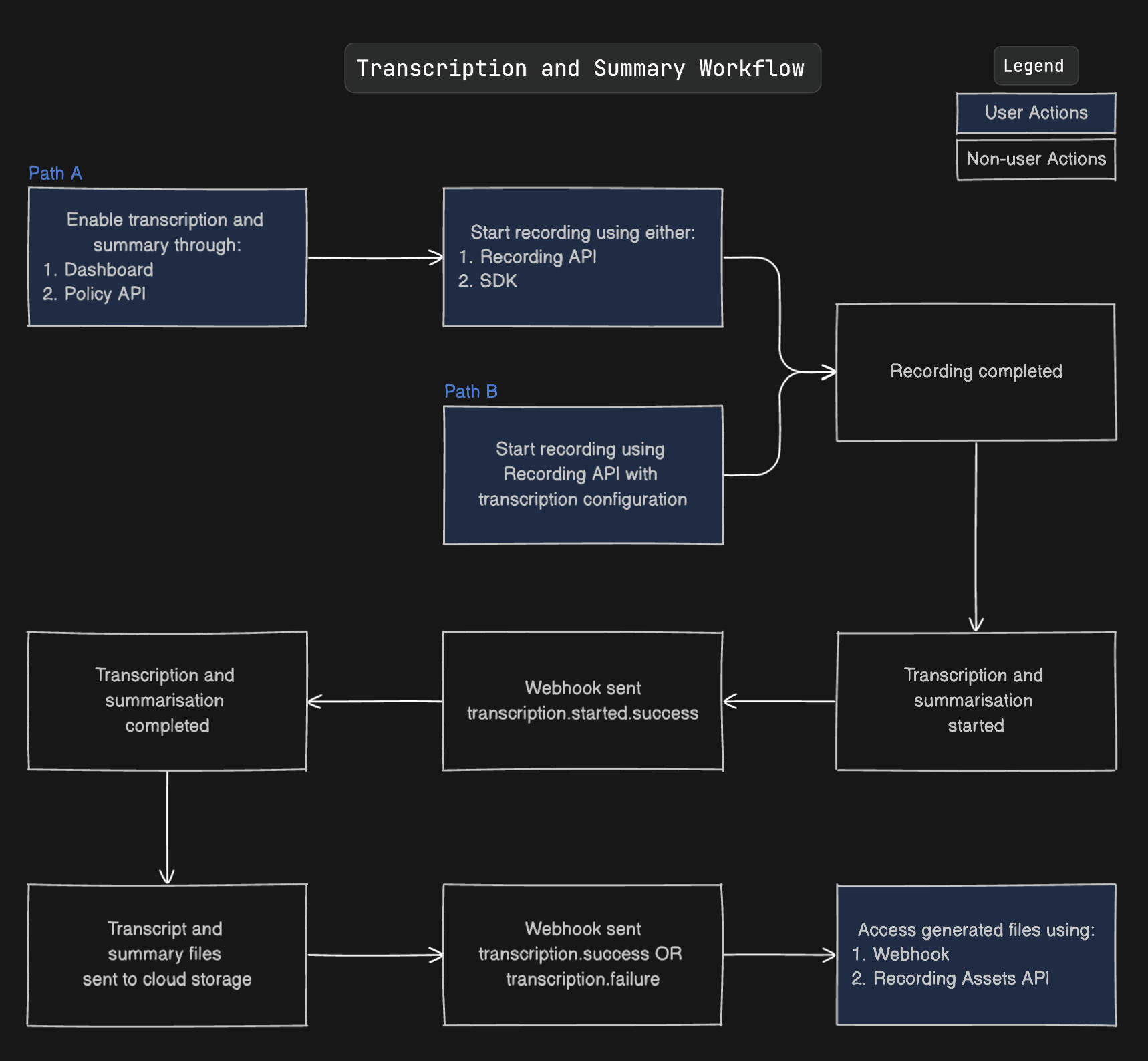
Live transcription is the real-time conversion of spoken words into written text during a live presentation, panel discussion, or Q&A session. Using advanced automated speech recognition (ASR) technology, professional human stenographers (CART providers), or hybrid AI models, live audio feeds are captured, analyzed, and instantly rendered as visible text on display screens, mobile devices, or virtual event interfaces.
Unlike post-event transcription, which serves as a historical record, real-time live transcription operates with a latency of just a few seconds. This allows attendees to read along in sync with the speaker’s delivery, transforming the event experience for everyone in the room and online.
Key Tech Terminology Defined
- Automatic Speech Recognition (ASR): The artificial intelligence algorithms that process audio patterns and translate them into written words without human intervention.
- CART (Communication Access Realtime Translation): The professional service where a trained human specialist transcribes spoken words at speeds exceeding 220 words per minute with exceptional accuracy.
- Latency: The delay between the speaker uttering a word and the text appearing on screen. Leading systems maintain a latency under 2–3 seconds.
- Custom Language Models: Special settings applied to transcription engines that pre-program corporate jargon, speaker names, and industry terminology to eliminate spelling errors.
Why Live Transcription is Essential for Modern Corporate Gatherings
Adding live text to your event presentation does more than check a box for human resources; it drives measurable value across multiple organizational fronts.
1. Unmatched Event Accessibility and Compliance
An estimated 1.5 billion people globally live with some degree of hearing loss. For corporate events, ensuring compliance with legislative frameworks like the Americans with Disabilities Act (ADA) and the European Accessibility Act is a legal necessity. Providing high-quality live transcription guarantees that deaf and hard-of-hearing professionals can participate fully in your sessions, creating a truly inclusive corporate environment.
2. Enhanced Information Retention and Engagement
Corporate events are often dense with complex data, strategic metrics, and technical jargon. Studies show that multi-sensory learning—hearing a point and reading it simultaneously—massively improves information retention. Additionally, live transcripts help non-native language speakers keep pace with quick verbal delivery, keeping your global teams aligned and fully engaged.
3. Seamless Hybrid Event Integration
In a hybrid setup, remote participants face unique distractions. Real-time captions keep online viewers focused on the screen, improving watch-time and lowering drop-off rates. These transcripts can be fed directly into your event’s digital framework, allowing remote users to search, highlight, and review live discussions as they unfold.
How the Technical Setup Works
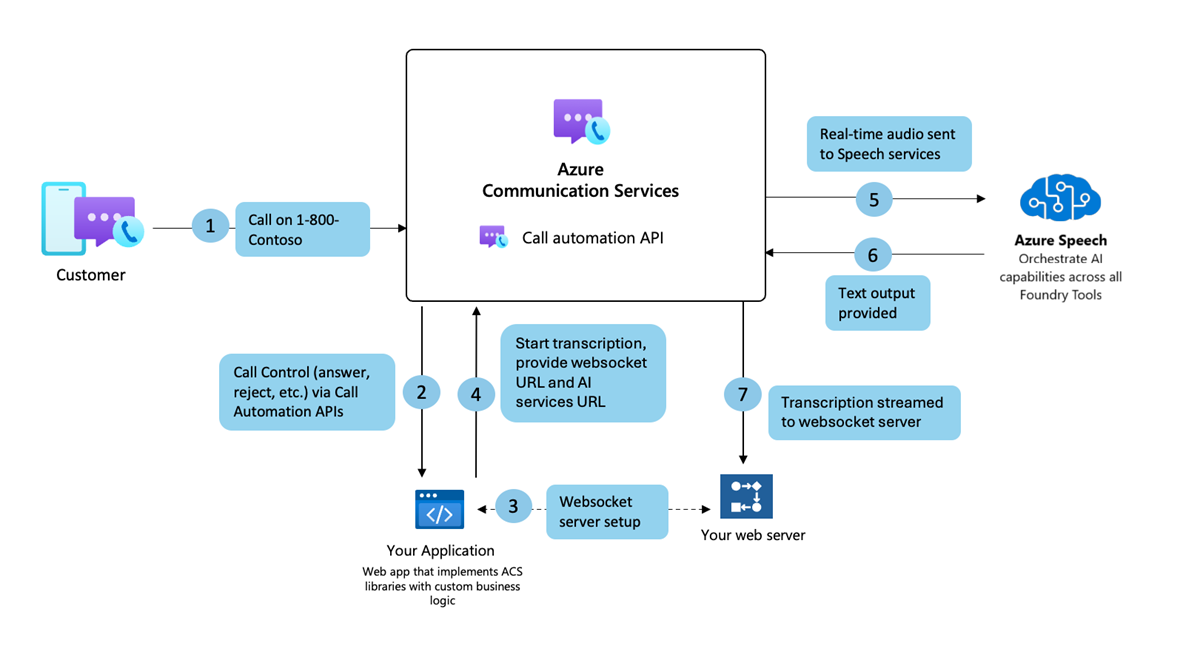
Deploying live transcription for corporate events requires a structured, dependable workflow to ensure zero failures during high-stakes presentations. Let us break down the standard technical architecture:
Step 1: Audio Capture and Optimization
The accuracy of any transcription engine—human or machine—is directly dependent on the quality of the input audio. Lapel, headset, or high-quality podium microphones must be routed through the master AV console. Crisp, isolated speaker feeds are essential. Background noise, low room volume, or excessive room reverb will drastically degrade ASR accuracy.
Step 2: Transmission and Processing
The isolated audio signal is converted into a high-quality digital feed and transmitted to the transcription processor. For cloud-based AI engines, this requires a stable, low-latency internet connection. If your corporate security guidelines dictate strict local networks, edge-computing, on-premise ASR engines can process the audio locally to guarantee total data privacy.
Step 3: Text Rendering and Display
Once processed, the transcription text is pushed to display systems. Event organizers can present the text in several ways:
- Main Stage LED Walls: Caption tracks displayed beneath the main presentation slides or video screens.
- Personal Mobile Devices: QR codes at seat locations allowing attendees to view the live transcript stream on their personal smartphones.
- Hybrid Event Platforms: Integrated caption sidebars within web-based video streams.
Optimizing the Content and Registration Workflow
To deliver a truly professional live transcription experience, event logistics must be integrated from the ground up, starting with your initial planning phase.
First, discover what your audience needs long before they walk through the door. Utilizing custom registration forms allows you to collect accessibility requirements in advance. To manage this efficiently, check out the specialized setup options on the EventHex Event Registration Portal, which allows organizers to build tailored forms that query dietary, mobility, and real-time captioning requirements directly.
Once requests are logged, event coordinators can synchronize accommodations, configure hardware, and provision specialized screen views. Tracking these pre-event demands side-by-side with overall logistics becomes exceptionally simple when utilizing a centralized system like the EventHex Centralized Dashboard. Having a unified view ensures that AV teams, speaker schedules, and caption providers are fully coordinated in real time.
Best Practices for Implementing Live Transcription
To guarantee a smooth, flawless execution, adhere to the following operational best practices:
Pre-program Custom Vocabularies: Upload glossary sheets containing corporate names, brand products, acronyms, and technical jargon into your ASR configuration panel. This step alone can elevate automated system accuracy from a standard 85% to over 95%.
Establish AV Redundancy: Always plan for internet dropouts in large convention venues. Set up a secondary wired connection or an offline local backup system to prevent transcription outages if the venue’s external networks go down.
Prep Your Speakers: Advise speakers to articulate clearly, avoid talking over co-panelists, and state their names before speaking during roundtables. This facilitates clean speaker diarization (speaker identification) in the output text.
Transforming Live Text into Long-Term Digital Value
The value of live transcription does not end when the closing keynote concludes. Capturing accurate real-time text opens up an entire portfolio of post-event content opportunities:
- Instant Post-Event Captions: Export and sync the clean live transcript to post-event video recordings within hours instead of waiting weeks for manual captioning.
- SEO-Friendly Blog Content: Repurpose high-performing keynote transcripts into search-optimized articles, whitepapers, and newsletter content.
- Executive Summaries: Feed the raw transcripts into generative AI tools to instantly output executive summaries, key-takeaway lists, or social media highlights.
To learn how to seamlessly orchestrate your overall corporate event production and manage post-event content assets, explore the capabilities of EventHex.ai.
Frequently Asked Questions
What is the accuracy rate of AI-based live transcription?
Modern AI-based automated speech recognition (ASR) systems can achieve accuracy rates ranging from 90% to 98% under optimal conditions. Factors that maximize accuracy include using studio-grade individual microphones, ensuring a low-noise environment, and pre-programming corporate jargon or speaker names into the system’s custom dictionary.
How does live transcription improve ADA compliance for corporate events?
Live transcription, specifically CART services or highly accurate real-time AI captioning, provides the required communication accommodations for deaf or hard-of-hearing professionals. This ensures your corporate event complies with ADA Title III guidelines, avoiding legal issues and establishing an inclusive environment for all attendees.
Can live transcription support multiple languages in real-time?
Yes. Many enterprise-level transcription platforms offer real-time translation alongside live transcription. The spoken audio is instantly transcribed in its original language and then automatically translated into multiple target languages, allowing international delegates to read the live captions in their preferred language on their personal devices.