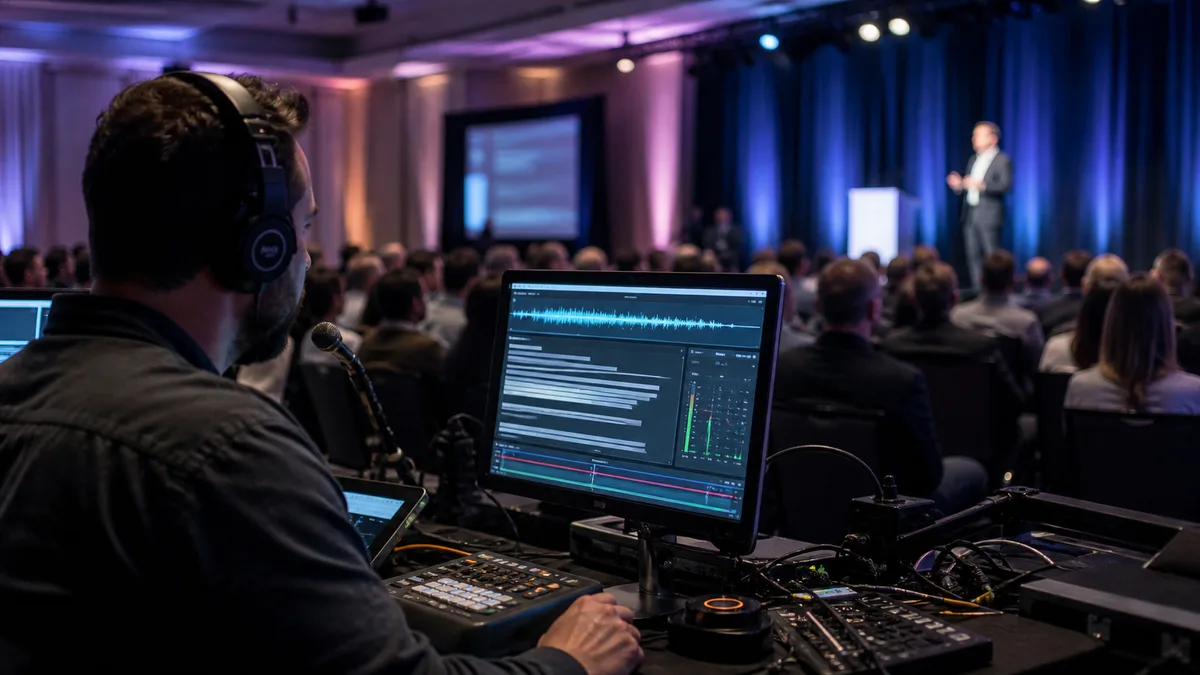
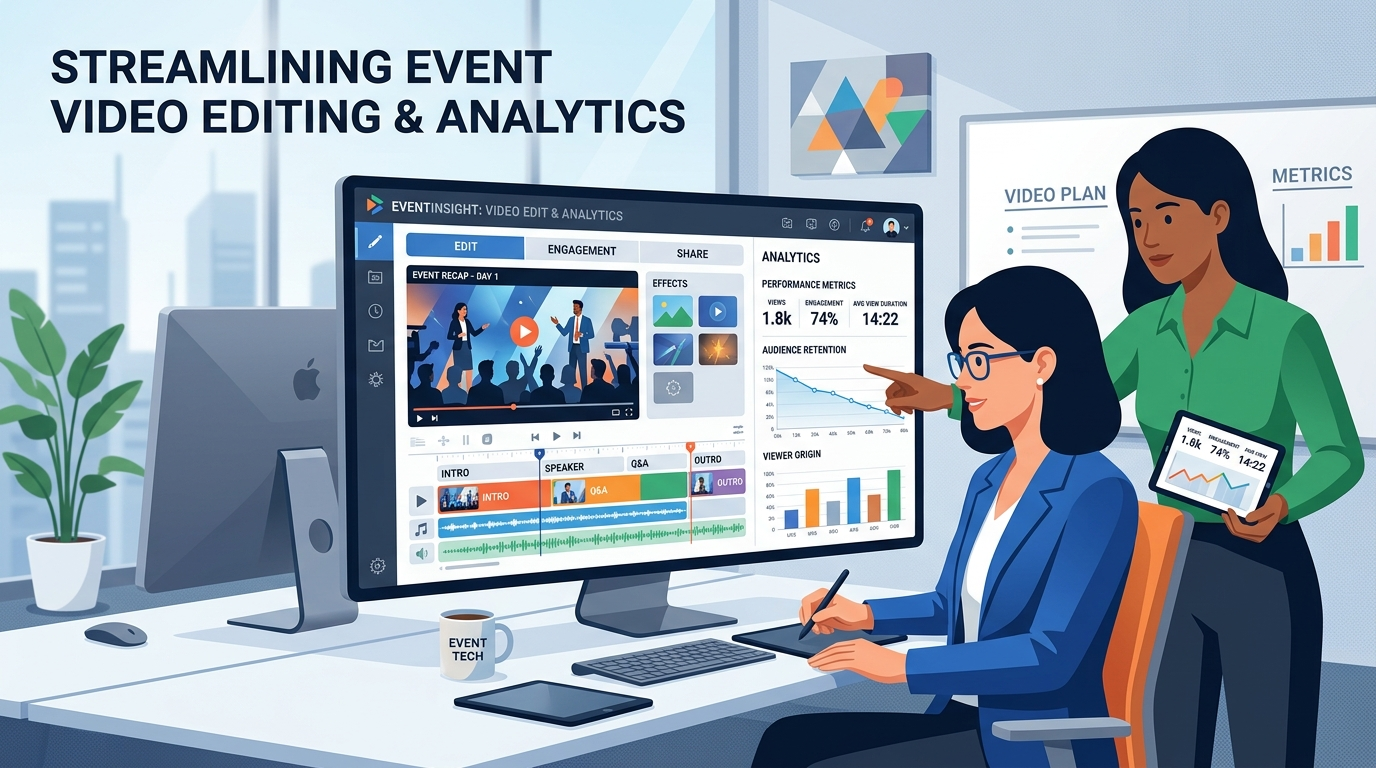
Corporate events are massive undertakings. Organizing committees invest months of coordination, thousands of dollars in budget, and substantial human resources into planning keynote sessions, securing industry-renowned speakers, and building immersive experiences. Yet, once the final session ends and attendees leave the venue or close their browser tabs, an administrative and marketing silent killer emerges: the post-event drop-off. Within 48 hours of an event’s conclusion, attendee momentum plummets, pipeline excitement cools down, and the window for converting high-intent engagement into concrete business opportunities begins to close rapidly.
Historically, the industry-standard solution to keeping the momentum alive has been the traditional event highlights video. However, the legacy process of producing these assets is fundamentally broken. Event organizers are faced with a stark operational challenge. They must navigate hundreds of hours of raw multi-track recordings, find the exact moments that resonated, and manually edit them. Traditional post-production workflows require hiring expensive freelance editors or agencies, managing complex revision cycles, and waiting weeks for a single three-minute recap. By the time a corporate recap video is finalized, the event is old news, the leads are cold, and retargeting campaigns lose their contextual relevance. This operational bottleneck prevents marketing teams from capitalising on attendee interest when it is at its highest.
The Operational Bottleneck: Why Manual Post-Event Video Editing Fails
The core issue with traditional post-event marketing is the speed-to-market of engaging content. In a digital-first era, your audience’s attention span is incredibly short. Post-event retargeting relies heavily on immediate reinforcement. If an attendee engaged deeply with a keynote presentation on supply chain logistics, showing them a generic “Thank you for attending” email three weeks later yields dismal conversion rates. To run a highly personalized retargeting campaign, marketers need to show the exact segment of the video that is relevant to that specific attendee’s interests.
Executing this manually is virtually impossible due to three major hurdles:
- Resource and Labor Intensity: A three-day hybrid conference with multiple tracks easily generates over 50 hours of raw footage. Assigning video editors to watch, transcribe, tag, and cut this volume of material requires hundreds of billing hours, which is financially prohibitive for most organizations.
- The Speed-to-Market Deficit: Retargeting ads are most effective within the first 3 to 7 days post-event. When video turnaround times take 14 to 30 days, the strategic advantage of digital retargeting is entirely lost.
- Lack of Scalability: Manual editing can only produce one or two general recap videos. It cannot generate 50 highly targeted, speaker-specific, or topic-specific clips suitable for segmented retargeting lists.
Without automated workflows, valuable event content remains locked in massive, unwatchable archives, representing a significant waste of digital assets and marketing potential.
How AI Video Highlights Are Changing the Playbook
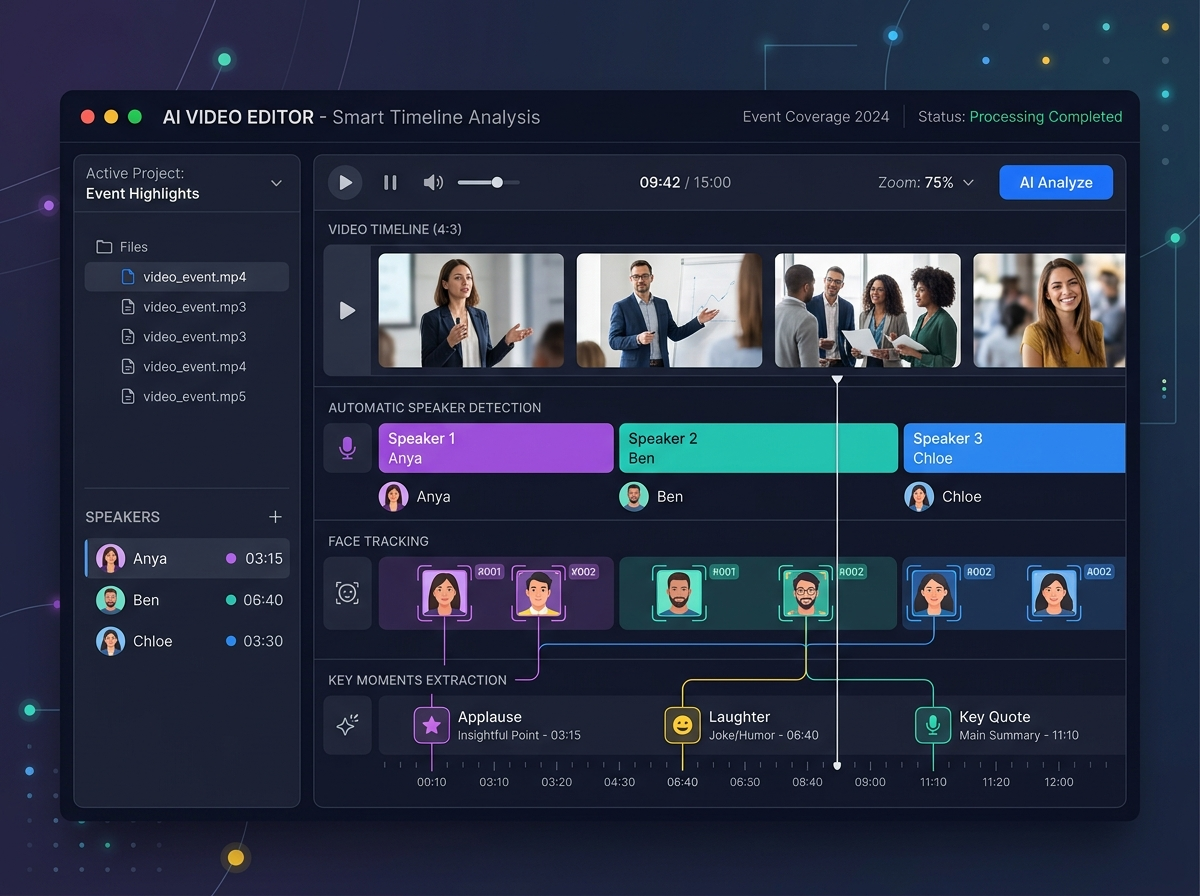
Artificial Intelligence has fundamentally dismantled this post-production bottleneck. AI-powered video processors can ingest multi-hour event recordings and, within minutes, analyze the visual, audio, and textual streams. By employing advanced machine learning models, AI systems identify key moments based on semantic triggers, changes in slide decks, audience reactions, and natural shifts in speaker emphasis. Rather than waiting weeks, marketing teams can access a library of highly relevant, perfectly edited short-form clips almost instantly.
This paradigm shift introduces three critical capabilities for modern B2B and B2C marketers:
1. Automated Semantic Clip Generation
Instead of manually scrubbing through timelines, AI video editors analyze natural language transcripts to detect when a speaker starts and ends a particular topic. The AI automatically isolates these segments, clips them, adds burned-in captions, and optimizes the aspect ratio for various platforms (such as 9:16 for mobile-first channels like Instagram and TikTok, or 1:1 and 16:9 for LinkedIn and desktop ads).
2. Instant Audience Engagement and Sentiment Analysis
By monitoring micro-interactions—such as chat surges, virtual applause, slide transitions, or physical audience clapping detected by ambient microphones—AI pinpoints precisely which segments of a presentation generated the most engagement. These high-energy segments are automatically packaged into short event highlight videos, ensuring that the retargeting assets are backed by real-world audience validation.
3. Hyper-Segmented Post-Event Retargeting
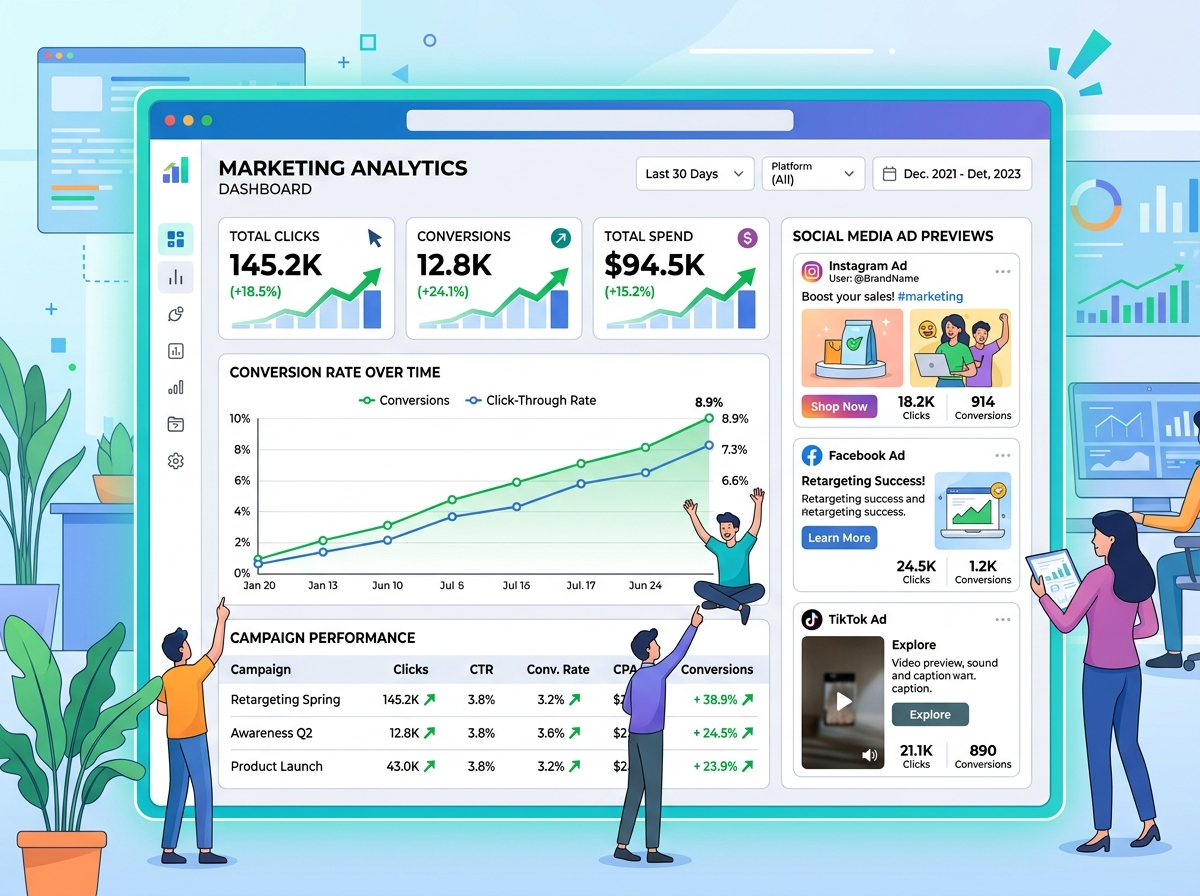
Because the cost and time of creating short clips drop to near-zero, marketing teams are no longer restricted to a single master recap. They can generate dozens of niche micro-highlights. For example, if your conference covered cybersecurity, cloud migration, and IT compliance, you can now run three distinct retargeting campaigns. Attendees who spent the most time in cybersecurity sessions will see targeted social media ads containing specific cybersecurity highlights, driving them to a personalized booking page with a high-relevance call to action.
Advanced Post-Event Retargeting Strategies for 2026
As the B2B landscape matures, standard retargeting ads that simply show a company logo or direct users back to a generic home page are no longer yielding positive ROI. Modern buyers expect a cohesive content journey. When they spend their valuable time attending a physical or virtual conference, they are seeking solutions to highly specific problems. Therefore, your post-event marketing must act as an ongoing educational sequence rather than a series of aggressive sales pitches.
By automating the processing of your event footage, you can deploy a multi-tiered post-event sequence that systematically nurtures leads:
- Tier 1 (Days 1–3) – The Immediate FOMO Recapture: Deploy a short, highly energetic event highlights video across LinkedIn, Meta, and YouTube. This video should capture the collective energy, packed keynotes, and overall scale of the event to trigger Fear Of Missing Out (FOMO) among those who registered but did not attend, and to reinforce the positive feelings of those who did.
- Tier 2 (Days 4–7) – Session-Specific Deep Dives: Segment your attendee lists based on the specific session tracks they attended. Serve them highly focused video snippets containing the single most impactful takeaway from that session. If a user spent 45 minutes watching a panel on data privacy, your retargeting ad should show a 60-second highlight of the panel’s concluding consensus.
- Tier 3 (Days 8–14) – Interactive Call-to-Action: Bridge the gap between content consumption and pipeline conversion. Direct your segmented retargeting audiences to landing pages containing interactive video galleries where they can explore related sessions, read AI-generated transcripts, and directly schedule a consultation with your sales representatives.
Supercharging Your Retargeting Campaigns with Automated Workflows
To implement this advanced strategy, forward-thinking event organizers rely on robust, end-to-end event management platforms that seamlessly bridge the gap between live execution and post-event marketing. This is where EventHex serves as an invaluable platform for modern event marketers.
EventHex simplifies the entire lifecycle of event video marketing by automating the transition from raw live-streamed files to highly targeted marketing campaigns:
- Automated AI Recaps & Highlights: The moment your session concludes, EventHex’s AI engine instantly processes the stream to compile high-impact event highlights videos. It automatically identifies keynote takeaways, panel discussions, and memorable audience reactions without requiring manual editing support.
- Interactive Media Galleries: Instead of burying videos in a static blog post, EventHex hosts these dynamic clips in beautiful, searchable, and interactive galleries. Attendees can search for specific topics, speakers, or keywords, allowing them to instantly access the exact content they need.
- Built-in Retargeting Integrations: EventHex captures valuable audience behavioral data during the event, tracking exactly which sessions each attendee watched and which video segments they engaged with. Through native marketing integrations with major ad networks, these custom segments are pushed directly to Google Ads, LinkedIn Campaign Manager, and Meta Ads, allowing you to launch tailored video retargeting ads with just a few clicks.
By combining AI video generation with automated distribution, EventHex transforms a complex, multi-week administrative headache into a streamlined, high-efficiency inbound engine that converts passive viewers into active sales opportunities.
The Direct Benefits of Post-Event Video Personalization
When you shift from broad-brush advertising to hyper-personalized post-event retargeting, your entire marketing funnel benefits from substantial performance gains:
- Significantly Lower Cost Per Acquisition (CPA): By serving contextually relevant event highlights videos to warm audiences, you achieve much higher click-through rates (CTR) and lower cost-per-click (CPC) on ad networks. Marketers consistently report up to a 40% reduction in CPA when transitioning from static banners to personalized video ads.
- Accelerated Sales Velocity: B2B sales cycles can drag on for months. Presenting prospects with the specific, high-value expert answers they witnessed during live panels helps overcome internal buying friction and keeps your solution top-of-mind.
- Extended Content Lifecycle: Organizing events is expensive. By dividing a single hour-long keynote into ten separate, highly shareable, and indexable micro-clips, you multiply the lifespan of your event assets, maintaining high-value organic search footprint and digital presence for several months.
Conclusion: Bridging the Post-Event Engagement Gap
The true success of a corporate event is not just measured by the number of registrations or the volume of physical attendance. It is defined by the lasting business relationships, pipeline velocity, and measurable conversions that occur long after the physical booths are packed away. Relying on slow, costly, and manual post-production workflows keeps B2B marketers in a constant state of catch-up, wasting the valuable content generated during live presentations.
Embracing AI video highlights is no longer just a technical luxury—it is an operational necessity for maximizing event ROI. By leveraging platforms like EventHex to automate video processing, categorize key takeaways, and deploy targeted post-event retargeting campaigns, organizations can bridge the post-event engagement gap, maintaining strong attendee momentum and driving consistent, predictable revenue growth in 2026 and beyond.