In our increasingly interconnected world, professional events and academic conferences are drawing highly diverse, global audiences. However, language barriers remain one of the most persistent obstacles to effective knowledge sharing and inclusive collaboration. Fortunately, the rise of advanced generative AI and low-latency multilingual technology has made live event translation more accurate, accessible, and cost-effective than ever before. In 2026, making an event accessible to a global audience is no longer a logistical nightmare—it is an operational standard.
The Crucial Need for Live Event Translation in 2026
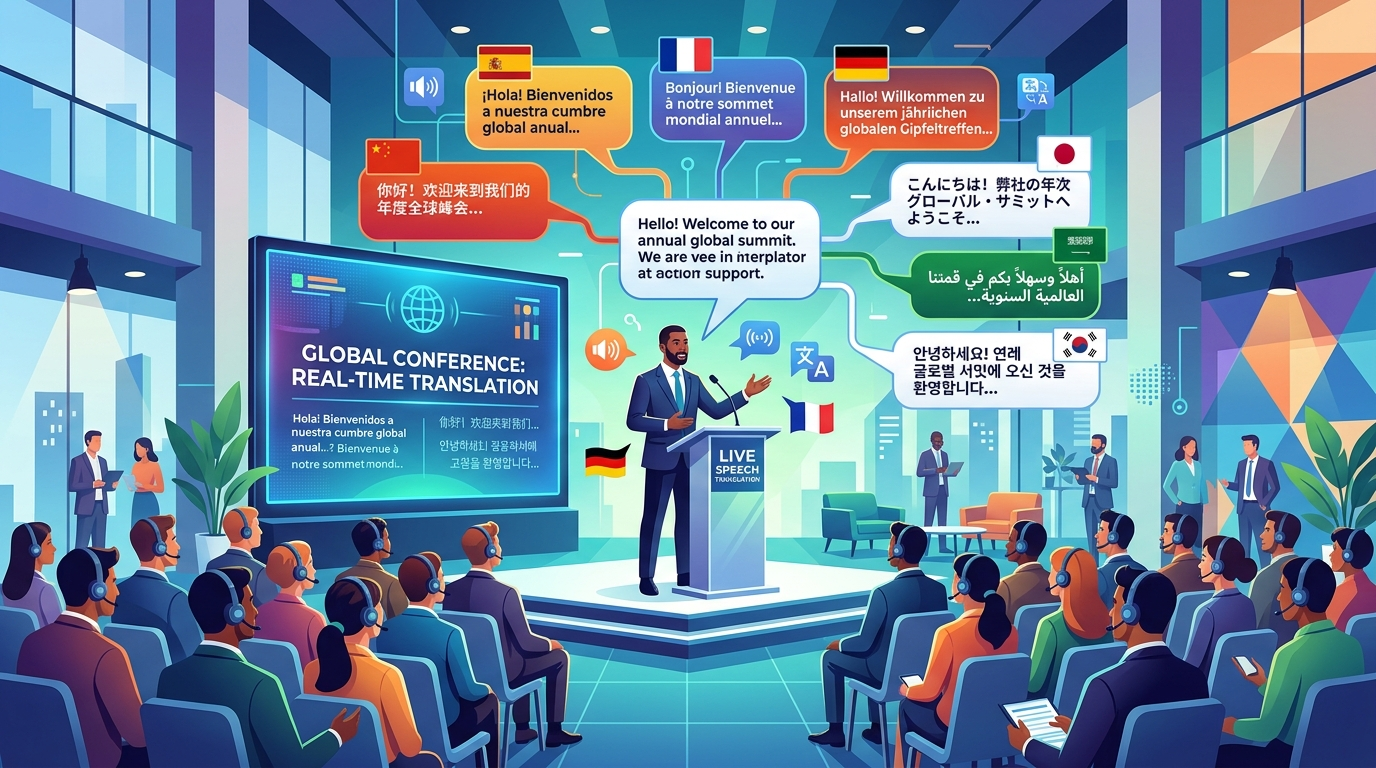
When hosting an international summit or high-profile corporate gathering, organizers must prioritize comprehensive communication. Without multi-language support, you exclude massive percentages of your potential market, limit the impact of your speakers, and diminish the overall experience for non-native participants.
Overcoming Language Barriers in International Summits
Traditional international events often struggled with language gaps. Keynote speakers presenting groundbreaking research or strategic insights in English might lose non-English speakers entirely. Conversely, brilliant international experts speaking in their native tongues might find their messages diluted through slow or inadequate translation, leading to fractured sessions and reduced engagement.
Making Events Truly Inclusive and Globally Accessible
True accessibility goes beyond physical ramps and digital color contrast; it extends to linguistic equity. Offering real-time translation makes attendees feel welcomed, respected, and valued. Furthermore, live event translation is a crucial asset for hard-of-hearing or deaf participants, who rely on real-time subtitles to follow complex presentations and discussions.
How AI-Powered Live Translation and Captioning Works
The machinery driving modern multilingual event technology is an elegant combination of three core artificial intelligence breakthroughs: speech-to-text, neural translation, and synthesized speech.
Automatic Speech Recognition (ASR)
The first step involves capturing the speaker’s live audio and converting it into highly accurate text. ASR engines in 2026 are trained on diverse accents, specialized technical terminologies, and industry jargon, enabling them to transcribe speech in real-time with over 98% accuracy, regardless of background venue noise.
Neural Machine Translation (NMT)
Once transcribed, the text is instantly passed through advanced translation models. These models do not just translate word-for-word; they analyze sentence structure, context, idioms, and industry-specific context to deliver translations that sound completely natural and preserve the speaker’s original intent.
Low-Latency Text-to-Speech (TTS)
For audio interpretation, the translated text is converted back into spoken audio using life-like, expressive neural voices. This process happens in less than two seconds, allowing attendees to listen to the live presentation in their preferred language through their own smartphones and headphones, without any bulky translation headsets.
Comparing Traditional Human Interpreters vs. AI Event Translation Services
While human interpreters have been the gold standard for decades, AI event translation services are rapidly capturing the market due to massive differences in cost, scalability, and ease of deployment.
Cost Efficiency at Scale
Hiring a team of professional human interpreters for a two-day, multi-track conference can easily cost tens of thousands of dollars. It requires specialized interpretation booths, wireless transmitters, headsets, and dedicated AV engineers on-site. AI-powered software, by contrast, operates at a fraction of that cost and requires zero physical equipment at the venue.
Deployment Speed and Multi-Language Capability
Human interpreters are typically limited to one or two language pairs. If you have attendees from fifteen different countries, providing human interpretation is logistically impossible. AI platforms can translate a single presenter’s audio into 30+ languages simultaneously in real-time, allowing every attendee to choose their native tongue at the click of a button.
When a Hybrid Approach Makes the Most Sense
For ultra-high-stakes diplomatic summits or sensitive medical conferences, some organizers prefer a hybrid model. Human interpreters handle the main stage keynotes, while cost-effective AI translation covers breakout sessions, panel discussions, and workshop rooms, ensuring complete event-wide coverage without exceeding the budget.
Seamless Accessibility with EventHex.ai Live Captioning
At EventHex.ai, we believe that technology should break down barriers, not build them. That’s why we have built robust, low-latency translation and captioning systems directly into our suite.
Integrating Real-Time Captioning into Event Streams
Our platform enables organizers to overlay live, translated captions directly onto main stage screens, virtual broadcast players, or attendees’ mobile devices. By ensuring that our Centralized Dashboard manages both the AV stream and the captioning feed, we eliminate synchronization lags, providing a smooth and comfortable reading experience.
Multi-Language Subtitles for Hybrid and Virtual Settings
For virtual or hybrid attendees, EventHex provides an interactive sidebar where they can toggle subtitle languages in real-time. Whether they are watching the live stream from Tokyo, Berlin, or São Paulo, the experience is fully localized and deeply engaging, boosting session retention rates across the board.
Key Implementation Steps for Event Planners
Deploying live translation at your conference is straightforward when following a structured deployment plan.
1. Assessing Audience Language Needs
During the ticketing and registration phase, include a mandatory drop-down question asking: “What is your primary language for event content?” This data allows you to focus your configuration on the exact languages your audience requires, optimizing your translation resources.
2. Selecting the Right Tech Stack
Ensure your chosen translation platform integrates seamlessly with your main event software. EventHex.ai provides native translation modules, saving you the hassle of managing third-party plugins, complex API connections, or separate audio lines.
3. On-Site AV Integration and Troubleshooting
To get the best transcription quality, ensure your speakers use high-quality microphones (lapel or headset mics are preferred over handheld or podium mics). Conduct a sound check before the event to verify the live audio signal entering the AI engine is crisp, clear, and isolated from ambient room noise.
Best Practices for Multilingual Event Success
- Provide Speaker Slides in Advance: Feeding presentation slides and key terms to the translation engine beforehand helps it learn specialized vocabulary, acronyms, and product names.
- Promote the Feature Clearly: Put signs with QR codes around the venue explaining how attendees can access live translation on their phones. Do not expect them to figure it out on their own.
- Have On-Site Technical Support: Ensure your AV team or a dedicated technology assistant is available at the registration desk to help attendees configure their audio settings if needed.
Frequently Asked Questions
How accurate is AI live event translation compared to humans?
AI translation in 2026 has reached near-human parity, achieving 95-98% accuracy for standard languages and business terminologies. While humans still excel at capturing extremely subtle cultural nuances or sarcasm, AI outperforms them in terms of speed, vocabulary depth, and multi-language scalability.
What equipment do attendees need to listen to translated audio?
None. Attendees simply scan a QR code on-site, open the event web application on their smartphone, plug in their own personal headphones, select their language, and listen to the translated audio stream in real-time.
Can AI translation handle niche industry terms and medical jargon?
Yes. By utilizing customizable dictionaries and uploading custom glossaries before the event, organizers can train the translation engine to recognize and correctly translate complex technical, scientific, or medical terminologies with extreme precision.
Conclusion
Linguistic accessibility is no longer an optional luxury—it is a core pillar of professional event planning. Implementing real-time live event translation ensures your global audience is fully engaged, your content is widely understood, and your event is remembered as a truly global, inclusive experience. Ready to see how EventHex.ai can open your events to the world? Contact our sales team or explore our Event Marketing tools to get started!