
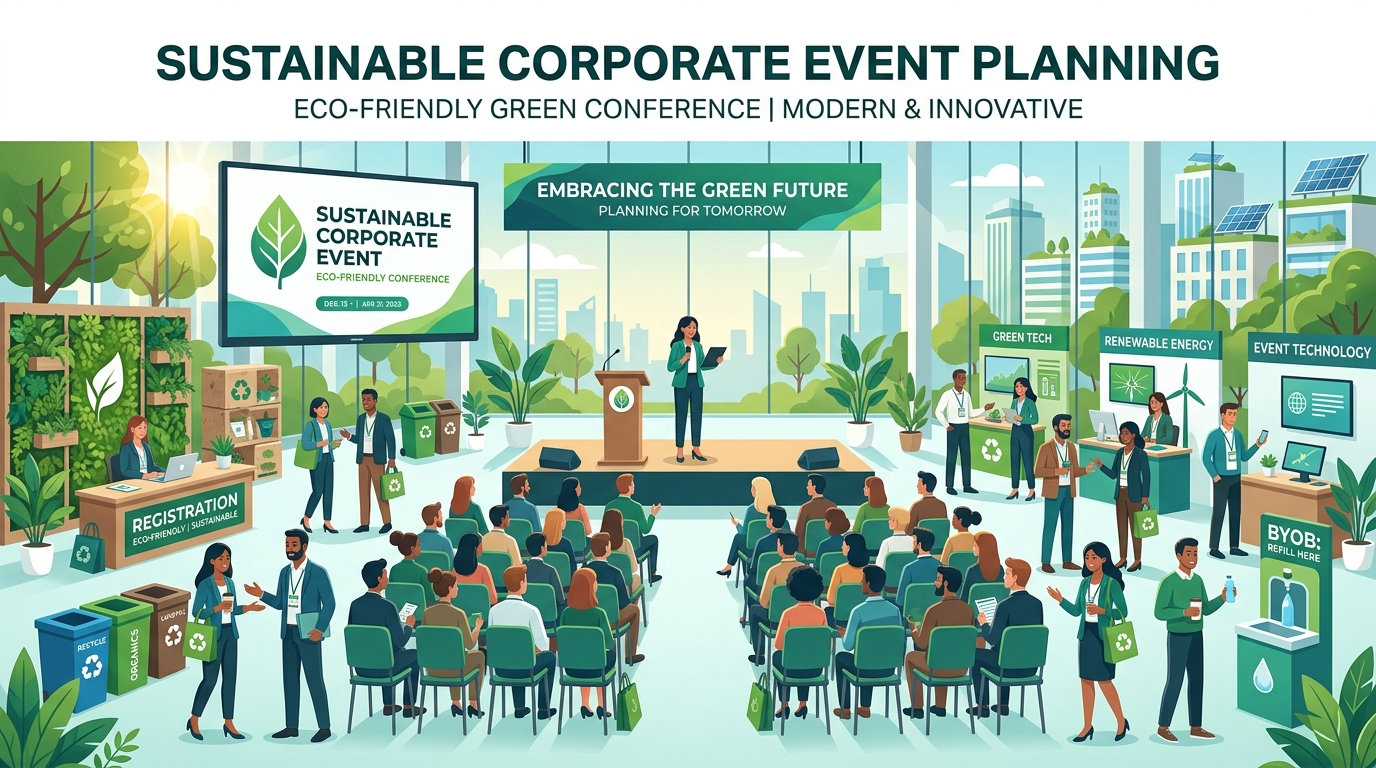
In the era of modern business, Environmental, Social, and Governance (ESG) criteria are no longer optional line items in annual reports. They are core pillars of corporate reputation and operational strategy. Yet, for corporate event planners, human resource teams, and marketing directors, meeting these mandates presents a massive administrative headache. Every large conference, trade show, or product launch leaves a physical and ecological footprint that can derail a company’s sustainability goals overnight.
For the broader playbook — venues, catering, waste, and ESG metrics — see our full sustainable event planning guide.
Traditionally, efforts to minimize this impact have stopped at superficial gestures—most notably, hand-delivering recyclable badges or introducing bamboo lanyards. While these steps are well-intentioned, they barely scratch the surface of the problem. True sustainable event planning requires moving past greenwashed, low-impact tokens and focusing on a systemic, carbon-neutral approach. It demands a strategy that tackles waste, carbon footprint, and resource consumption at their roots.
The Pain Point: Meeting ESG Mandates in the Event Industry
Event planning is inherently resource-intensive. According to industry benchmarks, the average national conference attendee generates over 1.89 kilograms of waste per day, a substantial portion of which is paper and single-use plastic. From surplus food and excessive marketing swag to printed schedules, signs, and transportation emissions, the footprint of a standard corporate event is staggering.
Planners face a double-edged sword: they must host high-impact events that drive lead generation and community engagement, while simultaneously proving to corporate sustainability officers that the event aligns with carbon-reduction targets. This struggle is compounded by outdated event management processes. Legacy check-in tools require printing thousands of badges in advance—many of which end up in the trash due to no-shows or spelling mistakes. Manual attendee tracking makes it impossible to measure, let alone offset, carbon footprints in any reliable way.
Step 1: Establishing an ESG Event Framework
Before booking a venue or sending out invitations, it is essential to establish a structured sustainability framework. This planning baseline ensures that every decision, from venue selection to tech implementation, is aligned with clear ESG parameters:
- Carbon Accounting: Partner with certified auditors or use carbon calculators designed specifically for event management to measure the baseline emissions of travel, catering, and venue energy.
- Sourcing Standards: Create strict vendor agreements. Mandate that caterers utilize locally sourced, seasonal, and organic ingredients, and prioritize venues that operate on renewable energy.
- Zero-Waste Goals: Move from single-use plastics to fully reusable or compostable service options. Ensure the venue has clear sorting bins for recycling, composting, and landfill waste.
Step 2: Rethinking Attendee Travel and Logistics
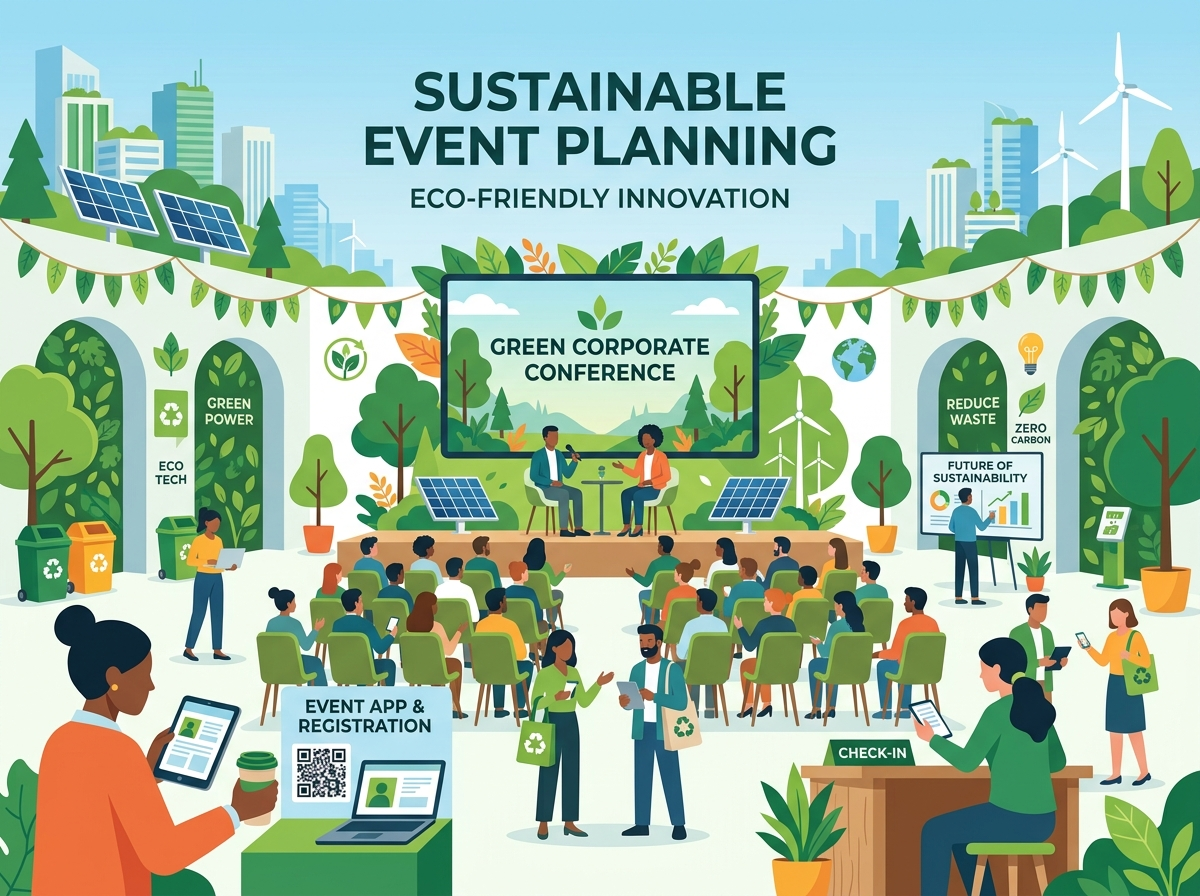
Travel typically accounts for over 70% of an event’s total carbon footprint. While you cannot control how every attendee travels, you can heavily influence and mitigate their choices:
- Encourage Alternative Transportation: Provide shuttle services, promote public transit routes, and create dedicated digital channels for attendee carpooling.
- Smart Scheduling: Host your event outside of peak traffic hours to reduce vehicle idling times and traffic congestion.
- The Hybrid Alternative: Offer premium virtual and hybrid event options. This not only dramatically lowers emissions from long-distance flights but also vastly expands your audience reach.
Step 3: Eliminating Material Waste with Event Technology
The easiest way to reduce waste is to avoid creating it in the first place. The digital revolution in event management makes this possible. Transitioning from physical, paper-heavy systems to modern digital tools is the single most effective way to optimize your event’s environmental footprint.
This is where EventHex comes in as the premier sustainable event platform. By centralizing management and automating operational tasks, EventHex eliminates the need for physical materials, physical tickets, and wasteful paper trails.
On-Demand Thermal Badge Printing
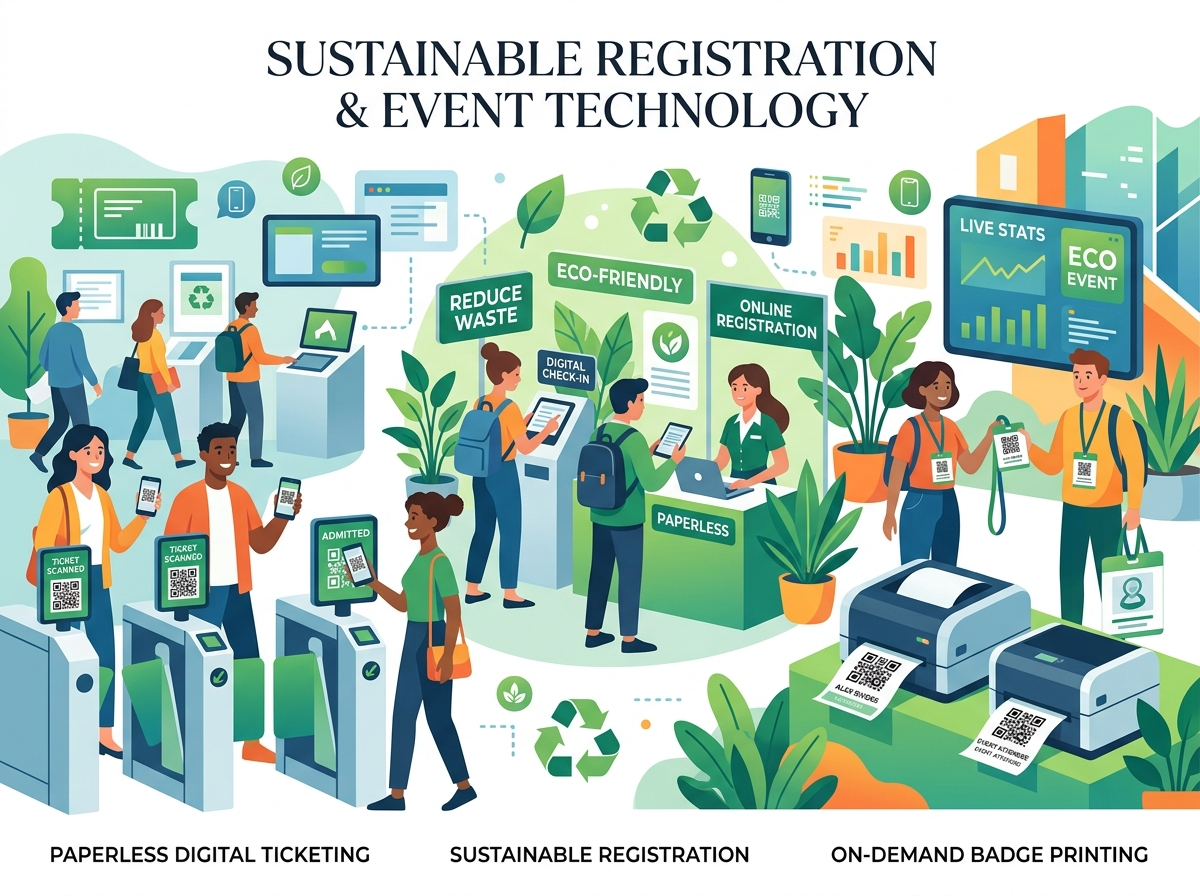
One of the largest sources of onsite waste is pre-printed badges. Traditional registration setups require printing badges for every registered attendee weeks before the event. If an attendee cancels, registers late, or needs a name correction, badges must be reprinted, leading to a pile of discarded plastic and paper.
With EventHex Registration & Check-In, events utilize high-efficiency on-demand thermal badge printing. Badges are only printed the exact second an attendee checks in at the venue. If an attendee doesn’t show up, no badge is ever generated. Thermal printing also eliminates the need for chemical ink cartridges, utilizing heat-sensitive, fully recyclable paper badges that slide easily onto lanyards without plastic sleeves.
Walk-in Registration Caps & Capacity Controls
Unexpected crowds cause massive logistical strains, leading to emergency catering orders (often in non-reusable containers) and physical overcrowding. Using EventHex’s capacity management, planners can enforce strict registration caps and monitor live attendance trends. By knowing exactly who is coming, planners can coordinate with caterers down to the precise meal, ensuring zero food waste.
Digital-First Engagement & Matchmaking
In the past, networking relied on paper directories, maps, and hundreds of printed business cards. EventHex replaces this paper trail with its digital-first engagement suite. Planners can manage digital matchmaking, attendee profiles, schedules, and floorplans through a centralized mobile interface. Surveys and feedback loops are run digitally, capturing rich audience data without using a single sheet of paper.
Step 4: Leveraging Real-Time Dashboards for ESG Reporting
To satisfy stakeholders and meet rigorous audit standards, event planners must prove their green claims with hard data. This is impossible when using fragmented spreadsheets and manual tracking tools.
The EventHex Centralized Dashboard serves as your single source of truth. It consolidates ticket registration data, attendee check-in rates, live session participation, and survey feedback. Planners can instantly pull reports on attendee attendance ratios to calculate actual, rather than estimated, carbon offsets required for travel and catering. This level of precise analytics is critical for corporate ESG reviews and future budget allocations.
Conclusion: The Future of Events is Digital and Sustainable
Corporate ESG goals are here to stay, and event planners must evolve to meet them. True sustainability goes far beyond simple paper recycling or bamboo badge holders. It requires a fundamental shift in how we plan, run, and evaluate corporate gatherings. By choosing sustainable sourcing, planning catering with zero-waste intent, and deploying advanced event technology, brands can host high-impact, carbon-neutral events that leave a lasting impression on attendees without leaving a scar on the planet.
Ready to make your next corporate conference zero-waste? Discover how EventHex can transform your event check-in, registration, and engagement into a seamless, eco-friendly experience.
Frequently Asked Questions (FAQ)
What is sustainable event planning?
Sustainable event planning is the practice of designing and executing corporate events, conferences, or social gatherings with minimal environmental impact. This includes reducing waste, conserving water and energy, sourcing local and organic catering, encouraging carbon-neutral transportation, and utilizing paperless event technology.
How do we measure the carbon footprint of an event?
Event carbon footprints are measured by tracking emissions from three primary scopes: travel and transport (including air and ground travel of attendees), venue energy consumption (electricity and heating), and catering/waste (food sourcing, processing, and landfill disposal). Planners use specialized carbon calculators and check-in reports from platforms like EventHex to obtain accurate data on actual attendance, allowing them to purchase precise carbon offsets.
Why is pre-printing badges a bad environmental practice?
Pre-printing badges creates massive waste because event planners typically experience a 10% to 30% no-show rate. All pre-printed badges for no-shows must be thrown away. Additionally, spelling errors and late registrations lead to double-printing badges on-site. On-demand thermal printing ensures badges are only generated when an attendee physically walks through the doors, reducing paper waste to zero.
How does event technology like EventHex help reduce waste?
EventHex helps events go green by digitizing paper-heavy processes. It replaces printed agendas, paper tickets, and maps with digital schedules and floor plans. Additionally, EventHex reduces physical badge and printer ink waste through inkless, on-demand thermal printing, and provides live capacity caps to prevent over-catering and food waste.