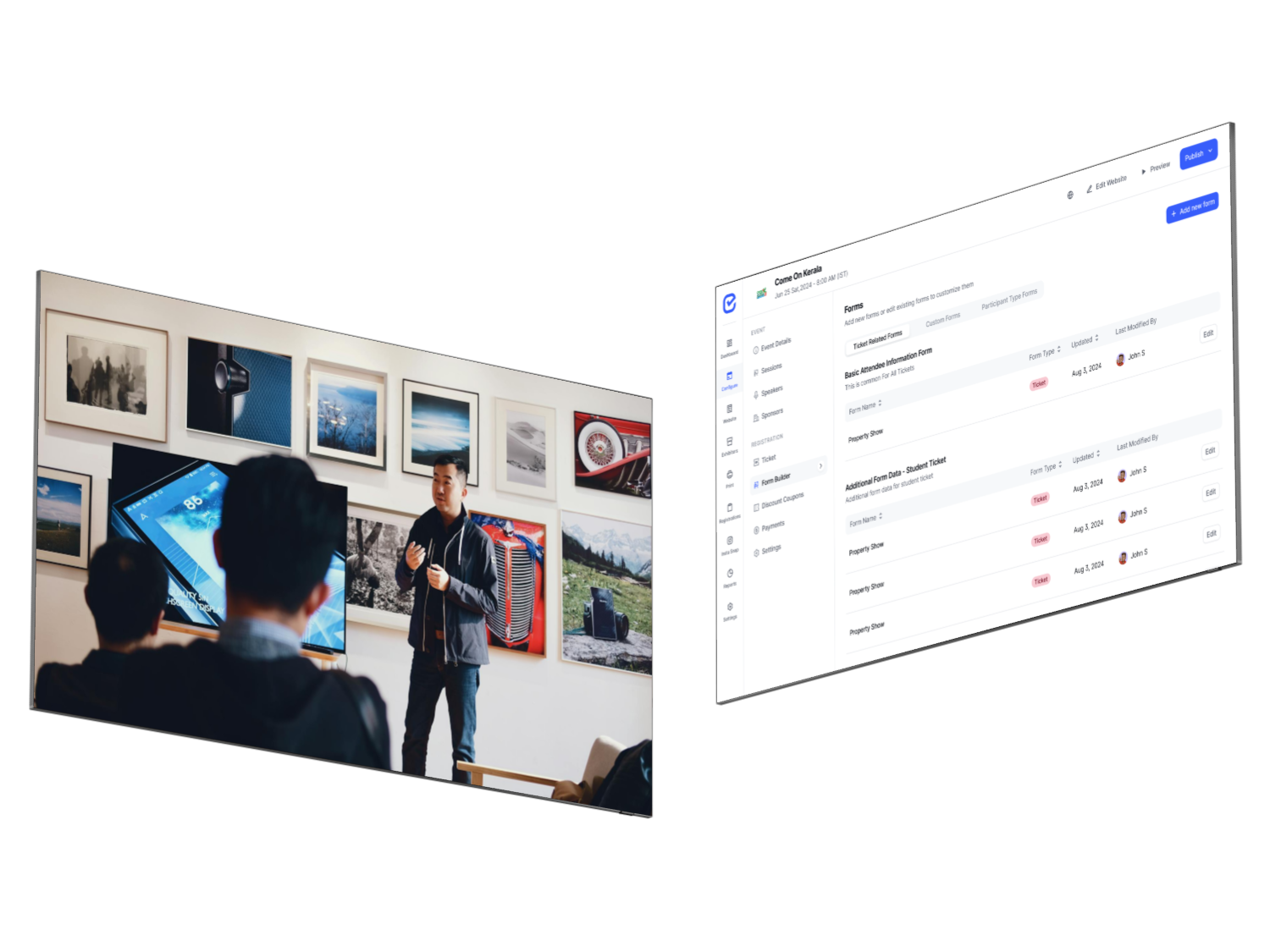

Introduction
The event management software market in 2026 looks nothing like it did three years ago. AI-powered automation, agentic workflows, and real-time analytics have become table stakes. Whether you’re planning a 200-person corporate retreat or a 10,000-attendee tech conference, the platform you choose will define how smoothly your event runs — and how much sleep you lose in the process.

We evaluated 25 event management platforms across seven categories: registration and ticketing, on-site operations, attendee engagement, AI capabilities, analytics, integrations, and customer support. Each platform was assessed based on publicly available feature sets, user reviews, and hands-on testing where possible.
This guide is designed to help you match the right platform to your event type, team size, and budget — not just list features. Let’s get into it.
Want to see how EventHex handles registration, check-in and badges in one place? Book a 30-minute EventHex demo and we’ll walk you through it.
What to Look for in Event Management Software
Before comparing platforms, you need a clear evaluation framework. Here are the seven capabilities that separate modern event management software from legacy tools:

1. Registration and Ticketing
Look for custom registration forms, multi-ticket types (early bird, VIP, group), promo codes, waitlists, and payment processing with multiple gateway support. The best platforms handle complex registration logic — tiered pricing, session-based registration, and multi-currency support — without custom development. Use our event registration platform checklist to compare registration flows, fees, invoices and check-in side by side.
2. On-Site Operations
QR code check-in, on-demand badge printing, self-service kiosks, and real-time attendance tracking. Your check-in process is the first impression attendees have. Platforms that reduce average check-in time from 45 seconds to under 5 seconds win here.
3. Attendee Engagement
Live polling, Q&A, gamification, networking features, and mobile event apps. Engagement tools should work across in-person, virtual, and hybrid formats without requiring attendees to download multiple apps.
4. AI Capabilities
This is the biggest differentiator in 2026. AI-powered features now include smart matchmaking for networking, automated content summarization, AI form builders, intelligent scheduling, and predictive analytics. Platforms without meaningful AI features are already falling behind.
5. Analytics and Reporting
Real-time dashboards, session attendance tracking, engagement scoring, sponsor ROI reports, and post-event analytics. The best platforms provide actionable insights, not just data dumps.
6. Integrations
CRM integrations (Salesforce, HubSpot), marketing automation (Mailchimp, ActiveCampaign), payment gateways (Stripe, PayPal, Tap Payments), and communication tools (Slack, WhatsApp). Open APIs and webhook support are essential for enterprise deployments.
7. Support and Reliability
24/7 support availability, dedicated account managers for enterprise clients, uptime guarantees, and onboarding assistance. During a live event, response time matters more than anything else.
Quick Comparison: 25 Event Management Platforms at a Glance
| Platform | Best For | AI Features | All-in-One | Mobile App | Rating |
|---|---|---|---|---|---|
| Whova | Conferences & expos | Limited | ✓ | ✓ | 4.8/5 |
| Cvent | Enterprise & venue sourcing | Limited | ✓ | ✓ | 4.3/5 |
| Swoogo | Custom registration workflows | Partial | ✓ | ✓ | 4.8/5 |
| EventHex | AI-powered end-to-end management | ✓ Full | ✓ | ✓ | 4.7/5 |
| Bizzabo | Marketing & ticket sales | Partial | Partial | ✓ | 4.0/5 |
| vFairs | Virtual & hybrid events | Limited | Partial | ✓ | 4.75/5 |
| Eventify | Affordable all-in-one | Partial | ✓ | ✓ | 4.6/5 |
| EventMobi | Attendee experience | Partial | ✓ | ✓ | 4.6/5 |
| Hopin | Virtual-first events | Limited | Partial | ✓ | 4.4/5 |
| Airmeet | Hybrid events | Partial | ✓ | ✓ | 4.5/5 |
| Splash | Brand experience & marketing | Limited | Partial | Partial | 4.5/5 |
| Cadmium | Associations & nonprofits | Limited | ✓ | ✓ | 4.7/5 |
| Swapcard | AI networking & matchmaking | ✓ | Partial | ✓ | 4.5/5 |
| Eventbrite | Ticketing & small events | Limited | Partial | ✓ | 4.3/5 |
| Brella | AI matchmaking & networking | ✓ | Partial | ✓ | 4.5/5 |
| SpotMe | Enterprise engagement | Partial | ✓ | ✓ | 4.6/5 |
| Stova | Enterprise meetings & events | Limited | ✓ | ✓ | 4.3/5 |
| Eventtia | Hotels & enterprises | Limited | ✓ | ✓ | 4.7/5 |
| Zoom Events | Webinars & virtual events | Limited | Partial | ✓ | 4.5/5 |
| Sched | Scheduling & agenda building | Limited | Partial | ✓ | 4.6/5 |
| Hubilo | Hybrid event engagement | Partial | ✓ | ✓ | 4.5/5 |
| Accelevents | Fundraising & galas | Limited | ✓ | ✓ | 4.5/5 |
| Slido | Live polling & Q&A | Limited | Partial | ✓ | 4.7/5 |
| RingCentral Events | Video-first hybrid events | Limited | Partial | ✓ | 4.4/5 |
| Zuddl | Data-driven B2B events | Partial | ✓ | ✓ | 4.4/5 |
Detailed Reviews: Top 25 Event Management Software Platforms
1. Whova

Best for: Conferences, professional events, and expos of all sizes
Whova consistently ranks as one of the most popular event management platforms, and for good reason. It offers a genuinely all-in-one experience — from registration and agenda management to a feature-rich attendee app with built-in networking, live polling, and exhibitor management.
Strengths: Intuitive interface that doesn’t require technical expertise. The attendee app has strong adoption rates because it’s genuinely useful — attendees actually want to use it. Excellent community board and networking features. Good abstract/CFP management for academic events.
Limitations: AI features are still basic compared to newer platforms. Customization options for branding and website design are somewhat limited. Reporting could be more granular. Higher price point for smaller events.
Best use case: Mid-to-large professional conferences (500–5,000 attendees) where attendee engagement and networking are priorities.
2. Cvent

Best for: Large enterprises, corporate events, and venue sourcing
Cvent is the enterprise heavyweight of the event management world. With the largest event venue marketplace and deep integrations with enterprise CRMs, it’s the go-to choice for organizations running multiple large-scale events annually. The platform’s Supplier Network connects planners with over 300,000 venues worldwide.
Strengths: Unmatched venue sourcing network. Robust enterprise features including SSO, compliance tools, and multi-event program management. Strong registration and badge printing capabilities. Deep Salesforce and HubSpot integrations.
Limitations: Steep learning curve — most teams need dedicated training. Pricing is enterprise-level and not transparent. The user interface feels dated compared to newer platforms. AI capabilities remain limited. Customer support can be slow for non-enterprise accounts.
Best use case: Enterprise organizations managing 10+ events per year with complex procurement requirements and venue sourcing needs.
3. Swoogo
Best for: Highly customizable registration and marketing-driven events
Swoogo has carved out a strong position as the most customizable registration platform in the market. If your events require complex registration logic — conditional fields, tiered access, custom workflows, and branded confirmation pages — Swoogo handles it without requiring developer support.
Strengths: Best-in-class registration customization. Clean, modern interface. Strong marketing tools including email campaigns and landing page builder. Good analytics with attribution tracking. Responsive customer support.
Limitations: On-site operations (check-in, badge printing) are less mature than dedicated solutions. Networking and engagement features are basic. Limited mobile app capabilities. AI features are still evolving.
Best use case: Marketing teams running corporate events, product launches, and field marketing programs where registration conversion optimization matters.
4. EventHex

Best for: AI-powered end-to-end event management with smart automation

EventHex is a newer entrant that has gained significant traction by taking a fundamentally different approach: building AI into every layer of the platform rather than bolting it on as an afterthought. From an AI form builder that creates registration forms from natural language prompts, to InstaSnap AI that lets attendees find their event photos using a selfie, to AI Smart-Connect that matches attendees for networking based on profiles and goals — the AI isn’t marketing fluff, it’s functional.
Strengths: Most comprehensive AI feature set in the market (AI Copilot, AI Photo Gallery, AI Smart-Connect, AI Form Builder, AI Session Recap). True all-in-one platform covering registration, ticketing, check-in, badge printing, speaker management, session management, call for papers, sponsor management, gamification, event website builder, analytics, and marketing. Supports global payment gateways including Stripe, Tap Payments (mada, KNET, Benefit for GCC markets), and PayPal. Unified dashboard for managing multiple events. Strong mobile app with offline support.
Limitations: Newer brand with less market recognition than established players like Cvent or Whova. Feature documentation is still maturing. Community and third-party integration ecosystem is growing but smaller than Cvent’s or Eventbrite’s.
Best use case: Conference organizers, event agencies, and organizations that want to leverage AI for efficiency — particularly those managing events in the Middle East/GCC region where Tap Payments integration is a differentiator.
5. Bizzabo
Best for: Event marketing teams focused on pipeline generation
Bizzabo positions itself as the “Event Experience Operating System” and is particularly strong for B2B marketing teams that need to prove event ROI. Its SmartBadge technology and Klik wearables enable real-time lead capture and engagement tracking at a hardware level.
Strengths: Excellent marketing attribution and ROI measurement. SmartBadge/Klik hardware for lead capture and engagement tracking. Strong CRM integrations. Good analytics for proving event pipeline contribution. Professional-looking event pages.
Limitations: Not a true all-in-one — gaps in speaker management, CFP, and session management. Higher price point. SmartBadge hardware adds additional cost. Mobile app is basic compared to Whova or EventHex.
Best use case: B2B marketing teams at SaaS companies that need to demonstrate event ROI to leadership and integrate event data directly into their sales pipeline.
6. vFairs

Best for: Immersive virtual and hybrid event experiences
vFairs pioneered the virtual exhibition hall concept with 3D booth environments that make virtual events feel more tangible. If your events rely heavily on exhibitor presence, virtual trade shows, or job fairs, vFairs creates an experience that stands out from flat webinar-style platforms.
Strengths: Best-in-class virtual exhibition environments. Strong exhibitor management tools. Good hybrid event support with both virtual and in-person components. Dedicated project managers for each event. Gamification features for virtual engagement.
Limitations: 3D environments can feel gimmicky for some event types. The platform is complex to set up and requires significant lead time. In-person event capabilities are limited compared to all-in-one platforms. Limited AI features.
Best use case: Virtual and hybrid trade shows, job fairs, and exhibitions where exhibitor booths and visual immersion matter.
7. Eventify
Best for: Budget-conscious organizers who need all-in-one capability
Eventify offers a surprisingly complete feature set at a price point that undercuts most competitors. It includes registration, a branded mobile app, networking, live polling, analytics, and exhibitor management — making it accessible to organizations that can’t justify enterprise pricing.
Strengths: Competitive pricing with transparent plans. Genuinely all-in-one feature coverage. Good mobile app with offline access. Strong customer support with quick response times. Multilingual support.
Limitations: Feature depth is shallower than enterprise platforms. Limited AI capabilities. Customization options are more restricted. Analytics are basic compared to Bizzabo or EventHex.
Best use case: Small-to-mid organizations running 1–5 events per year on a moderate budget who need a solid all-rounder.
8. EventMobi

Best for: Creating engaging attendee experiences through mobile
EventMobi’s strength is its attendee-facing experience. The platform’s mobile app is polished, intuitive, and feature-rich — offering personalized agendas, networking, live engagement tools, and a social activity feed that keeps attendees connected throughout the event.
Strengths: Excellent mobile app experience. Strong engagement tools (live polling, Q&A, gamification). Good personalization features. Virtual event support with integrated streaming. Responsive support team.
Limitations: Registration features are decent but not as powerful as Swoogo’s. AI features are basic. On-site check-in capabilities are limited. Less suited for very large conferences (5,000+ attendees).
Best use case: Mid-size conferences and corporate events (200–2,000 attendees) where mobile attendee experience is a top priority.
9. Hopin
Best for: Virtual-first events and online conferences
Hopin was a pandemic-era success story that scaled rapidly to become one of the largest virtual event platforms. While the hype has cooled, the platform still offers solid virtual event capabilities including breakout rooms, virtual stages, sponsor areas, and networking spaces.
Strengths: Purpose-built for virtual events. Good breakout room functionality. Built-in streaming and recording. Networking speed-dating feature is unique. Marketplace for session recordings and on-demand content.
Limitations: In-person and hybrid event support is weak. The company has gone through significant downsizing, raising concerns about long-term viability. Feature development has slowed. Customer support quality has declined.
Best use case: Organizations that primarily run virtual events and webinars and don’t need in-person event management.
10. Airmeet

Best for: Hybrid events with strong community-building features
Airmeet combines virtual event hosting with community-building tools, making it effective for organizations that want to maintain attendee engagement before, during, and after events. Its “Social Lounge” feature creates casual networking spaces that mimic in-person hallway conversations.
Strengths: Social Lounge for casual networking. Good hybrid event support. Community-building features between events. Clean, intuitive interface. Built-in streaming.
Limitations: In-person event management is limited. Less suitable for large trade shows or exhibitions. Analytics are basic. AI features are emerging but not mature.
Best use case: Tech companies and SaaS organizations running hybrid community events, meetups, and thought leadership series.
11. Splash

Best for: Brand-focused event marketing and executive experiences
Splash focuses on creating beautifully branded event experiences — from invitations and landing pages to on-site check-in. It’s the platform of choice for marketing teams that treat events as brand activations and need everything to look pixel-perfect.
Strengths: Best-in-class event page design and branding tools. Strong email invitation system. Good guest list management. CRM integrations (Salesforce, Marketo). Branded check-in experience.
Limitations: Not an all-in-one event management platform — lacks session management, speaker management, and CFP. Limited engagement tools. Focused primarily on smaller, curated events. No AI features to speak of.
Best use case: Marketing teams at consumer brands, luxury companies, and agencies producing branded experiential events and executive dinners.
12. Cadmium (EventScribe)
Best for: Academic conferences, associations, and nonprofit events
Cadmium has spent years building features specifically for the association and academic conference market. Its abstract management, proceedings publishing, and CE/CME credit tracking capabilities are among the best available — features that most general-purpose platforms completely lack.
Strengths: Strong abstract submission and peer review system. CE/CME credit tracking for medical and professional education events. Proceedings and content publishing tools. Good mobile app for conference attendees. Proven track record with large associations.
Limitations: Not suited for corporate or marketing events. Interface is functional but dated. Limited AI features. Customization requires working with Cadmium’s team. Less flexible for non-academic event types.
Best use case: Medical, scientific, and professional associations running annual conferences with abstract submissions, peer review, and continuing education requirements.
13. Swapcard
Best for: AI-powered attendee networking and exhibitor lead generation
Swapcard is one of the few platforms that has genuinely invested in AI matchmaking for event networking. Its recommendation engine analyzes attendee profiles, content preferences, and meeting history to suggest relevant connections — making it effective for trade shows and B2B events where networking ROI matters.
Strengths: Strong AI-powered networking and matchmaking. Good exhibitor tools with lead scanning and analytics. Effective meeting scheduler. Multi-event community platform. Mobile app is well-designed.
Limitations: Registration features are basic. On-site operations (check-in, badge printing) are less mature. Not a complete all-in-one solution. Better suited for large events — overkill for small meetups.
Best use case: Trade shows and B2B conferences (1,000+ attendees) where exhibitor ROI and attendee networking are the primary success metrics.
14. Eventbrite
Best for: Simple ticketing and self-service event registration
Eventbrite remains the most accessible event platform for getting started quickly. If your primary need is selling tickets and managing registrations for community events, workshops, or social gatherings — with zero learning curve — Eventbrite delivers. Its marketplace also provides event discovery and organic reach.
Strengths: Easiest setup — you can create an event page and start selling tickets in under 10 minutes. Built-in event marketplace for discovery. Familiar, trusted checkout experience for attendees. Good for free and low-cost events. Basic analytics and attendee management.
Limitations: Not a serious event management platform for professional conferences. No speaker management, session management, or CFP features. Limited engagement tools. Analytics are basic. Fees can add up for paid events.
Best use case: Community events, workshops, social gatherings, and small professional events where simple ticketing is the main requirement.
15. Brella
Best for: AI-powered matchmaking for conferences and B2B events
Brella focuses almost entirely on doing one thing exceptionally well: connecting the right people at events. Its AI matchmaking engine uses intent data — attendees specify what they’re looking for, and Brella suggests matches based on complementary interests and goals.
Strengths: Industry-leading AI matchmaking with intent-based matching. Clean, focused meeting scheduler. Good integration with other event platforms. Provides networking analytics to measure connection quality. Simple for attendees to use.
Limitations: Not an all-in-one platform — you’ll need another solution for registration, check-in, and content management. Limited features beyond networking. Less suitable for events where networking isn’t a primary goal.
Best use case: B2B conferences and investor events where high-quality 1:1 meetings are a primary goal and organizers use a separate platform for registration.
16. SpotMe
Best for: Enterprise engagement events and pharmaceutical conferences
SpotMe targets enterprise organizations — particularly pharmaceutical and financial services companies — that need compliant, secure event platforms with advanced engagement features. Its content engagement tools and compliance features set it apart in regulated industries.
Strengths: Strong compliance features for regulated industries (pharma, finance). Advanced engagement analytics. Content hub for on-demand access post-event. Enterprise-grade security. Good hybrid event capabilities.
Limitations: Enterprise pricing that excludes smaller organizations. Complex setup requiring onboarding support. Not suited for consumer or community events. Limited AI features.
Best use case: Pharmaceutical companies, financial services firms, and large enterprises that need compliance-ready event platforms.
17. Stova (formerly Aventri & MeetingPlay)

Best for: Enterprise meetings and strategic event programs
Stova was formed by combining Aventri and MeetingPlay, creating a platform that covers both strategic meetings management (SMM) and event technology. It’s designed for enterprise procurement teams that need to manage event spend, compliance, and vendor relationships alongside event logistics.
Strengths: Strategic meetings management capabilities. Expense tracking and budget management. Good for corporate meeting programs. Integrates with travel and expense systems. Strong reporting for procurement teams.
Limitations: Complex and enterprise-focused — not user-friendly for occasional event planners. Feature set is broad but not deep in any single area. AI capabilities are limited. The merged platform is still being unified, creating some UX inconsistencies.
Best use case: Enterprise procurement and travel teams managing corporate meeting programs with budget oversight requirements.
18. Eventtia
Best for: Hotels, hospitality groups, and multi-venue enterprises
Eventtia has found a strong niche in the hospitality and hotel conference market. Its platform includes features specifically designed for venues that host events — including venue management, catering coordination, and multi-event scheduling that general-purpose platforms don’t address.
Strengths: Purpose-built for venue operators and hospitality groups. Multi-event calendar management. Good registration and check-in features. White-label options for hotel branding. Multilingual support. Responsive customer support.
Limitations: Less suitable for organizers who don’t operate their own venues. Limited AI features. Networking and engagement tools are basic. Analytics could be more advanced.
Best use case: Hotel chains, convention centers, and hospitality groups that host events at their own venues and need integrated venue + event management.
19. Zoom Events
Best for: Virtual events and webinars leveraging existing Zoom infrastructure
If your organization already uses Zoom for meetings, Zoom Events provides a natural extension for hosting virtual events and webinars. It leverages the familiar Zoom interface while adding event-specific features like registration pages, multi-session hubs, and networking lounges.
Strengths: Familiar Zoom interface — minimal learning curve for hosts and attendees. Reliable streaming and recording. Good for webinar series and virtual summits. Integrated with Zoom Workplace ecosystem. Affordable for organizations already on Zoom plans.
Limitations: In-person event support is nonexistent. Limited engagement tools beyond basic polling. No check-in, badge printing, or on-site capabilities. Not suited for large conferences. Feature development is slow.
Best use case: Organizations that run primarily virtual events and webinars and want to leverage their existing Zoom subscription.
20. Sched

Best for: Agenda and schedule management for conferences
Sched does one thing very well: it helps organizers build conference agendas and lets attendees create personalized schedules. Its clean interface and flexible scheduling tools make it a favorite for multi-track conferences, festivals, and unconferences.
Strengths: Excellent schedule builder with drag-and-drop interface. Attendees can build personalized agendas. Clean, intuitive design. Good for multi-track, multi-day events. Affordable pricing. Mobile-friendly.
Limitations: Not an all-in-one platform — no registration, ticketing, or check-in. No networking or engagement tools. Limited analytics. Must be paired with other platforms for a complete event solution.
Best use case: Multi-track conferences, unconferences, and festivals where attendees need to build personalized schedules across many concurrent sessions.
21. Hubilo

Best for: Hybrid events with strong content and engagement features
Hubilo positions itself as a hybrid event platform with particular strength in content distribution and attendee engagement. Its “Snackable Content” feature automatically repurposes event recordings into short clips for social media and post-event marketing.
Strengths: Snackable Content for automated content repurposing. Good hybrid event capabilities. Engaging virtual stage with reactions and chat. Lead retrieval for sponsors. In-app video networking.
Limitations: In-person event features are limited. Check-in and badge printing are basic. Abstract management and CFP are not available. AI features are marketing-focused rather than operational.
Best use case: Marketing teams running hybrid demand generation events where content repurposing and post-event engagement extend the event’s lifecycle.
22. Accelevents
Best for: Fundraising events, galas, and nonprofit events
Accelevents stands out for its fundraising capabilities — including mobile bidding, donation drives, raffles, and pledge management. For nonprofits and organizations that run events primarily to raise money, it provides features that general-purpose platforms completely miss.
Strengths: Best-in-class fundraising tools (silent auctions, mobile bidding, donation kiosks). Good registration and ticketing. Virtual and hybrid event support. Text-to-give capabilities. Integrated payment processing for donations.
Limitations: Not designed for traditional conferences or corporate events. Limited speaker and session management. Networking features are basic. Analytics focused on fundraising metrics rather than event engagement.
Best use case: Nonprofits, universities, and charitable organizations running fundraising galas, auctions, and donor events.
23. Slido
Best for: Live audience engagement (polling, Q&A, quizzes)
Slido (now part of Cisco/Webex) is the most widely used audience engagement tool for live events. Its strength is pure simplicity — attendees join with a code, no app download required, and can participate in polls, Q&A, quizzes, and word clouds instantly. It integrates with PowerPoint, Google Slides, and most presentation tools.
Strengths: Frictionless audience participation — no downloads required. Integrates with presentation tools (PowerPoint, Slides, Webex, Teams, Zoom). Excellent for town halls, all-hands meetings, and conference sessions. Real-time results visualization. Free plan available.
Limitations: Not an event management platform — it only handles engagement within sessions. No registration, ticketing, check-in, or any event management features. Must be paired with a full event platform. Limited to polling and Q&A.
Best use case: Speakers, moderators, and session organizers who need to add live interactivity to presentations — used alongside a full event platform.
24. RingCentral Events (formerly Hopin Events)
Best for: Video-first hybrid events with professional production
RingCentral Events emerged from Hopin’s acquisition and integration into the RingCentral ecosystem. It combines virtual event capabilities with RingCentral’s video and communications infrastructure, making it suitable for organizations that want professional-quality video production for hybrid events.
Strengths: Professional video production tools with backstage management. Integrated with RingCentral’s communication suite. Good for webinar series and product launches. Studio-quality streaming. Breakout rooms for workshops.
Limitations: In-person event capabilities are minimal. Limited engagement tools. The platform is still transitioning from Hopin’s original codebase. Networking features are basic. Not suited for large conferences.
Best use case: Corporate marketing and communications teams running virtual product launches, town halls, and webinar series that require professional video quality.
25. Zuddl
Best for: Data-driven B2B events with CRM integration
Zuddl has emerged as a strong option for B2B event marketers who need deep CRM integration and event attribution. The platform tracks attendee behavior across the entire event lifecycle and pushes engagement data directly into Salesforce and HubSpot for pipeline attribution.
Strengths: Deep CRM integration with Salesforce and HubSpot. Event attribution and pipeline tracking. Good hybrid event support. Clean, modern interface. Real-time engagement analytics. Content hub for on-demand access.
Limitations: Newer platform with smaller customer base. In-person operations (check-in, badges) are basic. Not suited for consumer events. Limited integrations outside of CRM tools. AI features are emerging.
Best use case: B2B event marketing teams at SaaS and technology companies that need to prove event contribution to sales pipeline through CRM integration.
Which Platform Is Right for Your Event Type?
The “best” platform depends entirely on what you’re organizing. Here’s a practical matching guide:
| Event Type | Top 3 Platforms | Why |
|---|---|---|
| Large conferences (1,000+) | Whova, EventHex, Cvent | All-in-one with registration, sessions, engagement, and on-site tools |
| Academic/medical conferences | Cadmium, EventHex, Whova | CFP, peer review, CE/CME tracking, proceedings |
| Corporate events & meetings | Cvent, Stova, Splash | Enterprise compliance, budget management, branded experiences |
| Trade shows & exhibitions | vFairs, Swapcard, EventHex | Exhibitor management, lead capture, booth analytics |
| Virtual-only events | Zoom Events, Hopin, Airmeet | Streaming, breakout rooms, virtual networking |
| Hybrid events | EventHex, Airmeet, Hubilo | Dual-audience engagement, in-person + virtual tooling |
| B2B demand generation | Bizzabo, Zuddl, Splash | CRM integration, pipeline attribution, lead scoring |
| Fundraising & galas | Accelevents, Eventbrite, Cvent | Donation tools, auction management, ticketing |
| Small events & meetups | Eventbrite, Eventify, Sched | Simple setup, affordable pricing, fast deployment |
| Events in the GCC/Middle East | EventHex, Eventtia, Cvent | Local payment gateway support (mada, KNET, Benefit) |
Key Trends Shaping Event Management Software in 2026
AI Is No Longer Optional
In 2026, AI has moved from a nice-to-have to a competitive necessity. Platforms like EventHex, Swapcard, and Brella are using AI for attendee matchmaking, content summarization, automated form generation, and predictive analytics. If a platform’s AI features are limited to “AI-generated email subject lines,” it’s already behind.
Data Portability Matters
Event organizers are increasingly demanding ownership of their data. Platforms that lock attendee data behind proprietary exports or charge for data access are losing ground to solutions that offer open APIs, webhook support, and seamless CRM integration.
The All-in-One vs Best-of-Breed Debate Continues
Some organizers prefer a single platform that handles everything (registration through analytics). Others prefer assembling best-of-breed tools (Swoogo for registration + Brella for networking + Slido for engagement). All-in-one platforms save time on integration; best-of-breed stacks offer more flexibility. Your team’s technical capability should drive this decision.
On-Site Technology Is Catching Up
For years, event management software focused primarily on pre-event (registration) and post-event (analytics). In 2026, on-site technology — fast check-in, real-time badge printing, NFC-enabled lead capture, and live attendance tracking — has become a critical differentiator.
Frequently Asked Questions
What is the best event management software overall?
There is no single “best” platform — it depends on your event type, size, and requirements. For large conferences, Whova and EventHex are strong all-in-one options. For enterprises with venue sourcing needs, Cvent leads. For AI-powered event management, EventHex offers the most comprehensive AI feature set available.
What is the most affordable event management software?
Eventbrite and Eventify offer the most accessible pricing for smaller events. Eventbrite has a free tier for free events. Eventify provides competitive all-in-one pricing. For mid-size events, EventHex offers flexible pricing with no platform fees on ticket sales.
Which event management platform has the best AI features?
EventHex currently offers the most comprehensive AI feature set — including AI Smart-Connect for networking, AI Photo Gallery with facial recognition, AI Form Builder, AI Event Copilot, and AI Session Recap. Swapcard and Brella also offer strong AI-powered networking and matchmaking.
What software is best for academic and medical conferences?
Cadmium (EventScribe) is the established leader for academic and medical conferences, with deep abstract management and CE/CME credit tracking. EventHex and Whova also serve this segment well with their call-for-papers and session management features.
Can I use event management software for hybrid events?
Yes. Most modern platforms support hybrid events, but the quality of hybrid support varies dramatically. EventHex, Airmeet, and Hubilo provide the strongest hybrid experiences with engagement tools that work across both in-person and virtual audiences simultaneously.
How do I choose between an all-in-one platform and best-of-breed tools?
If your team is small (1-3 people managing events), an all-in-one platform like Whova, EventHex, or Eventify saves significant time by eliminating integration work. If you have a dedicated events team with technical resources, a best-of-breed stack (e.g., Swoogo + Brella + Slido) can offer more specialized capabilities in each area.
What event management software supports GCC payment methods?
EventHex supports Tap Payments integration for mada (Saudi Arabia), KNET (Kuwait), Benefit (Bahrain), and Apple Pay across the GCC. Most global platforms (Cvent, Eventbrite) rely on Stripe or PayPal, which have limited local payment method support in the Middle East.
Is event management software worth the investment for small events?
For events under 100 attendees, free tools like Eventbrite, Google Forms, or Luma may suffice. Once you cross 200+ attendees or need professional features like badge printing, session management, and engagement analytics, dedicated event management software typically saves more time than it costs.
Conclusion
Choosing event management software in 2026 comes down to matching your specific needs — event type, team size, technical requirements, and budget — to a platform that excels in those areas. Don’t chase the platform with the longest feature list. Instead, identify your three most critical requirements and find the platform that handles them best.
For AI-powered event management, EventHex offers the most comprehensive automation suite. For enterprise-scale events, Cvent remains the industry standard. For attendee engagement, Whova sets the benchmark. And for specialized needs — fundraising (Accelevents), academic conferences (Cadmium), or brand experiences (Splash) — niche platforms outperform generalists every time.
Ready to see how AI can transform your next event? Book a free demo with EventHex and explore what’s possible.