
In the fast-evolving landscape of corporate conferences and trade shows, the traditional methods of connecting professionals are no longer sufficient. Today, organizers and participants alike demand more meaningful, structured, and deliberate interactions. This is where AI event matchmaking steps in, transforming chaotic networking halls into precise engines of high-value professional collaboration. By leveraging advanced data analytics, neural recommendation networks, and predictive behavioral models, modern event technology ensures that every handshake is backed by data, maximizing the return on investment (ROI) for all involved parties.
Ready to try it live? EventHex’s AI event matchmaking software (Smart Connect) pairs attendees by goals, interests, and industry automatically.
What is AI Event Matchmaking?
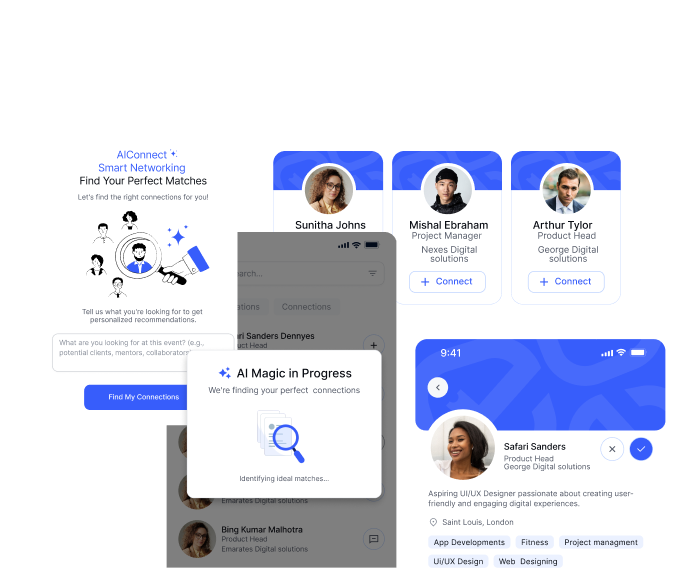
At its core, AI event matchmaking is the application of machine learning algorithms to attendee, exhibitor, and sponsor profile data to recommend highly relevant, mutually beneficial connections. Unlike older, filter-based matchmaking directories that require users to manually sift through thousands of names, AI-driven platforms act as smart curators, predicting which participants will find mutual value in meeting.
How AI Matchmaking Differs from Traditional Networking
Traditional networking relies heavily on serendipity—bumping into the right person at a coffee station or striking up a conversation during a lunch queue. While charming, serendipity does not scale and is highly inefficient. Filter-based matchmaking platforms improved on this by allowing searches by industry, job title, or location, but they still suffered from low engagement because they required manual, repetitive effort. AI event matchmaking, on the other hand, is active and adaptive. It learns from real-time behaviors—such as which profiles a user views, ignores, or interacts with—to refine and personalize its recommendations continuously as the event unfolds.
Want to see attendee matching in action? Book a 30-minute EventHex demo and we’ll walk through how Smart Connect would work for your event.
Why Traditional Event Networking Fails
Before understanding the cure, we must diagnose the disease. Traditional event networking environments are fundamentally flawed in three distinct areas: cognitive overload, social anxiety, and poor data tracking.
The “Awkward Mixer” Problem
For many attendees, walking into a room of 500 strangers during a cocktail reception is a source of intense anxiety, not excitement. Extroverts may thrive, but introverts, specialists, and key decision-makers often retract, sticking to colleagues they already know. This leads to a massive waste of networking potential and leaves attendees feeling that the event was not worth their time.
Why Business Card Swapping is Dead
Collecting a stack of fifty physical business cards is no longer a metric of networking success. The vast majority of these cards end up forgotten in drawers or discarded. In 2026, professional networking is digital, instantaneous, and integration-ready. If a connection cannot be seamlessly logged into a CRM or a professional database on the spot, it practically does not exist.
Unlocking Measurable Business Value Across Key Stakeholders
The transition to intelligent networking delivers profound, measurable benefits across all three core segments of the event ecosystem: attendees, sponsors/exhibitors, and organizers.
| Stakeholder | Traditional Pain Point | AI Matchmaking Solution | Primary Business Impact |
|---|---|---|---|
| Attendees | Wasted hours, awkward interactions, low-value meetings. | Curated lists of top compatible matches with 1-click meeting scheduling. | High-value networking, maximum ROI, clear partner sourcing. |
| Sponsors & Exhibitors | Passive booth traffic, cold lead generation, low conversion. | Pre-scheduled meetings with pre-qualified buyers actively seeking their services. | Accelerated sales cycles, documented lead pipeline, higher contract values. |
| Event Organizers | Difficulty proving event value, attendee churn, manual matchmaking labor. | Automated coordination, comprehensive backend analytics dashboards. | Increased rebooking rates, reduced overhead, data-backed event growth. |
Core Benefits of AI Event Matchmaking for Organizers and Attendees
Implementing an advanced matchmaking suite delivers immense, quantifiable benefits across the entire event ecosystem.
Multiplied Return on Investment (ROI)
For attendees, the number one metric of event success is the quality of people they met. When they secure five high-value deals or partnerships directly facilitated by smart recommendations, their perceived ROI skyrockets. For organizers, this translates directly into higher retention rates for subsequent events, positive word-of-mouth, and powerful testimonials.
Hyper-Targeted Match Recommendations
AI models analyze vast datasets—including LinkedIn profiles, registration questionnaires, past session attendance, and stated goals—to output highly specific, categorized recommendations. Whether an attendee is looking for a technology vendor, a co-founder, an investor, or a mentor, the AI cuts through the noise, matching the exact supply with the exact demand.
Structured B2B Meeting Scheduling
Matchmaking isn’t just about suggesting names; it’s about executing connections. Modern platforms integrate calendar scheduling tools directly within the event interface. Once a match is accepted, the system automatically schedules a slot, assigns a dedicated meeting table or virtual room, and sends reminders, eliminating the endless back-and-forth emails.
Inside the Matchmaking Engine: How the Algorithms Work
Modern event recommendation engines employ several sophisticated computer science models to process data and generate high-value match listings:
1. Natural Language Processing (NLP) & Semantic Search
When an attendee registers through a system like EventHex Event Registration, they typically write a brief biography, specify their industry, and write a sentence describing what they want to achieve (e.g., “Looking to source robust cloud-based ERP solutions with localized compliance features”). NLP algorithms process this unstructured text, map the terms to a multidimensional vector space, and perform semantic analyses that look beyond exact keywords. For example, the AI understands that a query for “supply chain logistics” has deep synergy with a provider listing “inventory management automation” even if the exact words do not match.
2. Collaborative Filtering & Behavioral Tracking
Just as consumer entertainment services recommend movies based on what similar users enjoyed, event AI learns dynamically. By tracking how attendees interact with the mobile app—such as which profiles they view, whose meeting invitations they accept, and which sessions they bookmark—the machine learning model continuously refines its understanding of user preferences. If several attendees with profiles highly similar to yours are requesting meetings with a specific cybersecurity startup, the system will dynamically elevate that startup in your recommendations.
3. Multi-Objective Optimization
True B2B matchmaking is rarely symmetrical. An investor wants to meet early-stage founders; founders want to meet institutional capital. A vendor wants to pitch enterprise decision-makers; those decision-makers may want to prioritize educational sessions or peer-to-peer networking. The AI engine must balance these competing dynamics, ensuring that recommendations are mutually beneficial or structured to prevent high-profile buyers from being overwhelmed by unqualified solicitations.
How EventHex.ai Leverages Smart Matchmaking Technology
As an industry-leading event experience suite, EventHex.ai has built its core philosophy around intelligent, automated connections. We understand that networking is the lifeblood of B2B conferences, and we have designed our platform to maximize its impact.
The EventHex Attendee Networking Suite
Our native networking suite incorporates dynamic recommendation carousels, instant chat functionalities, and an integrated calendar system. Attendees receive daily digests of the top five people they should meet, along with clear reasons why the AI recommended them (e.g., “Both of you are working on LLM operations in the event sector”). This context makes initiating a conversation natural and frictionless.
Integrating Ticketing with Matchmaking
One of the unique strengths of EventHex is the seamless integration of our event registration platform with our matchmaking suite. The moment an attendee purchases a ticket, the AI begins onboarding them, using their registration answers to construct their networking profile. There are no secondary apps to download or complex account creation steps—everything is unified under a single, cohesive experience.
Step-by-Step Guide to Implementing AI Matchmaking at Your Next Event
If you are planning a conference or trade show, here is how to deploy a successful AI matchmaking pipeline.
1. Setting Clear Profiles and Goals
The success of any AI model depends entirely on the quality of its input data. Ensure your registration forms capture clear, structured data. Ask attendees not just what their title is, but what their primary goals are (e.g., “I am looking to buy cloud storage solutions” or “I am seeking strategic investment”).
2. Pre-Event Engagement Campaigns
Do not wait until the event starts to launch networking. Open the matchmaking platform 7 to 10 days before the doors open. This allows attendees to browse matches, send meeting requests, and build their schedules in advance, ensuring they arrive on day one with a fully packed, high-value agenda.
3. Dynamic On-Site Matchmaking Nodes
Create dedicated physical spaces at your venue for scheduled meetings. Numbered tables, lounge areas, or “matchmaking zones” managed by the platform ensure that attendees can find each other instantly, without wandering around a crowded exhibition hall.
4. Post-Event Relationship Nurturing
The networking shouldn’t stop when the venue lights go down. Allow attendees to access their match history, export contact details to their CRMs, and continue discussions post-event. This transforms your event from a one-off gathering into a continuous, active professional community.
Best Practices for Boosting Networking Adoption Rates
- Gamify the Connection Process: Introduce leaderboard points or achievement badges for attendees who complete scheduled meetings, driving up participation.
- Keep the Interface Simple: Avoid complex, multi-layered menus. The core matchmaking card should be clean, visual, and require only a simple swipe or click to show interest.
- Send Timely Push Notifications: Use smart reminders on attendees’ phones 10 minutes before their scheduled meetings to reduce no-show rates.
Frequently Asked Questions
Is attendee data safe on AI matchmaking platforms?
Yes, security and privacy are top priorities. Leading platforms like EventHex.ai operate under strict GDPR and CCPA compliances, ensuring attendee data is encrypted, never shared with unauthorized third parties, and that attendees have full control over what information is visible to others.
How do you handle no-shows for scheduled meetings?
To minimize no-shows, systems employ automated SMS and push notifications, integrated calendar syncing, and a simple one-click cancellation or rescheduling button. Additionally, organizers can set up help desks near the matchmaking zones to assist stranded participants.
Does matchmaking work for virtual and hybrid events?
Absolutely. In virtual and hybrid formats, AI event matchmaking is even more critical because physical proximity is absent. The platform automatically sets up secure, built-in video rooms for virtual meetings, allowing remote and in-person attendees to connect seamlessly.
Conclusion
AI event matchmaking is no longer a luxury feature—it is a fundamental expectation of modern event attendees. By replacing serendipity with data-driven precision, organizers can deliver undeniable ROI, foster genuine professional relationships, and build high-retention event brands. Ready to see how EventHex.ai can revolutionize your event’s networking experience? Visit our Centralized Dashboard overview or request a demo today!