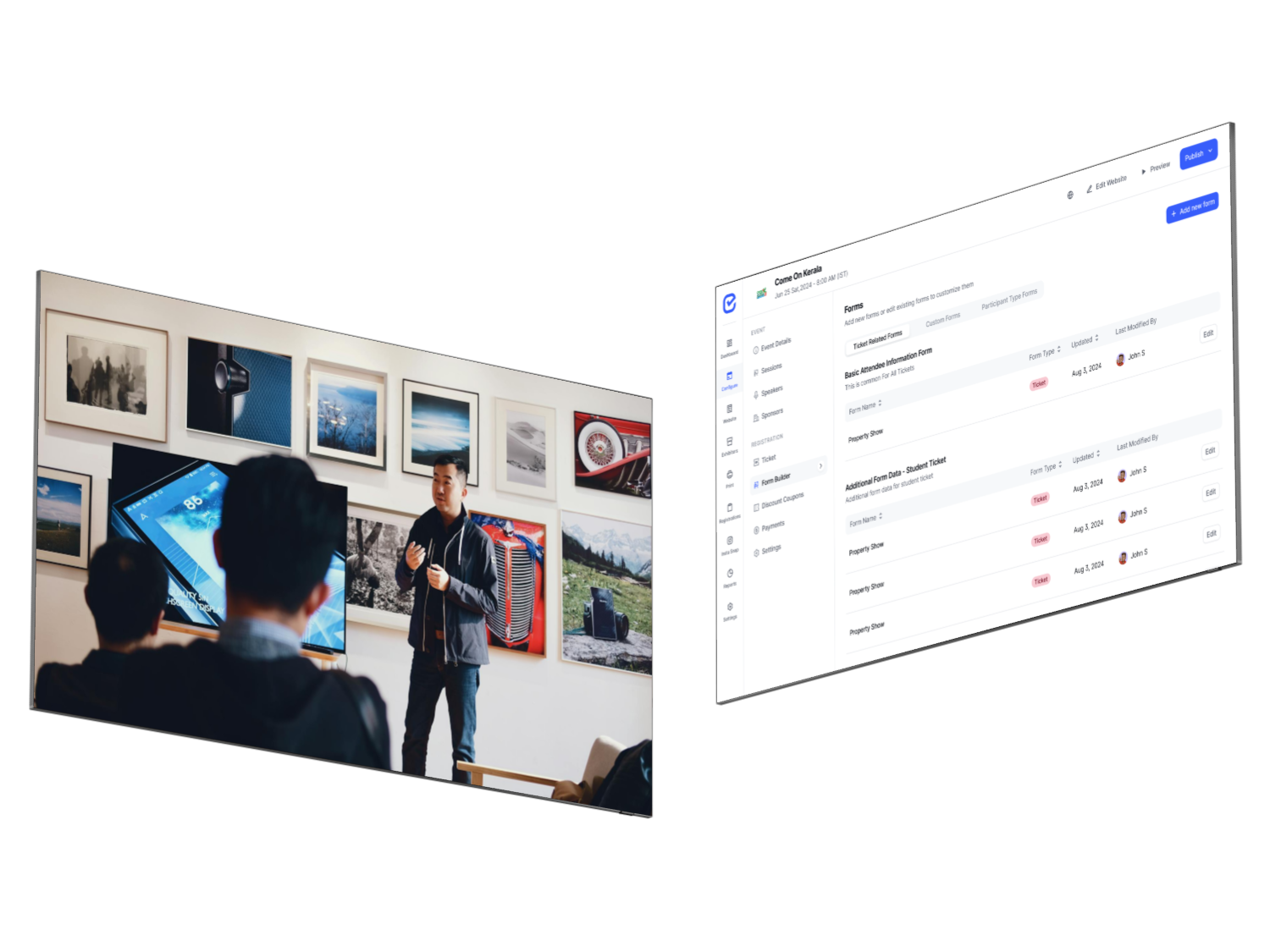
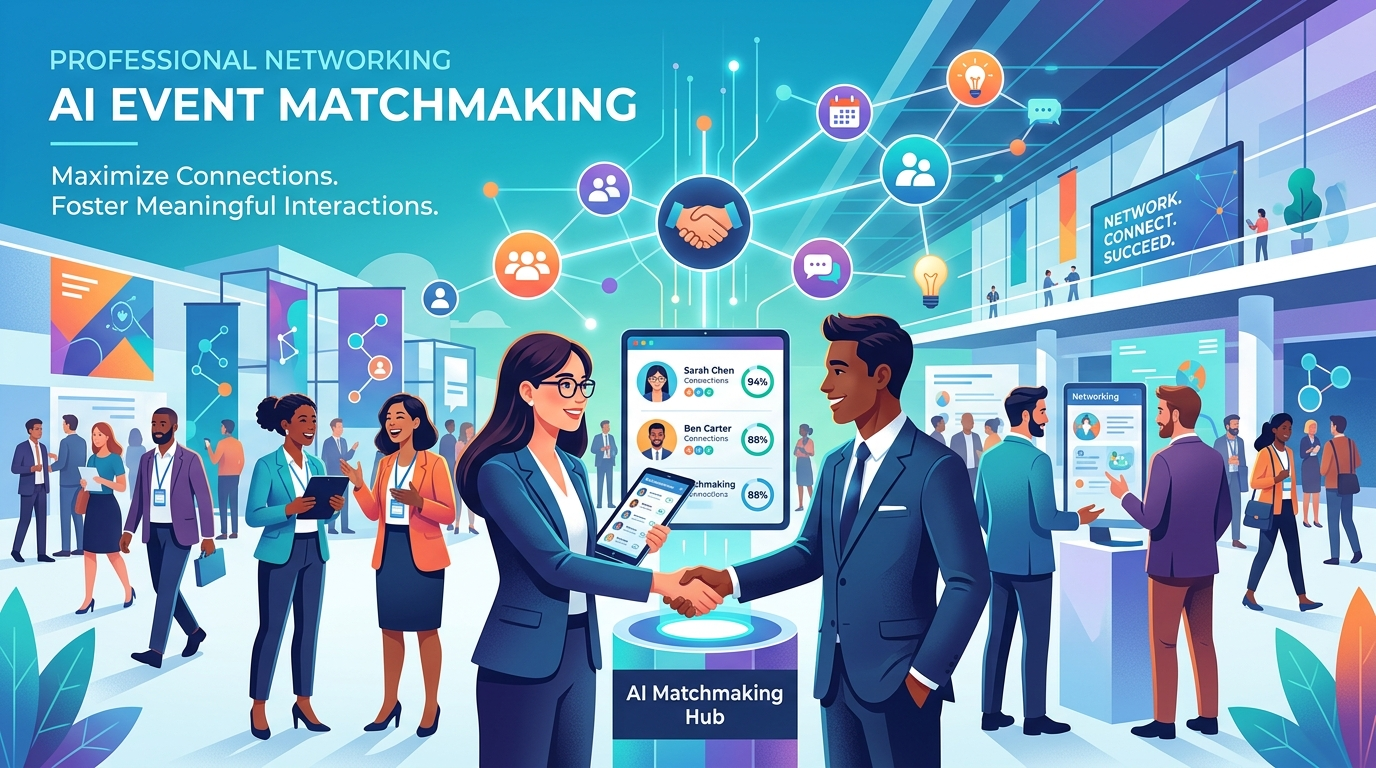
For decades, the lifeblood of any B2B conference, trade show, or corporate summit has been networking. It is the primary reason why industry leaders, buyers, and sellers buy expensive tickets and board flights. In fact, professional associations report that over 75% of attendees list networking as their primary objective. Yet, behind the scenes, event organizers have long harbored a stressful secret: traditional event matchmaking is a logistical nightmare that frequently yields disappointing results.
Typically, event hosts rely on “manual matchmaking.” This laborious process involves extracting attendee lists, cross-referencing industry categories, manually pairing individuals in Excel sheets, and sending dozens of back-and-forth calendar invitations. It is slow, highly error-prone, and scales incredibly poorly. For the attendee, it often feels like a lottery; they are left wandering a crowded foyer, relying on serendipity or a random name-badge encounter to find a complementary business partner.
Today, the industry is undergoing a massive shift. High-performing event organizers are replacing manual spreadsheet chaos with modern AI event matchmaking. By utilizing real-time data analysis and personalized preference routing, B2B event organizers are delivering unprecedented attendee satisfaction and easily provable sponsor ROI. Let’s delve deep into why this transition is occurring, compare the mechanics of both systems, and look at how platforms like EventHex are leading this revolution.
The Fragile Mechanics of Manual Matchmaking
To understand why organizers are switching, we must first dissect the fundamental flaws of the manual matchmaking process. Manual matchmaking is defined by human-driven coordination. At a typical B2B event, the organizer distributes a survey during the event registration phase, asking attendees what they offer and what they seek. Once the registration closes, the marketing or ops team spends days sorting, grouping, and attempting to pair hundreds of buyers with sellers.
The Administrative Bottleneck
If you have 500 attendees, the theoretical number of unique two-way pairings exceeds 124,000. It is physically impossible for a human coordinator to analyze every permutation. As a result, coordinators resort to blunt categorizations (e.g., grouping all “Software Providers” with all “Retailers”), missing the fine-grained nuances that determine actual business compatibility.
High Cancellation and Friction Rates
Once pairs are manually selected, scheduling begins. Schedulers must coordinate individual calendars, allocate physical tables, and notify both parties. If one attendee drops out or requests a schedule change, the entire house of cards collapses, requiring a coordinator to manually rebuild several meeting slots in real-time. Unsurprisingly, industry surveys indicate that over 50% of manual matchmaking requests go unanswered or result in no-shows.
The Zero-Data Void
When the event ends, manual matchmaking offers no analytical insights. Organizers are left wondering: Did the meetings actually take place? Were they valuable? What was the pipeline generated? Without solid metrics, demonstrating return on investment (ROI) to sponsors becomes an uphill battle of subjective surveys and vague testimonials.
The AI Event Matchmaking Revolution
AI event matchmaking turns this dynamic on its head. Instead of relying on human sorting, an AI matchmaking engine instantly processes multidimensional profile data to suggest highly relevant networking pairs. Let’s look at how this operates at a technical level using a modern platform like EventHex’s AI Smart-Connect.
Under the hood, the AI doesn’t just look at broad category tick-boxes. It runs a deep semantic analysis of attendee profiles, historical interactions, professional goals, and specified industries. If a buyer writes in their registration bio that they are looking to solve “supply chain localization issues using robotic automation,” and an exhibitor specializes in “warehouse picking robotics,” the AI immediately scores this connection as a high-relevance match.
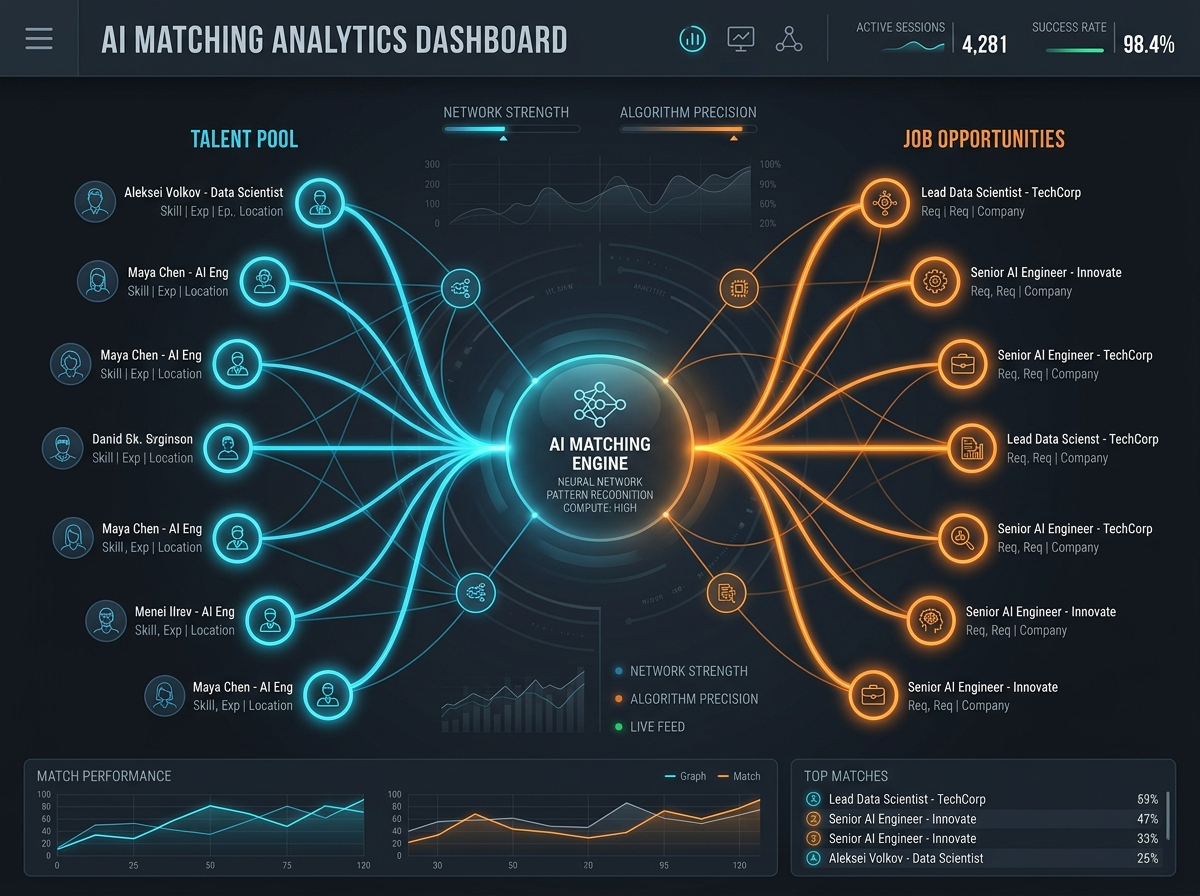
By shifting to an automated AI system, event organizers unlock five core benefits that are completely unavailable to manual processes:
- Hyper-Personalized Pairings: The system identifies non-obvious synergies, aligning professional aspirations, mutual availability windows, and decision-making capabilities.
- Automated Self-Service Scheduling: Attendees use a dedicated interface to accept or decline matches. The system instantly books mutual time slots, automatically checking for calendar conflicts.
- Proximity and Real-Time Refinement: Modern AI networking apps can utilize real-time interactions, feeding back acceptance rates to optimize suggestions dynamically as the event unfolds.
- Time Efficiency: Wasted conversations are eliminated. Attendees walk into scheduled 1:1 sessions with a clear, shared agenda, drastically accelerating the sales cycle.
- Granular Analytics: Organizers can access a centralized dashboard showing total scheduled meetings, completion rates, connection quality scores, and real-time sentiment analysis.
Side-by-Side Comparison: Manual vs. AI Networking
To help visualize why the industry is abandoning manual systems, let’s compare the operational metrics of both approaches side-by-side:
| Operational Dimension | Manual Matchmaking | AI-Powered Networking |
|---|---|---|
| Data Processing Capacity | Extremely limited (typically under 150 attendees) before breaking down. | Virtually limitless scale. Processes thousands of profiles in seconds. |
| Matchmaking Relevance | Surface-level, based on broad, generic industry tick-boxes. | Deep semantic analysis of open-text biographies, interests, and goals. |
| Scheduling Friction | Heavy. Manual calendar coordinating, emails, and physical table assigning. | Zero friction. Automated conflict checking and instant table booking. |
| Adaptability to Changes | None. A single cancellation forces manual reassignment of multiple slots. | Instant. AI dynamically re-routes agendas and reassigns tables on the fly. |
| Post-Event Measurability | Vague and subjective (basic post-event email surveys). | Hard transactional data: completed meetings, contact exchanges, and ROI. |
According to comprehensive 2026 event tech industry reports, switching to AI matchmaking results in a 170% to 200% increase in connection acceptance rates at B2B trade shows. For major global event organizers like Clarion Events, implementing an AI matchmaking layer produced a 44% year-over-year increase in verified in-person meetings completed. These are not marginal gains; they are transformative shifts that redefine event economics.
Why B2B Event Hosts Are Switching: The Strategic Drivers
The transition is not just driven by a love for technology; it is pushed by real economic and strategic pressures that modern event hosts must face.
1. The Demand for Provable Sponsor ROI
Gone are the days when sponsors would pay tens of thousands of dollars just to put a logo on a banner or a physical booth in a quiet corner of the hall. In 2026, over 95% of event teams state that proving ROI is their absolute top priority. Sponsors demand qualified leads and documented meetings. An AI-powered matchmaking system provides an undeniable paper trail of success. It allows organizers to hand sponsors an analytical breakdown of precisely how many qualified buyers they were connected with, complete with satisfaction ratings.
2. Alleviating Event Operations Fatigue
Organizing a high-profile corporate event is incredibly stressful. Manual matchmaking adds a massive layer of logistical friction right when the team needs to focus on speaker management, production, and venue operations. Moving matchmaking to an automated AI platform frees up hundreds of staff hours, reducing pre-event operational anxiety and minimizing human coordination mistakes.
3. Breaking the Ice with Automated Prompts
Even at high-level executive summits, starting a conversation can be awkward. Traditional networking relies entirely on the extroversion of the individual. AI systems like EventHex bridge this gap beautifully by generating personalized, AI-driven conversation starters. By analyzing shared professional histories and complementary interests, the app prompts both parties with lines like, “You are both exploring local warehouse automation to combat labor shortages—here is where your profiles align.” This breaks the ice instantly, ensuring the meeting kicks off with high-value momentum.
EventHex AI Smart-Connect: The Modern Standard
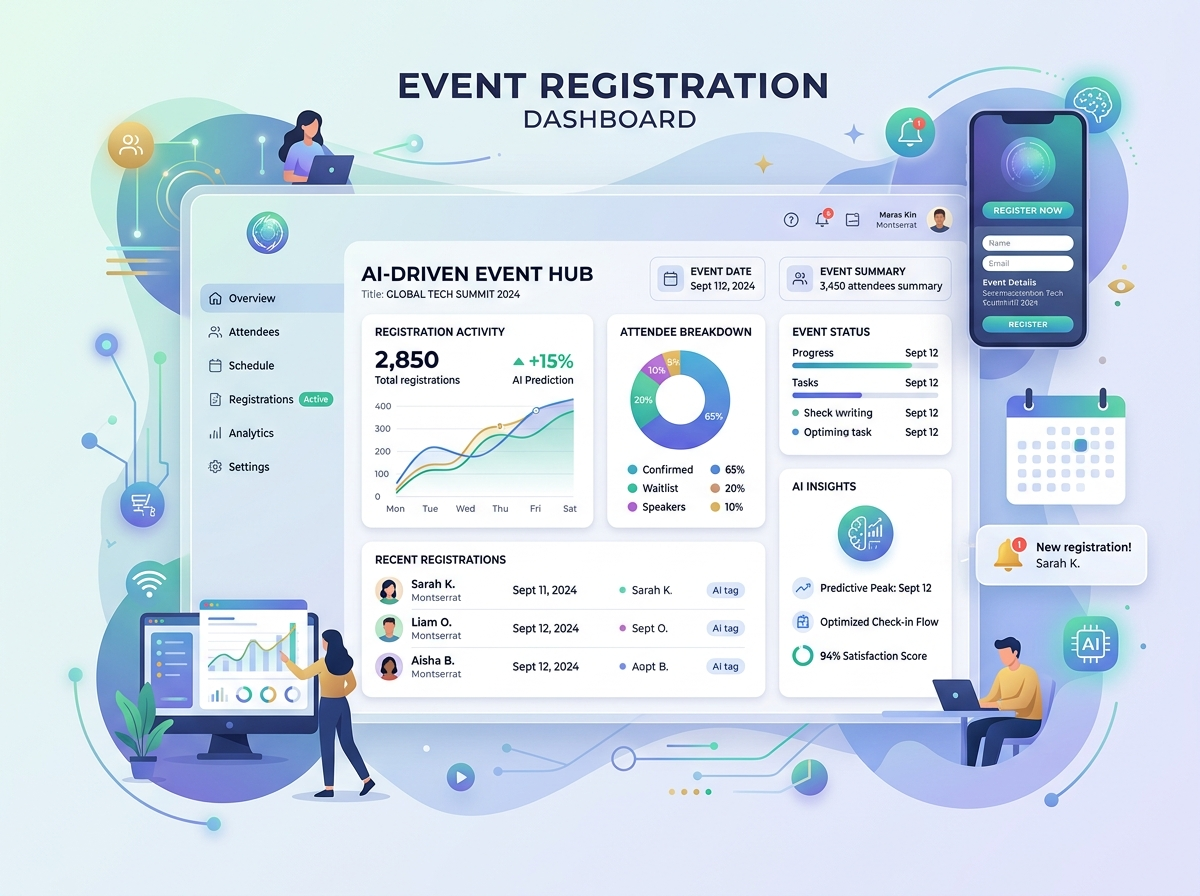
If you want to move away from the chaos of manual spreadsheets, EventHex AI Smart-Connect provides the ultimate enterprise-grade solution. Seamlessly integrating into your entire event lifecycle—from initial smart registration to real-time on-site matchmaking and complete post-event reporting—EventHex ensures every participant walks away with high-value, actionable connections.
Unlike standalone matchmaking apps that create fragmented data silos, EventHex operates as an all-in-one event management suite. When an attendee registers, their data immediately populates the AI profiling engine. The centralized dashboard serves as the single source of truth for organizers, visualizing match trends, meeting schedules, and analytics in real-time. Attendees are guided by a premium mobile app that provides live proximity notifications, digital business card exchanges, and custom schedules, creating a fluid, professional networking experience.
Frequently Asked Questions (FAQ)
Q: How does AI event matchmaking differ from standard event networking?
A: Standard networking is open, unstructured, and relies largely on chance encounters during coffee breaks or receptions. AI event matchmaking is a structured, data-driven approach that uses machine learning algorithms to analyze attendee profiles, goals, and interests to schedule highly relevant 1:1 meetings automatically.
Q: Can attendees customize their networking preferences in EventHex?
A: Yes, absolutely. During registration or via the mobile app, attendees can define their specific networking objectives, target industries, mutual interests, and set their exact calendar availability. The AI Smart-Connect engine respects these constraints perfectly.
Q: Does AI matchmaking support hybrid or virtual events?
A: Yes. EventHex AI Smart-Connect is built to handle in-person, virtual, and hybrid formats. For physical events, it coordinates physical table bookings and on-site proximity alerts; for virtual components, it seamlessly integrates video conferencing and direct chat rooms.
Q: How do sponsors benefit from AI matchmaking?
A: Sponsors receive measurable, direct value. Instead of hoping attendees wander by their booth, sponsors are matched with highly qualified, pre-vetted buyers who have a stated demand for their solution, resulting in pre-scheduled high-value sales meetings.
Q: How does the AI generate conversation starters?
A: The AI scans matching attendee profiles, identifying shared background traits, complementary professional goals, or common industry challenges, and automatically suggests tailored icebreakers directly inside the mobile app to ensure a highly productive conversation.