
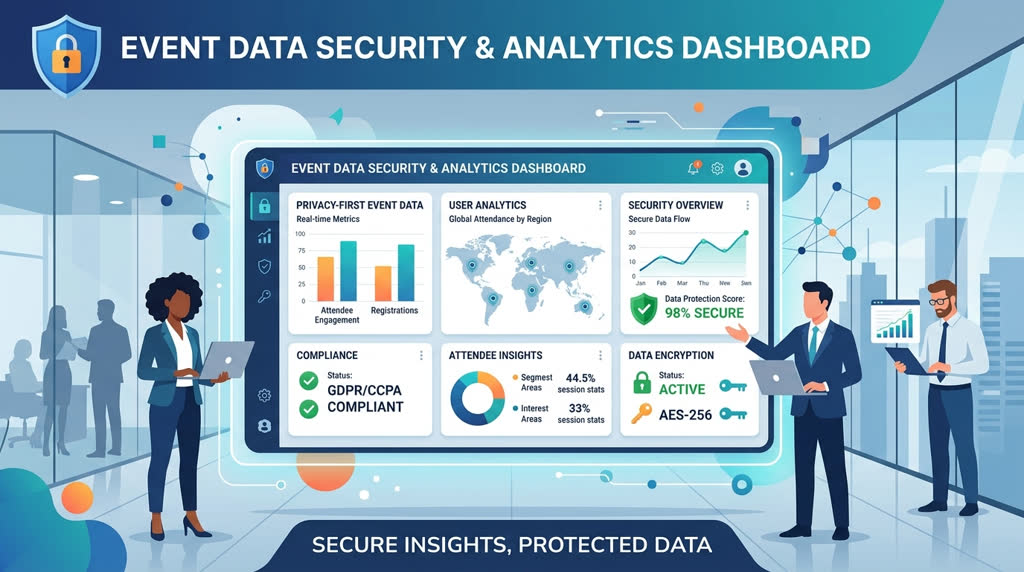
The professional events industry is in the midst of a massive, quiet revolution. For years, event organizers, event marketers, and corporate stakeholders operated under a “track-everything” paradigm. They relied on dropping invasive third-party cookies, building shadow tracking profiles, and collecting vast swathes of personal information without clear consent.
However, in 2026, the intersection of aggressive regulatory updates, browser-level technical enforcements, and fundamentally changed consumer expectations has rendered traditional analytics approaches obsolete.
The European Data Protection Board (EDPB) launched its 2026 Coordinated Enforcement Framework (CEF), focusing directly on compliance with GDPR transparency rules. Across the Atlantic, the CCPA and a growing patchwork of state-level US privacy acts have closed prior tracking loopholes. Technically, third-party cookies are experiencing final deprecation, with standard mobile browsers blocking cross-site storage by default. Over 85% of Safari and Firefox users now enjoy standard tracking prevention, and security-savvy chrome users are following suit.
If you are an event manager operating a legacy event analytics platform, you are likely facing a severe data crisis. When you implement legally compliant consent mechanisms, 30% to 60% of your attendee traffic suddenly becomes completely invisible because they reject tracking cookies. Crucially, the attendees who decline consent are not random; they tend to be high-value, tech-savvy corporate buyers—the exact demographic you need to measure.
To survive and thrive in this new landscape, event hosts must transition to a privacy-first, consent-centric, and first-party event analytics strategy.
The Death of the Cookie: Why Event Tracking Changed Forever in 2026
For over a decade, digital marketers and event planners used a common set of invisible trackers to follow visitors from initial ad impressions to landing pages, registration forms, and across the physical or virtual venue. These behavioral logs were aggregated by third-party systems to calculate ROI.
This tracking was flawed in three ways:
- Regulatory Non-Compliance: Regulators are now imposing billions of dollars in fines for non-consented tracking. Any system that routes personal identifier data (PII) to multi-tenant ad platforms without granular consent violates the core tenets of the GDPR and ePrivacy directive.
- Technical Obstruction: Browser engines have largely built walls around their storage buckets. Cross-site tracking is technically dead. Even if a user ignores a consent banner, standard modern browsers actively discard third-party cookies and shorten the lifespan of client-side first-party storage.
- Attendee Backlash: Modern event attendees are hyper-aware of data collection. It is reported that up to 79% of corporate consumers express severe concern over how their data is handled. A complex, untrustworthy registration process containing multiple invasive trackers triggers abandonment and damages brand reputation.
The answer is not to search for technically complex workarounds to bypass user choices. The sustainable solution is to shift to a privacy-first, cookieless, and consent-driven event tracking model.
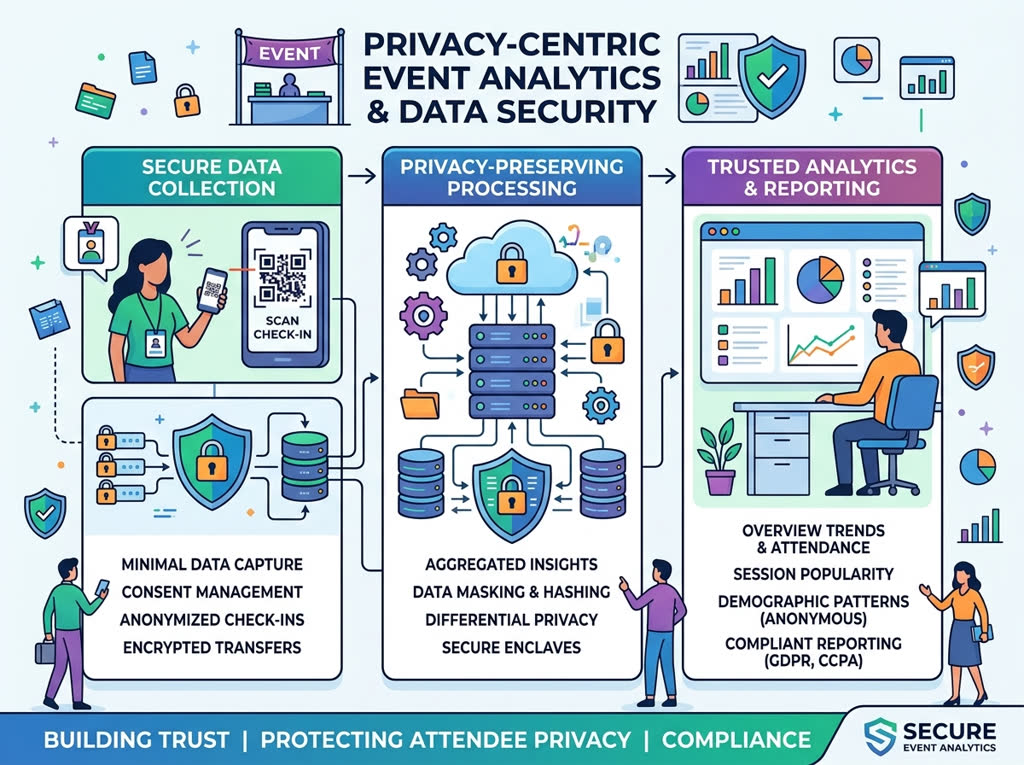
1. Dynamic, Granular Consent Flows at Registration
The first line of defense is the registration form itself. Legally, “bundled consent”—where agreeing to buy a ticket automatically opts the attendee into promotional marketing, partner data-sharing, and behavioral tracking—is strictly prohibited under modern enforcement standards.
In 2026, compliance demands that registration form builders implement dynamic, granular opt-ins. This means that:
- The transaction is separate from the tracking: Attendees must be allowed to complete their registration even if they opt out of all tracking, marketing, and profiling.
- Ticketing requirements are clearly specified: Collecting standard registration details (such as names, emails, and payment information) to fulfill a ticketing contract is legally justified under “contractual necessity.” However, behavioral profiling and sharing leads with exhibitors are not, requiring explicit, active, and affirmative consent.
- Consent must be granular: Attendees must have independent toggle control over specific categories of data processing, such as event operations, email newsletters, partner matches, and behavioral on-site analytics.
By decoupling consent from ticket sales, organizers respect attendee choices and establish high-value trust.
Additionally, modern systems must allow attendees to easily withdraw their consent at any point in the event lifecycle, providing automated “Opt-Out” or “Right to be Forgotten” self-service interfaces.
2. Transitioning to First-Party and Zero-Party Data
Because third-party data is no longer reliable, the industry has shifted to first-party data (data you collect directly through your own channels) and zero-party data (information that attendees proactively and intentionally share with you).
Instead of guessing attendee interests by tracking their browsing behavior with hidden pixels, event hosts are simply asking them during key interactions.
- Strategic Form Fields: Tailor your ticket forms to ask high-value, structured questions like “What major industry challenge are you looking to solve this quarter?” or “Which session tracks are you most excited about?”
- Interactive Live Features: Proactively engage your audience during live keynotes and panel discussions using live interactive polls. This zero-party feedback provides immediate behavioral insight without requiring permanent personal profiling.
- First-Party Authentication: Moving to authenticated, secure user accounts on your event website ensures that any activity tracked (such as saving a session to a personal schedule) is tied to a direct, consensual relationship.
This first-party foundation is technically resilient because it does not rely on third-party cookies, making it completely immune to browser-level tracking blocks. Collecting zero-party data directly minimizes data pollution, as the information comes straight from the source with zero algorithmic inferences.
3. Server-Side Tagging and Cookieless Session Metrics
Traditional web tracking relies on client-side scripts running directly in the visitor’s browser. These scripts send event payloads straight to external third-party ad networks and analytics platforms. In 2026, ad-blockers and privacy-focused browsers regularly intercept these outbound network requests.
The modern standard is Server-Side Tagging (SST).
Under an SST framework, client-side actions are sent directly to a single, secure cloud container hosted on your own subdomain. Your server receives the data, cleanses it of personal identifiers (such as raw IP addresses or device fingerprints), and then routes only anonymized, aggregated event data to external partners.
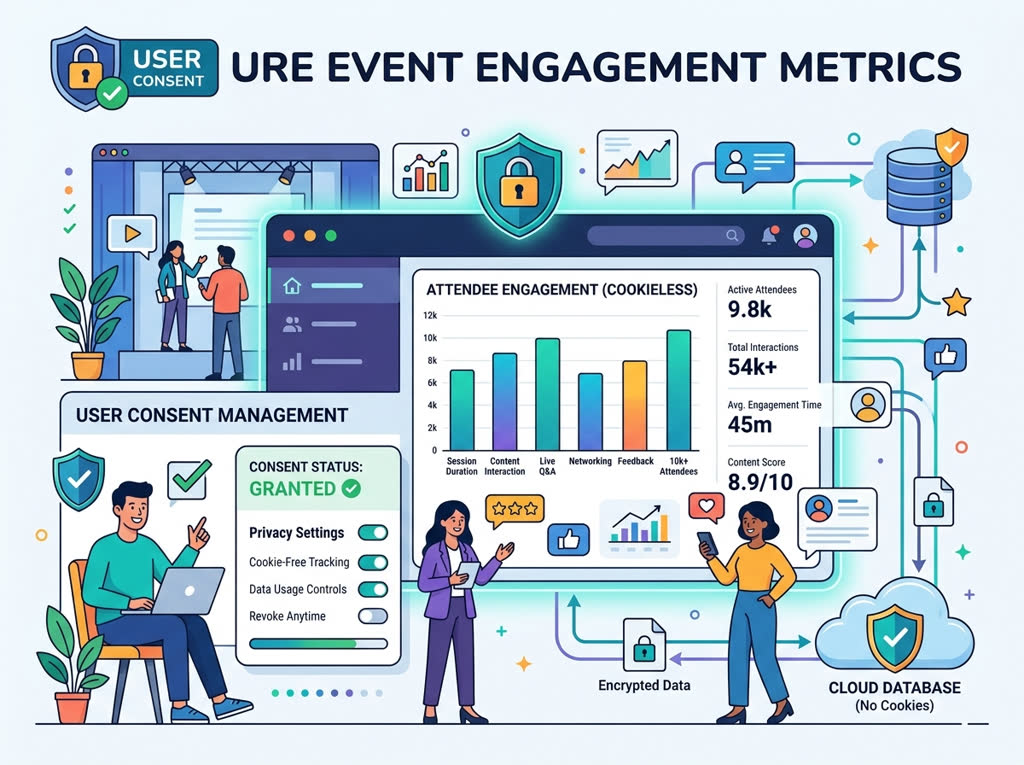
By using server-side tagging, event hosts retain complete ownership and control over their data flow, ensuring that no unconsented PII is ever leaked to third-party ad platforms. Furthermore, this server-side routing speeds up page load times on mobile devices, improving core web vitals and overall registration conversion rates.
EventHex: The Elegant, Privacy-First Solution for Modern Organizers
As compliance requirements grow more complex, trying to piece together a compliant infrastructure using separate form builders, analytics tools, and consent managers becomes an administrative nightmare. You need a unified, clean tool built for the modern era.
This is where EventHex stands apart.
EventHex is not just a ticketing software; it is a comprehensive, modern event analytics platform built from the ground up with a privacy-by-design architecture. It gives organizers complete visibility over registration trends and attendee behavior without violating global privacy standards.
Lightweight, Compliant Ticket Forms
With EventHex’s intuitive event registration tools, you can construct clean, compliant registration workflows in minutes. EventHex separates contractual necessity from marketing consent, providing customizable, granular consent checkboxes out-of-the-box. Your forms remain lightweight, fast, and secure.
The Centralized Compliance Dashboard
Instead of spreading attendee details across multiple legacy systems, EventHex provides a powerful centralized dashboard that acts as your single source of truth.
- Monitor registration counts, ticket revenue, and compliance rates in real time.
- Securely manage, search, and audit attendee consent preferences with transparent, exportable data trails.
- Instantly generate compliance reports that prove your event handles subscriber data in absolute accordance with modern GDPR standards.
By utilizing EventHex, event organizers can stop worrying about technical tracking updates and focus entirely on creating spectacular, trust-driven attendee experiences.
Frequently Asked Questions (FAQ)
What is a privacy-first event analytics platform?
A privacy-first event analytics platform is a system designed to measure event registrations, website traffic, and session engagement without relying on invasive tracking cookies or building cross-site behavioral profiles. It prioritizes user consent, data minimization, and secure first-party data ownership.
How do I make my event registration forms GDPR-compliant in 2026?
To ensure complete GDPR compliance, you must separate marketing and tracking consent from the ticket purchase flow. Provide clear, un-ticked granular options for different categories of processing, display a concise privacy policy link, and allow attendees to easily manage or withdraw their consent at any time.
Can I still measure event ROI without third-party cookies?
Yes. By focusing on first-party data (registration inputs, secure user accounts) and zero-party data (live polls, feedback forms), you can collect high-quality, high-intent engagement data directly from attendees. This data is far more accurate and technically durable than legacy cookie-based tracking.
Why is server-side tracking safer for attendee data?
Server-side tracking allows you to intercept client-side events on your own secure server before routing them to external tools. This lets you strip out sensitive personal identifiers (such as raw IP addresses) and ensures that only secure, anonymized data is shared with third parties.
Conclusion
Data privacy is no longer an administrative hurdle to overcome with clever workarounds—it is a competitive advantage. Event hosts who respect their attendees’ data choices build lasting brand authority, increase long-term retention, and secure highly accurate, compliant datasets.
If you are ready to modernize your event technology stack, transition to a compliant, powerful event analytics platform that works for you. Join leading corporate teams worldwide and launch your next secure, stunning event experience on EventHex.ai today.