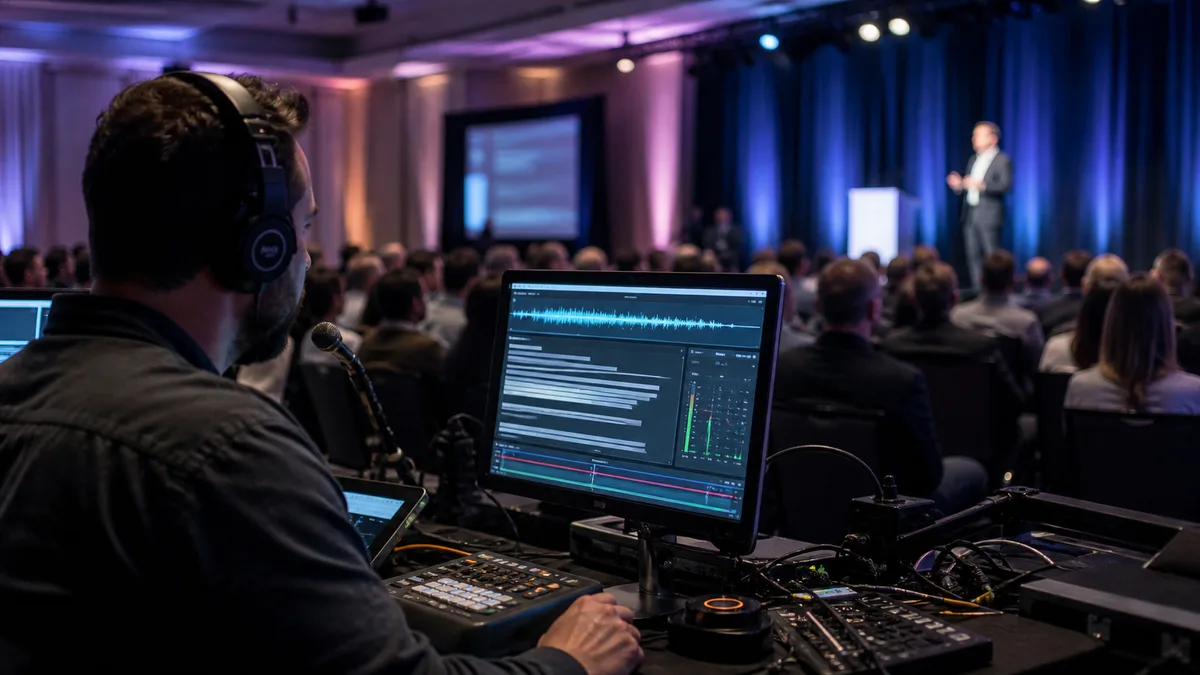
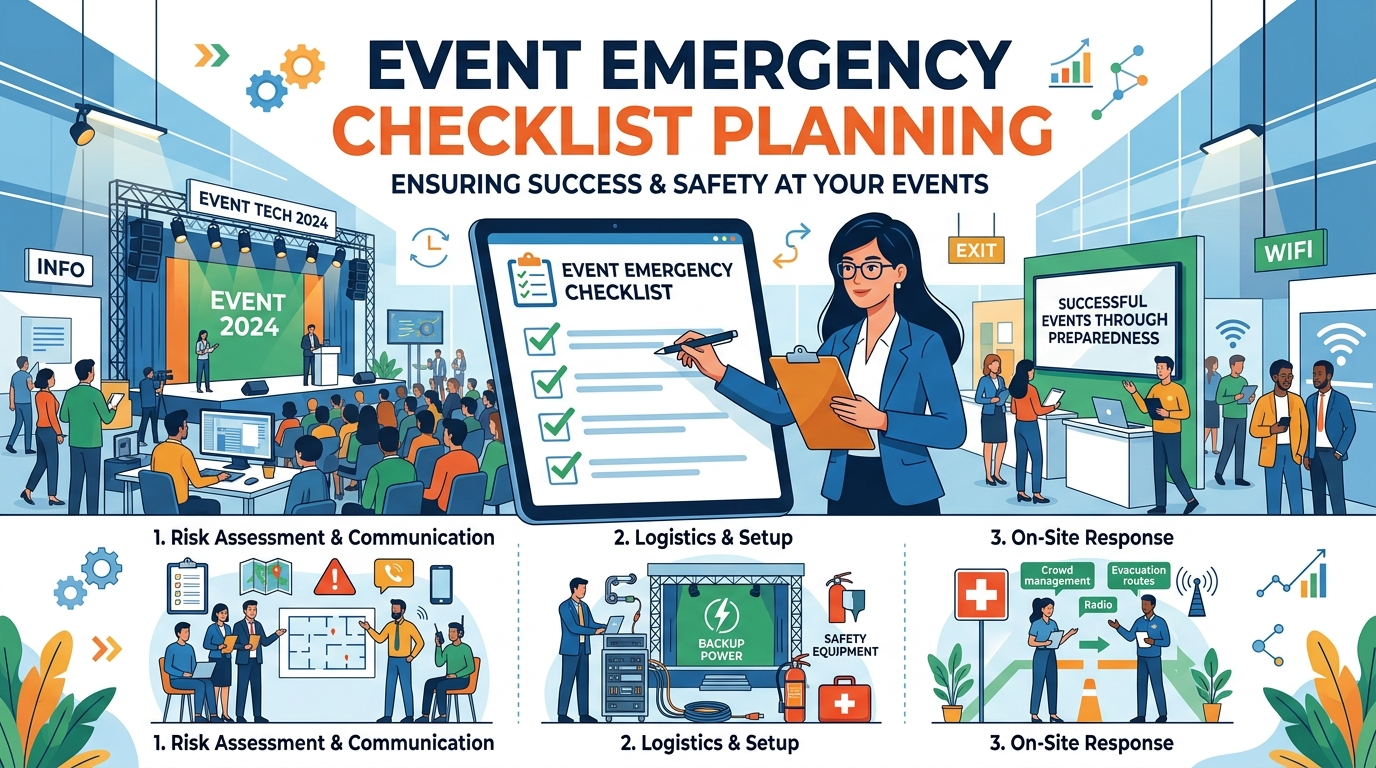
Imagine this: months of meticulous preparation, countless budget approvals, and endless coordinate calls culminate in your flagship annual conference. The keynote speaker is about to step onto the stage, the venue lights dim, and suddenly—absolute silence. The main video wall goes dark, the microphone loses power, and a sudden power surge trips the local circuit breakers. In event planning, success is never defined by the absence of challenges, but by how rapidly and gracefully you resolve them. To prevent these unexpected crises from derailing your hard work, every professional team needs a robust, battle-tested event planning checklist designed specifically for on-site emergencies.
When operations move from the spreadsheet to the physical venue floor, the margin for error collapses. An administrative oversight that was minor in the planning stages can quickly escalate into a full-scale crisis when managing thousands of live attendees. This is where an on-site event emergency checklist becomes your operational shield. Let’s break down the 10 vital items you must include in your on-site event emergency kit to maintain seamless control, safeguard your audience, and protect your brand’s reputation.
1. Redundant Communication Devices (The Multi-Channel Network)
During a live event crisis, cellular networks are the first to fail. When thousands of attendees upload videos or send messages simultaneously, local mobile towers experience massive congestion. Relying solely on cellular-dependent tools like standard smartphones or group chats is a major risk. Your event planning checklist must mandate a multi-tiered communication strategy.
Deploy professional-grade UHF/VHF two-way radios (walkie-talkies) equipped with high-durability discrete earpieces for your core team. Ensure you establish separate channels for different departments: Security, AV/Production, Registration, and Catering. Always maintain a backup analog communication protocol (such as runner messengers or physical whiteboards at the Centralized Command Office) to stay fully operational if hardware issues occur.
2. The Up-to-Date Incident Response Protocol (IRP)
When an emergency happens, there is no time to debate who is in charge or who should contact emergency services. A comprehensive event planning checklist must feature a printed and laminated copy of your Incident Response Protocol (IRP) inside your show box. This document must clearly define:
- The Chain of Command (who makes the final call on evacuation or delay).
- Evacuation routes, assembly areas, and local utility shut-off locations.
- Direct contact numbers for emergency services, local police, and facility management.
- Clear criteria for minor, major, and critical security or medical incidents.
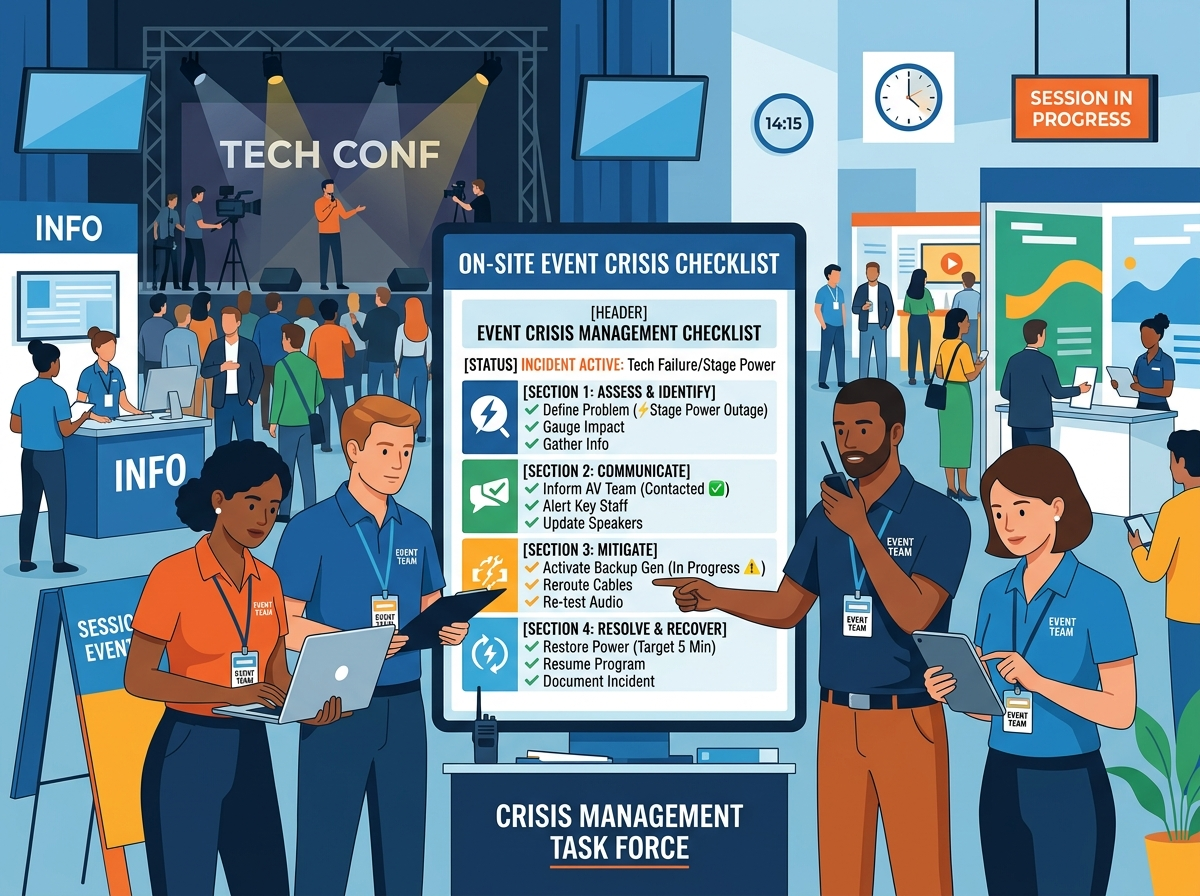
3. On-Site Hardware Registration and Check-in Hubs
Registration congestion is one of the most common on-site bottlenecks, and a hardware failure at the front desk can completely halt your event flow. If your check-in terminals go offline or your badge printers fail, long lines can quickly create security hazards and frustrate attendees before they even enter the venue.
Your on-site kit must include spare network routers, extra Ethernet cabling, and offline-capable check-in devices. Modern event technology like EventHex’s registration systems solves this issue by offering quick barcode/QR scanning and instant badge printing. This ensures that even during unexpected network dropouts, your registration flow continues without delay, keeping your entrance clear and secure.
4. Redundant Power and AV Contingency Kit
Power cuts, faulty adapters, and broken HDMI ports happen far more often than planners care to admit. To prevent complete presentation blackouts, your on-site kit must include:
- Heavy-duty extension cords and multi-plug surge protectors.
- An assortment of video adapters (HDMI, USB-C, DisplayPort, Lightning).
- High-capacity portable power banks for staff devices.
- Extra slide clickers, rechargeable batteries (AA, AAA, 9V), and portable LED flashlights.
5. Professional-Grade Fastening and Repair Supplies
From loose stage carpeting that presents a tripping hazard to a collapsing sponsorship banner, physical wear and tear is inevitable. Your show box must contain professional-grade binding materials. The most important of these is heavy-duty matte gaffer tape, which secures loose cables and resolves fabric or panel breaks without leaving sticky residue on venue floors.
Additionally, stock zip ties in multiple lengths, safety pins for wardrobe emergencies, and double-sided mounting tape. These simple tools allow your team to make rapid, aesthetic, and functional structural fixes during the live event.
6. Dedicated On-Site Medical Kits and First Aid Gear
While major venues often have on-site medical staff, minor physical discomforts (like blisters, headaches, or small cuts) can distract your team and guests. Your event planning checklist must feature a fully stocked, professional first-aid kit.
This kit should include bandages of various sizes, antiseptic wipes, pain relievers, instant ice packs, eye wash solutions, and personal protective equipment (PPE) like sterile gloves and face masks. Ensure your medical kit is easily accessible and its location is clearly marked on your event’s digital maps and signage.

7. Real-Time Security and Crowded Entrance Signage
When crowds build up at entrance ways or specific lecture rooms, clear communication is vital to safety. If an emergency occurs, you must have ready-to-use temporary signage on hand to direct traffic or restrict access. Your emergency checklist should include collapsible easels, directional arrow signs, high-visibility hazard tape, and floor tape for rapid queuing path adjustments.
Providing clear visual markers helps keep crowds moving safely and organized, which is key to preventing accidents and managing stressful situations with ease.
8. Weather Protection and Contingency Gear
For outdoor or hybrid events, sudden weather shifts can quickly threaten attendee safety and destroy expensive electronic equipment. Keep a dedicated stash of emergency rain ponchos, pop-up industrial umbrellas, and heavy-duty plastic tarps to protect outdoor AV equipment and check-in desks. For extreme heat, ensure you have emergency hydration packs and instant cooling towels readily available for your staff and attendees.
9. Comprehensive Offline Event Master Sheets
In a worst-case scenario where local Wi-Fi and mobile networks are completely unavailable, you must be able to run your operations offline. Ensure your physical emergency kit contains printed, laminated sheets of:
- The complete hour-by-hour event schedule and master run sheet.
- An updated list of VIP attendees, sponsors, and key stakeholders.
- The entire vendor contact list with phone numbers and site locations.
- A detailed venue map outlining exits, service elevators, and power mains.
10. Centralized Dashboard and Real-Time Event Data
The ultimate shield against on-site chaos is real-time visibility. When an emergency happens, you need to know exactly how many attendees are currently inside the venue, which entrances are experiencing heavy traffic, and whether your staff is positioned correctly. Modern planners achieve this level of operational control by using unified event management software.
Implementing a centralized event dashboard allows your team to monitor ticket registration, check-in speeds, and crowd movements from a single portal. By having clear, visual metrics at your fingertips, you can make informed decisions under pressure, reallocate staff dynamically, and maintain complete operational control from setup to teardown.
Event Emergency Kit Quick Reference Guide
| Category | Key Items Required | Primary Operational Goal |
|---|---|---|
| Communication | UHF/VHF Radios, Discrete Earpieces, Analog Backup | Ensure uninterrupted, high-security staff coordination during network outages. |
| Operations & Power | Extension Cords, AV Adapters, Battery Power Banks | Prevent tech delays, presentation failures, and device power outages. |
| Fastening & Repair | Gaffer Tape, Zip Ties, Safety Pins, Double-Sided Tape | Quickly fix wardrobe issues, secure cables, and repair minor structural problems. |
| Safety & Medical | First Aid Kit, Hazard Tape, Signage, Rain Ponchos | Safeguard attendee health and manage crowds during unexpected weather or incidents. |
Frequently Asked Questions (FAQ)
What is the difference between an event planning checklist and an emergency kit?
An event planning checklist is a strategic guide that covers the entire lifecycle of your event, from budget planning to marketing. An event emergency kit, or show box, is a physical collection of tools, repair supplies, and protocols that your team keeps on-site to resolve immediate problems and crises during the live event.
How often should we update our incident response protocol?
Your incident response protocol should be reviewed and updated before every single event. This is because every venue has unique layouts, evacuation routes, local emergency contacts, and different staff structures. Doing a pre-event review ensures your plans are accurate and up to date.
How can event technology help manage on-site emergencies?
Unified event technology platforms provide instant access to real-time attendee data, check-in metrics, and staff assignments. By utilizing tools like a centralized dashboard, event organizers can monitor crowd flows, handle registration bottlenecks, and communicate critical updates instantly to keep operations running smoothly.
Transform Your Event Operations with EventHex
No event planner wants to think about what could go wrong, but the best in the business are always prepared. Mitigating risks on-site starts with having the right tools in your emergency kit, but true operational success lies in having robust, modern systems supporting you from the start.
Explore how EventHex can simplify your event management, secure your attendee check-ins, and give you the real-time insights you need to deliver memorable, safe, and flawless events every single time.