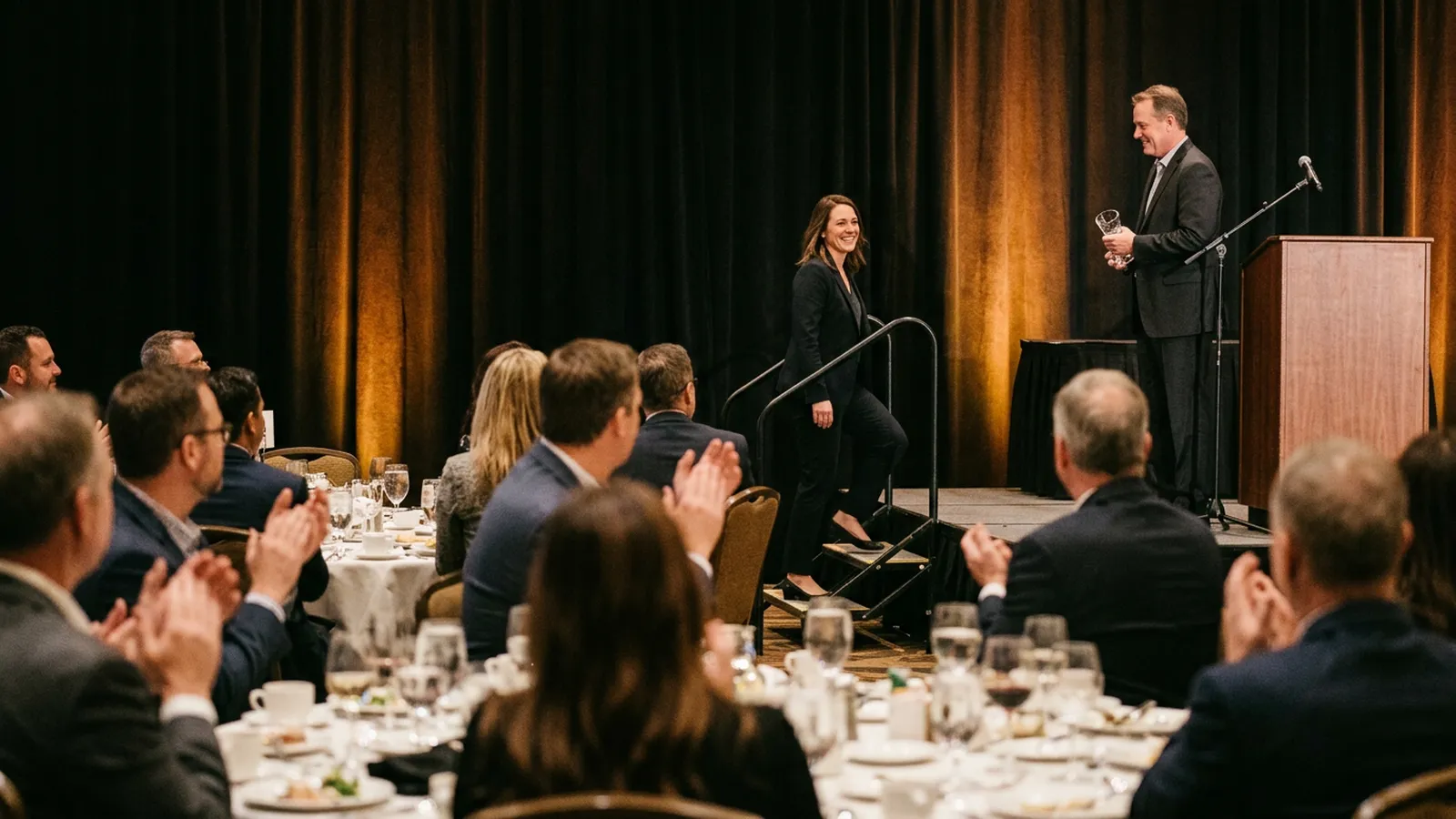
Short answer: To plan an awards ceremony, start 4–6 months out. Set the purpose and audience first, then fix the budget, award categories and judging criteria. Run nominations and judging on a firm timeline, then book the venue and production. Sell seats or tables with clear ticket types and write a minute-by-minute run of show. Rehearse every winner walk-up, and plan how winners and guests get their photos and recognition after the night. The ceremony itself runs about two hours. Most of the work, and most of the risk, sits in the months before it.
Awards ceremony planning at a glance
| Time before the event | What to lock in | Owner |
|---|---|---|
| 6 months | Purpose, audience, format (dinner, cocktail, in-programme segment), budget range, date shortlist | Event lead + sponsor/committee |
| 5 months | Award categories, eligibility rules, judging criteria, judging panel | Awards committee |
| 4 months | Venue, AV and production partner, catering, nominations open | Event lead |
| 3 months | Ticket and table sales open, sponsor packages confirmed, host booked | Event lead + sales |
| 6–8 weeks | Nominations close, judging runs, trophies ordered (allow engraving time) | Committee + suppliers |
| 2–3 weeks | Winners confirmed (sealed), run of show, scripts, seating, presenter briefs | Producer + host |
| Event week | Rehearsal, check-in setup, photography brief, comms to guests | Whole team |
| Within 48 hours after | Winner announcements, photos to guests, thank-yous, debrief | Marketing + event lead |
1. Decide what the ceremony is for
An awards ceremony can do several jobs. It can recognise employees, celebrate an industry, reward customers or partners, raise funds, or give a conference a strong final night. Each purpose changes the guest list, the budget and the tone. An internal recognition night needs warmth and plenty of names on stage. An industry awards gala needs credibility, fair judging and a guest list that sponsors want to be seen with.
Write a one-paragraph brief before you book anything. Say who the ceremony is for, what success looks like (for example, every finalist attends, or sponsors renew next year), and the format. That format could be a seated dinner, a cocktail reception with a short presentation, or an awards segment inside a larger event. Everything that follows depends on this brief.
2. Set the budget before the categories
Teams often design the awards first and price them later. Reverse that order. The biggest cost lines are usually the venue and catering, AV and stage production, the trophies, the host or entertainment, and photography or video. Smaller lines add up too: printed or digital programmes, decor, staff, and contingency.
Decide early how the night is funded. The usual sources are ticket and table sales, category sponsorship, entry fees, or an internal budget. If you are pricing a corporate version, our corporate event budget template gives you a ready structure for line items and contingency.
3. Design categories and judging people can trust
The categories are your product. Keep them few enough that the ceremony stays under two hours. As a rough guide, allow three to five minutes per category for the announcement, walk-up and photo, plus any acceptance speeches. Ten categories is already a full evening.
- Write eligibility rules for each category. Who can enter, which time period counts, and whether self-nomination is allowed.
- Publish the judging criteria. Name three to five criteria with weights, so entrants know what good looks like and judges score the same way.
- Pick an independent panel. Ask judges to declare conflicts of interest and step out of categories where they have one.
- Score in two rounds. A long-list round narrows the field, then a finalist round picks the winner. Finalists are often announced in advance, which helps attendance.
- Keep winners sealed. Limit who knows the results to the people who must know: the producer, the host and whoever prepares the envelopes or slides.
4. Run nominations on a fixed timeline
Nominations need a launch date, a closing date, reminders and a clear entry form. Ask only for what judges actually use, such as a short summary, the evidence, and contact details for the nominee. Long forms cut entries. Send a reminder one week before close and a final one 48 hours before, because most entries arrive at the end.
Plan the gap after closing carefully. Judging usually takes three to six weeks. Trophy engraving needs the winners’ names (or at least finalists’ names for blank-plate engraving), so build supplier lead times into your schedule rather than finding them out late.
5. Book the venue, production and suppliers
Choose the venue for the stage, not only the dining room. Check sight lines from every table, the route from the tables to the stage (steps, ramps and lighting), backstage space for winners, and where photographers will stand. Accessibility matters here: a winner who uses a wheelchair needs a ramp or a level presentation spot that is planned, not improvised. The event accessibility guidelines we published cover the basics to check with the venue.
For production, confirm screens, lavalier and handheld microphones, walk-up music for each winner, lighting cues and a confidence monitor for the host. Brief your photographer with a shot list: every winner with their trophy, every winner with the presenter and sponsor, table candids and the room-wide applause shots.
6. Sell seats and tables with clear ticket types
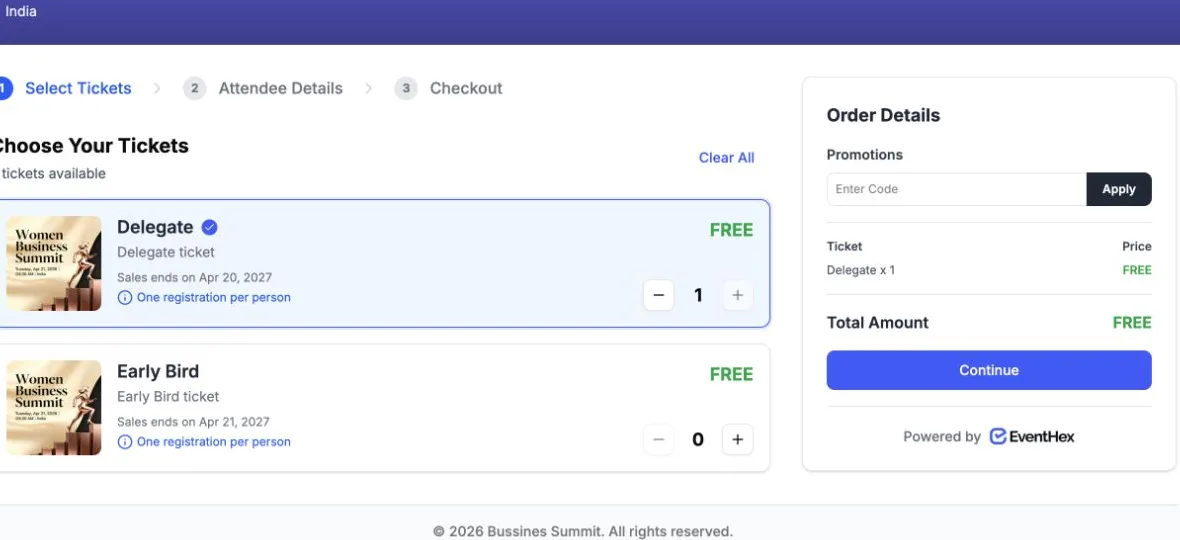
Awards nights often mix several kinds of guests: finalists, their guests, companies buying full tables, sponsors, judges and VIPs. Give each group its own ticket type with its own price, sales window and rules. That keeps pricing clear and your guest list clean. Collect what you need at registration, such as each guest’s name, company and dietary requirements, so seating and catering are built from real data.
In EventHex, organizers set up separate ticket types and attendees choose them on the event’s checkout page. When someone buys several tickets in one order, checkout can collect each attendee’s details rather than only the buyer’s. That is useful when one person books seats for their whole team. You can also offer promo codes, for example for finalists. See how this works on the event ticketing page.
7. Write the run of show and rehearse it
The run of show is a minute-by-minute script that the host, AV team, stage manager and photographer all share. A typical two-hour awards dinner looks like this:
- Doors and reception (30–45 min): check-in, drinks, photo opportunities.
- Welcome (5 min): host opening, housekeeping, sponsor thanks.
- Dinner service, first course (20–30 min).
- Awards block one (25–30 min): half of the categories.
- Main course (30 min).
- Awards block two (25–30 min): remaining categories, with the headline award last.
- Close (5 min): thanks, what happens next, and where photos will appear.
For every category, the script should say who presents, the walk-up music cue, the nominee slide, the winner slide, whether there is a speech (and its time limit), and the photo position. Rehearse the walk-ups on the actual stage. Most awards-night problems are small ones: a winner who can’t find the steps, a presenter reading the wrong card, or a slide that reveals the winner too early.
8. Make arrival and the room feel smooth
Guests in formal wear do not want to queue. Send a QR ticket before the event and staff the entrance so arrivals move quickly. Tell people their table number at check-in, or put a clear seating chart where it can’t be missed. Keep a separate, discreet desk for finalists and VIPs if you want to brief them on the walk-up process.
With EventHex, check-in staff scan attendee QR codes with the event check-in app and see attendance update live. If you also print badges or place cards on arrival, the badge printing workflow guide walks through the setup.
9. Involve the audience without slowing the night
A people’s choice award is a simple way to involve the room. Run a single live poll with the finalists, open it during dinner, and show the result on the big screen before you announce it. Keep it to one vote per guest and one question. A long voting process stalls the evening.
EventHex live polling lets attendees vote from their phones, and the results can be shown on a venue screen through the event’s live display. The same display can also show an event photo wall between award blocks. For more ideas that suit a seated audience, see our event gamification guide.
10. Deliver photos and recognition after the ceremony
Winners want their photos the same week, ideally the next morning, while they are still sharing the news. Guests want their table shots too. Plan delivery before the event, not after. Decide who uploads, how photos are sorted, and how guests find their own.
With the EventHex AI photo gallery, guests take a selfie to find the photos they appear in, and they can be notified on WhatsApp when new matches are found. If your awards include certificates for finalists or participants, guests can download certificates from their event account. You can design them with the badge and certificate designer.
Finish with a short debrief: attendance against registrations, what overran in the run of show, sponsor feedback, and the categories that drew the most entries. Those notes make next year’s planning faster.
Awards ceremony checklist
- One-paragraph brief: purpose, audience, format, success measure
- Budget with funding sources and 10% contingency
- Categories, eligibility rules, judging criteria and panel
- Nomination form, dates and reminder schedule
- Venue checked for stage access, sight lines and accessibility
- AV, host, photographer shot list and walk-up music
- Ticket types for finalists, tables, sponsors and VIPs
- Trophies ordered with engraving lead time
- Run of show, scripts, sealed results, rehearsal
- QR check-in, seating chart and finalist desk
- Photo delivery plan, winner announcements and thank-yous
Planning the night as part of a bigger event? The award ceremonies overview shows how EventHex fits gala and awards events.
Frequently asked questions
How far in advance should you plan an awards ceremony?
Four to six months is a comfortable lead time for most industry or company awards. You need time for nominations, three to six weeks of judging, trophy engraving and ticket sales. Small internal ceremonies can be planned in six to eight weeks if categories and winners are decided internally.
How long should an awards ceremony last?
Aim for the awards themselves to take 60 minutes or less, inside an evening of about two to three hours with dinner. Allow three to five minutes per category. If you have more than twelve categories, consider announcing some in advance or presenting them in a shorter segment without speeches.
What is the running order of an awards ceremony?
A common order is reception, welcome and sponsor thanks, first course, first block of awards, main course, second block of awards with the headline award last, then a closing message. Splitting the awards into two blocks keeps energy up and lets the kitchen serve on time.
How do you keep the winners secret?
Limit the results to the producer, the host and whoever builds the slides or envelopes. Keep winner slides in a separate, locked file, and rehearse with placeholder names. Tell finalists only that they are shortlisted and should attend.
Should you include a people’s choice award?
It works well when you want the audience involved. Run a single live poll with the finalists during dinner, limit it to one vote per guest, and reveal the result on screen. Keep the judged awards separate so the people’s choice does not undermine your judging process.
What should an awards ceremony budget include?
Venue and catering, AV and stage production, trophies and engraving, host or entertainment, photography and video, decor, staff, printed or digital materials, and a contingency of around 10%. Offset costs with ticket or table sales and category sponsorship.
Plan your awards night with less admin
A good awards ceremony looks effortless on the night because the planning was done early. Ticket types, guest details, check-in, live voting and photo delivery are the parts EventHex can take off your plate, so your team can focus on the show. Book a demo to see how it would work for your next awards event.