
The Shift in B2B Events: Why Retention is the Ultimate Growth Metric
For years, the success of B2B event marketing was measured by a single, brute-force metric: top-of-funnel lead generation. Marketers packed trade show floors with random foot traffic, scanned badges indiscriminately, and celebrated high registration counts. However, as we look at the landscape of modern business conferences, a fundamental transformation has occurred. Top-of-funnel lead acquisition has fallen dramatically down the list of priority metrics, replaced entirely by customer lifetime value (CLV), multi-touch engagement, and attendee retention. In fact, modern B2B planners are realizing that high attendee churn, lack of structural networking, and unmeasurable B2B ROI represent systemic issues that threaten the very existence of annual event franchises.
When an organization loses up to 50% of its business attendees year-over-year, it is forced to spend double the marketing resources on customer acquisition costs (CAC) just to keep attendance flat. This continuous churn creates an unstable event model and signals a larger, underlying problem: the event is failing to deliver long-term professional or business value. To combat this, smart organizations are moving away from treating conferences as isolated campaigns. Instead, they are utilizing a unified, strategic b2b event marketing framework that treats every gathering as an interactive, value-generating product built around customer success, relationship building, and repeatable networking wins.
Deconstructing the Pain Points: The Core Drivers of Attendee Churn
To implement an effective retention strategy, we must first analyze the primary administrative and experience-driven bottlenecks that cause high-value B2B decision-makers to skip your event the following year. These challenges generally fall into three critical areas:
1. High Attendee Churn and Low Engagement Velocity
When attendees spend hours in passive, broadcast-style keynotes without interactive engagement, virtual or physical fatigue sets in quickly. Attendees do not justify the high costs of travel and ticket pricing simply to consume slide decks that could easily be sent via an email newsletter. Without active, localized participation, the experience remains forgettable, leading directly to a massive drop in year-over-year registration renewals.
2. The Lack of Structured B2B Networking
Networking is consistently cited as the number-one reason B2B professionals attend conferences. Yet, most organizers leave networking entirely to chance, relegating it to disorganized coffee breaks or chaotic cocktail receptions. When introverted executives or highly targeted buyers cannot easily find, connect, and schedule meetings with matching vendors or peers, they leave feeling that the event was a waste of valuable time.
3. Unmeasurable B2B ROI and Poor Lead Management
Sponsors, exhibitors, and corporate attendees alike struggle to attribute real business outcomes to their event spending. If lead data is trapped in manual spreadsheets, or if badge scans do not route directly into corporate CRM systems, the sales cycle stalls. When stakeholders cannot calculate their cost-per-lead (CPL) or pipeline generated, securing budget approval for subsequent years becomes an impossible sell.

The Modern B2B Event Marketing Framework for 2026
Overcoming these strategic obstacles requires a systematic playbook that spans the entire event lifecycle. This structured b2b event marketing framework divides event operations into three strategic phases: Pre-Event Anticipation, Event-Day Execution, and Post-Event Momentum.
Phase 1: Pre-Event Anticipation and Smart Onboarding
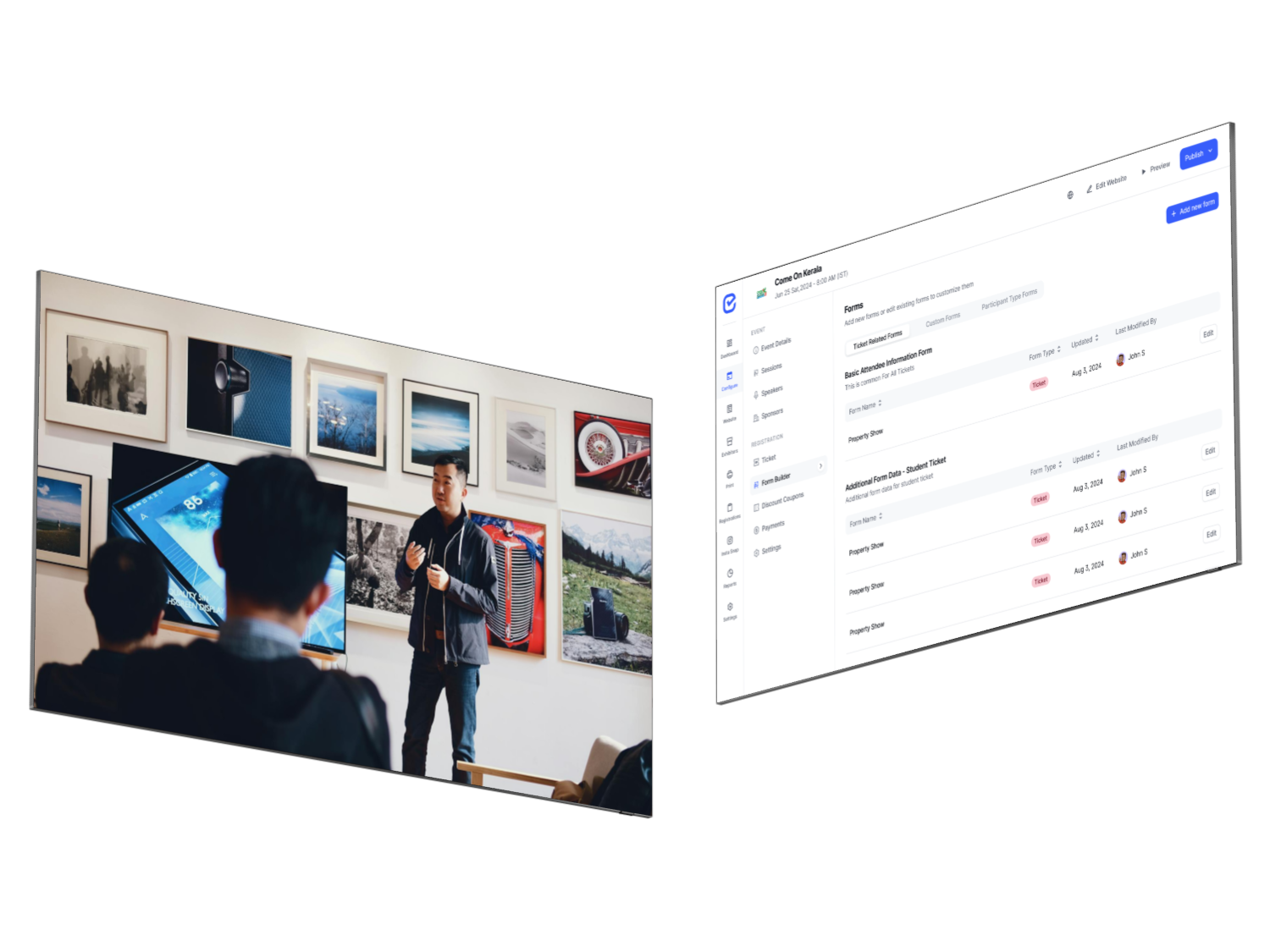
The attendee experience begins the moment a prospect lands on your registration page. Modern event sites must utilize frictionless, highly personalized onboarding sequences. By requesting key professional objectives, target industries, and networking goals during the signup process, organizers can establish an immediate behavioral profile for every participant.
This data must not stay siloed; it should immediately drive targeted content recommendations. For instance, if an attendee registers as a marketing director interested in digital conversion, your system should automatically suggest tailored sessions, relevant exhibitors, and peer-level contacts. Utilizing a structured platform like the EventHex Registration Suite ensures that this vital behavioral metadata is captured securely, accurately, and with zero platform fees, laying the foundation for personal relevance right from day one.
Phase 2: Active, Data-Driven Event-Day Engagement
Once attendees arrive on-site, the primary objective is to maximize their engagement velocity. This is accomplished by replacing passive formats with hands-on, interactive environments. Facilitated roundtables, speed-networking, live gamification, and digital Q&A panels keep attendees actively participating rather than passively watching.
Crucially, technology must bridge the physical and digital gap. Providing a white-label mobile app that acts as a digital copilot allows participants to manage their schedules, receive real-time updates, and participate in interactive live polling. This dynamic layer ensures that attendees stay immersed in the event flow, directly combating the mental fatigue that leads to early drop-offs.
Phase 3: Post-Event Momentum and Automated Retargeting
A classic event management mistake is allowing the attendee relationship to terminate the moment the closing keynote ends. To secure high retention, you must extend the event’s value-cycle into the weeks and months that follow. This involves auto-delivering personalized session recaps, key takeaways, and digital credentials immediately after the event.
Furthermore, historical behavioral data should be utilized to build immediate retargeting campaigns for the next annual installment. High-scoring participants—those who attended multiple sessions, booked 1:1 meetings, and interacted heavily with your mobile app—should be funneled into exclusive early-bird registration tracks. By maintaining this relationship momentum, the event stops being a single, isolated date on a calendar and becomes a continuous, value-driven community.
EventHex: The Modern AI-Powered Solution to Attendee Retention
While having a conceptual framework is essential, executing it seamlessly at scale requires a modern, integrated technology stack. This is where EventHex serves as the ultimate all-in-one platform, replacing a mess of disconnected event tools with a single, highly cohesive command center.
Intelligent Matchmaking with AI Smart-Connect
EventHex completely eliminates the chaos of accidental networking through its revolutionary AI Smart-Connect engine. By analyzing the professional profiles, shared business interests, and mutual challenges submitted by attendees during registration, the AI automatically suggests highly relevant 1:1 networking matches. Through the white-labeled mobile app, participants can seamlessly schedule meetings and reserve dedicated tables, turning the primary driver of event attendance—networking—into a structured, guaranteed success.
Unified Operations via the Centralized Dashboard
Planners no longer have to manually move registration lists to ticketing systems or sync check-in data with marketing tools. The EventHex Centralized Dashboard provides an all-in-one command center that coordinates registration, ticket sales, multi-track agendas, speaker profiles, and sponsor ROI analytics in real time. This complete operational cohesion eliminates critical data siloes, allowing organizers to respond dynamically to attendee behavior, monitor session capacities, and manage on-site badge printing with absolute ease.
Frictionless Micro-Engagements and Auto-Certificates
To maintain high post-event value, EventHex features an automated, visual badge and certificate designer. As soon as a session concludes or an attendee checks out of the venue, the system can auto-generate and deliver branded, verifiable digital certificates. This instant reward cycle provides attendees with professional collateral they can proudly share on LinkedIn, boosting brand visibility while reinforcing the educational value of your conference.
Comparative Analysis: Traditional Events vs. Modern AI-Driven Frameworks
To illustrate the dramatic operational advantages of adopting a unified, AI-led event strategy, consider the following comparison between legacy planning methodologies and the modern EventHex approach:
| Event Dimension | Legacy / Traditional Approach | Modern EventHex AI Framework |
|---|---|---|
| Onboarding & Registration | Static forms, generic confirmation emails, and zero preference tracking. | Personalized registration paths with conditional logic, capturing professional goals seamlessly. |
| Networking Execution | Random, unstructured mingling during crowded, brief coffee and lunch breaks. | AI-driven matching suggestions (AI Smart-Connect) with built-in B2B meeting scheduling. |
| Operational Visibility | Fragmented tools, manual CSV exports, and delayed post-event lead reports. | Real-time, cross-platform visibility from a single, unified Centralized Dashboard. |
| Audience Retention Loop | Generic “thank you” emails sent weeks after the event with static surveys. | Automated delivery of session summaries, verifiable digital credentials, and early-bird renewals. |
Conclusion: Transforming Attendees into Lifelong Advocates
In the highly competitive landscape of B2B event marketing, retention is no longer a luxury—it is the core baseline of operational sustainability. Planners who continue to rely on manual, fragmented processes and unstructured networking will inevitably suffer from high attendee churn and declining sponsor interest. By adopting a cohesive, strategic B2B event marketing framework that prioritizes personalized onboarding, active engagement, and continuous relationship momentum, you immediately differentiate your brand.
With an AI-powered partner like EventHex, this transformation becomes completely turn-key. From the intelligent matchmaking capabilities of AI Smart-Connect to the absolute operational visibility of the Centralized Dashboard, EventHex provides the technical infrastructure required to deliver memorable, high-ROI experiences that bring your audience back year after year. Step into the future of event management, optimize your attendee experience, and start building your lifelong community today.
Frequently Asked Questions (FAQ)
What is a B2B event marketing framework?
A B2B event marketing framework is a structured, repeatable methodology that aligns event goals, registration processes, content design, networking execution, and post-event data analysis to deliver measurable business ROI and drive high attendee retention rates year-over-year.
How does EventHex help improve attendee retention?
EventHex improves attendee retention by personalizing the entire event lifecycle. It utilizes AI Smart-Connect to facilitate targeted 1:1 B2B networking, provides a cohesive centralized dashboard for flawless execution, and automates post-event engagement through verifiable digital certificates and interactive recaps.
Can EventHex integrate with my existing CRM?
Yes. EventHex provides robust integration options with popular CRMs like HubSpot, as well as AWS SES for email, Firebase for push notifications, and over 5,000 external tools via Webhooks and Zapier, ensuring first-party behavioral attendee data flows directly into your marketing stack.
Is the event website builder easy to use?
Absolutely. EventHex features a no-code, drag-and-drop website builder that allows organizers to launch gorgeous, highly optimized event landing pages in minutes, fully integrated with their ticketing, registration forms, and session schedules.