As we navigate through 2026, the global events industry faces an unprecedented regulatory and administrative bottleneck. For years, event planners, marketers, and technology providers operated in a data-rich environment where tracking attendee behavior was frictionless. Every session scan, badge tap, website click, and mobile app interaction yielded granular profiles that could be fed straight into sales pipelines. However, the administrative landscape has shifted irreversibly under the weight of global regulations and changing attendee expectations.
Today, compliance is no longer just a checkbox or a footnote in a privacy policy. Tightened legal frameworks—including strict updates to Europe’s GDPR, the expansion of the California Consumer Privacy Act (CCPA/CPRA), and dozens of regional state-level frameworks globally—have turned attendee tracking into a minefield of potential liabilities. Event hosts who fail to properly secure explicit consent, or who transfer event attendee data to third parties without an auditable legal basis, face severe administrative penalties, catastrophic compliance audits, and an absolute loss of audience trust.
The Regulatory Crisis in Modern Event Tracking
The core issue lies in how traditional event tech architectures process data. Under regulations like the GDPR, event hosts operate as “Data Controllers,” meaning they carry the ultimate legal responsibility for how personal data is collected, used, and protected. Event technology systems, acting as “Data Processors,” must execute agreements (Data Processing Agreements, or DPAs) that strictly define processing limits. Historically, compliance was treated reactively. Many databases grew silently through business cards dropped in raffle bowls, pre-checked registration options, or list-sharing arrangements with sponsors that would fail any contemporary legal audit.
As we enter 2026, the consequences of compliance failures are severe. Regulators have moved beyond targeting large tech platforms to auditing corporate events, trade shows, and consumer exhibitions. A single unconsented tracking pixel or a leaked registration list can trigger investigations. Furthermore, attendees have become highly sensitive to data exploitation. The modern audience demands transparency, granular agency over their personal details, and the right to be forgotten immediately after the closing keynote. Planners are left with a massive challenge: How do you deliver deep engagement metrics and prove event return on investment (ROI) without invading attendee privacy or breaking global compliance laws?

The Solution: Implementing Consent-Driven, Privacy-First Architecture
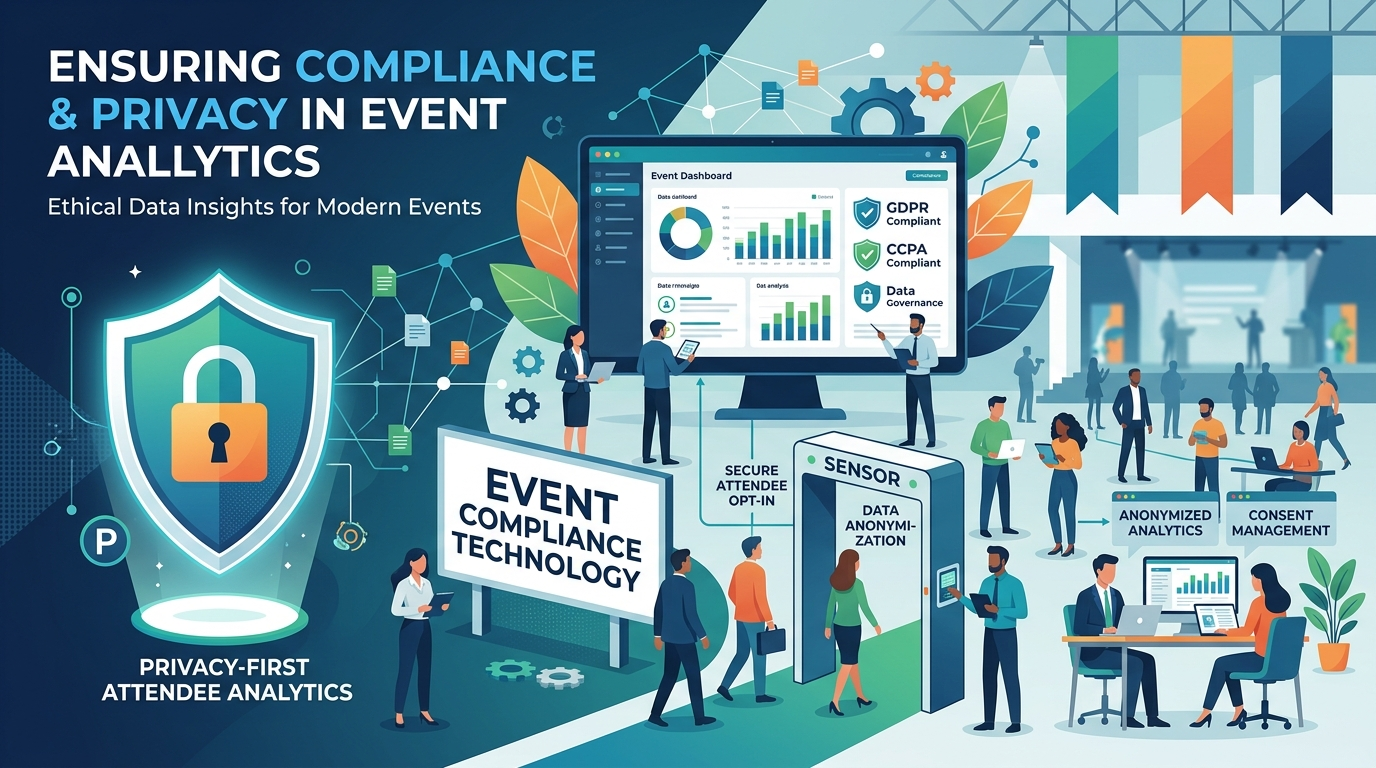
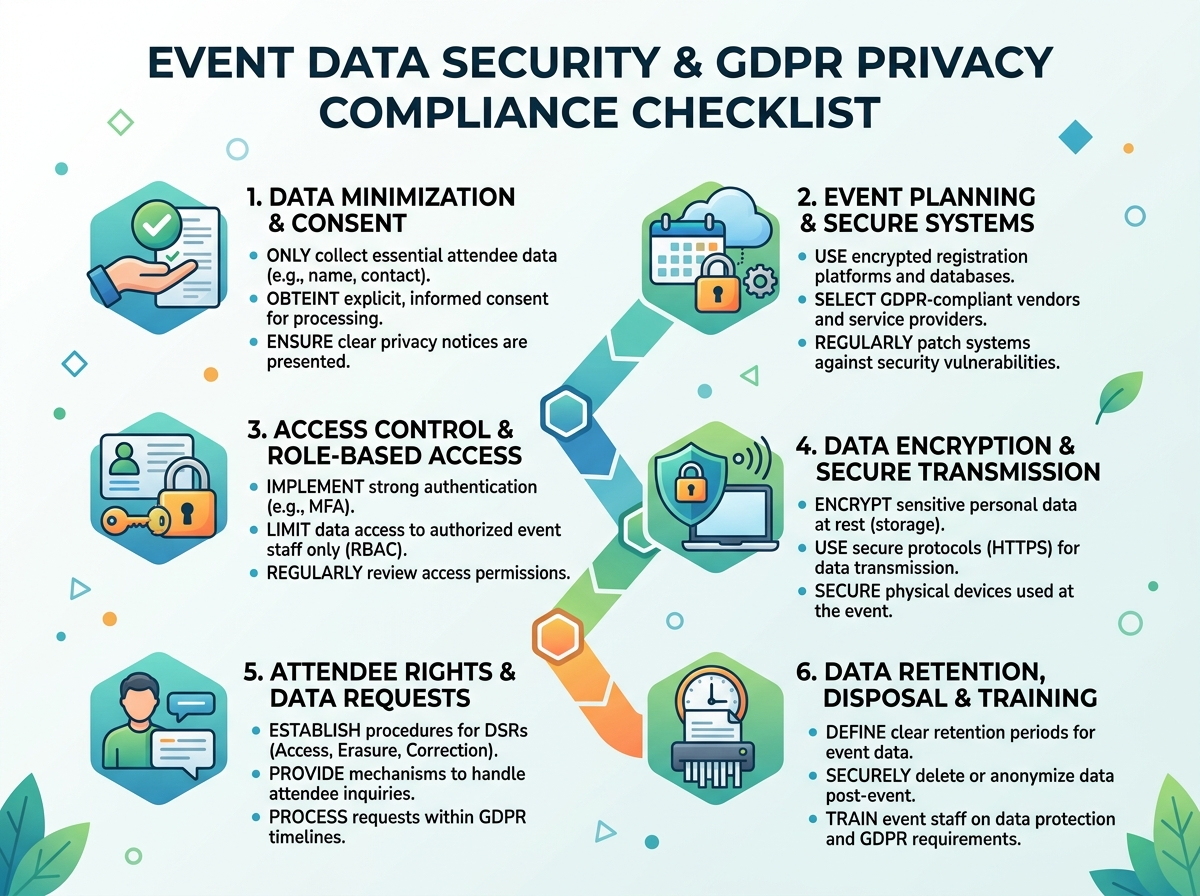
To overcome these administrative challenges, sophisticated event planners are transitioning to a consent-driven, privacy-first tracking architecture. This framework relies on three pillars: explicit consent, data minimization, and privacy-preserving analytics.
1. Dynamic, Granular Consent Flows at Registration
The era of the “agree-all” checkbox is dead. True compliance requires separating administrative consents (such as agreeing to terms of service to attend the event) from marketing consents (such as receiving sponsor emails or being tracked onsite). Consent must be freely given, specific, informed, and unambiguous. Each consent option must be presented as an active, un-checked toggle that the user must manually select. This transition starts at the very beginning of the attendee lifecycle—on the event registration page.
2. Privacy-Enhancing Onsite Interactions
Onsite tracking must adapt to privacy-by-design principles. Instead of silent tracking via passive RFID or facial recognition without explicit consent, compliant events leverage active, opt-in physical interactions. For example, attendees can manually scan their badges at touchpoints only after clearly understanding what data is shared. Every scan must be backed by a digital record showing exactly when and how consent was granted, providing a robust audit trail in case of regulator queries.
3. Aggregated and De-identified Analytics
If you do not need individual-level data to prove a trend, do not collect it. Compliance-minded planners are focusing on aggregated dashboard statistics. You can measure session popularity, peak venue occupancy, and engagement levels by processing anonymized data streams that cannot be traced back to a specific individual. This delivers the necessary marketing insights while completely bypassing the compliance risks of storing sensitive personal data.
How EventHex Harmonizes Analytics and Compliance
Transitioning to a highly compliant data architecture can be technically daunting. This is where EventHex serves as an elegant, enterprise-grade solution. Built from the ground up on privacy-by-design principles, EventHex eliminates compliance headaches by integrating rigorous privacy workflows into every aspect of your event lifecycle.
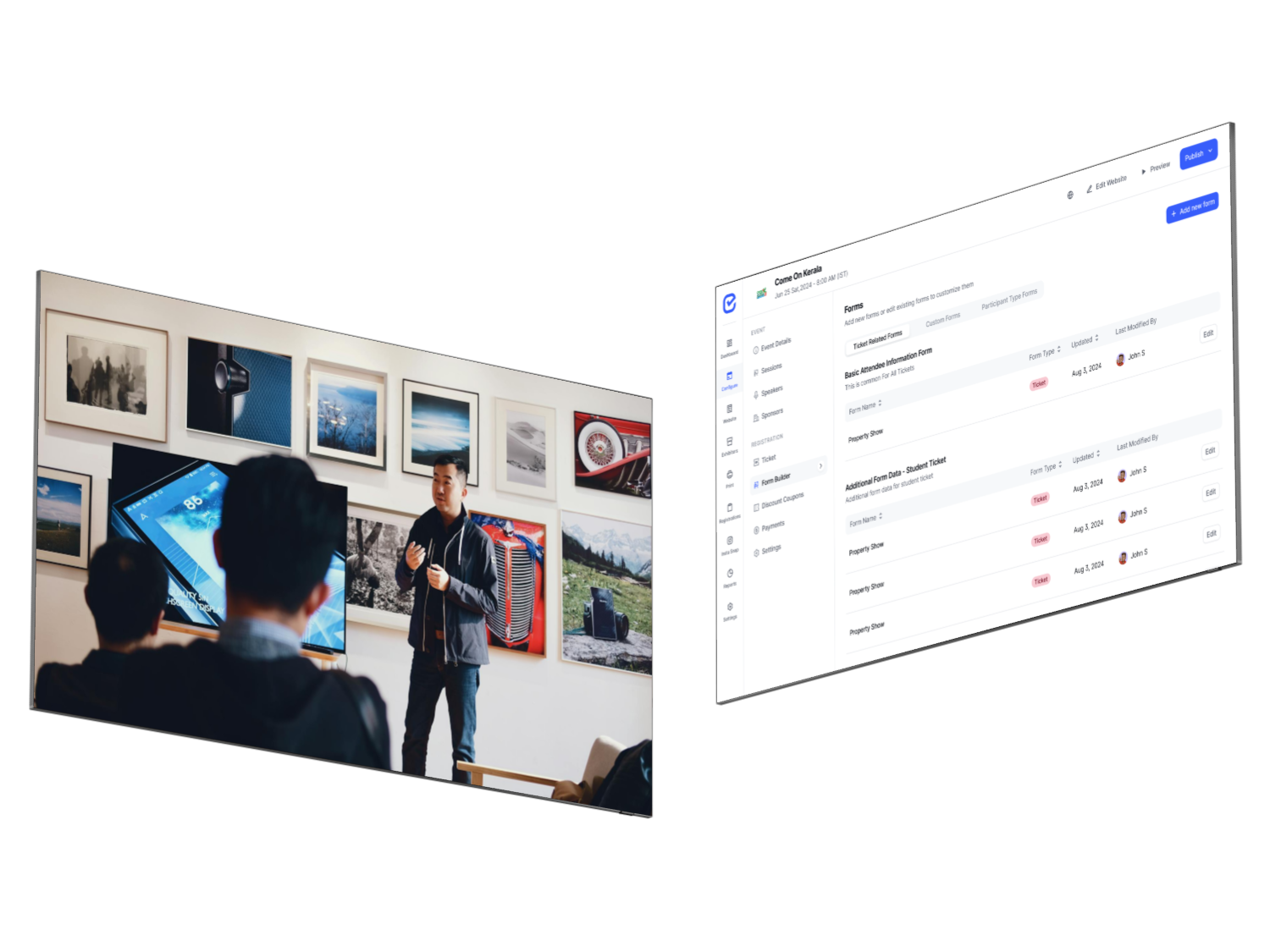
With EventHex’s intuitive registration system, planners can effortlessly construct custom, compliant registration forms with granular consent fields. Every consent decision is captured securely and recorded in the attendee’s profile, providing an immutable audit log. Furthermore, EventHex solves the onsite data bottleneck through its highly secure, compliant badge-scanning systems. Instead of exposing raw personal data, it ensures that attendee details are only shared under strict, permitted consent rules.
All of this compliant data is synthesized in real time on the EventHex centralized dashboard. The dashboard provides comprehensive, high-level analytics on registrations, ticket sales, and onsite participation without compromising individual privacy. Event planners get the precise metrics they need to demonstrate event ROI to stakeholders, while remaining fully aligned with global compliance requirements. By making compliance automatic rather than administrative, EventHex allows organizers to focus on what they do best: creating exceptional, worry-free event experiences.
Frequently Asked Questions (FAQ)
What is event attendee privacy compliance?
Event attendee privacy compliance refers to the legal and technical practices used to ensure that personal data collected during event planning, registration, and onsite activities complies with privacy regulations like GDPR and CCPA. This includes gathering explicit consent, protecting stored data, and allowing attendees to access or delete their records.
How does GDPR affect corporate events outside the EU?
GDPR applies globally to any organization that collects or processes personal data of individuals located within the European Union. If an event in North America or Asia registers even a single attendee residing in the EU, the entire processing lifecycle of that attendee’s data must comply with GDPR requirements, including consent and data portability.
Can we share attendee lists with sponsors under modern privacy laws?
No, attendee lists cannot be shared with sponsors or exhibitors unless attendees have explicitly opted-in to that specific data transfer during registration or onsite interaction. Pre-checked boxes or general, vague statements in a privacy policy do not constitute legal consent under GDPR or CCPA.