Imagine this scenario: Your high-profile annual B2B conference or trade show has just wrapped up. The venue was packed, the energy was high, and your team is exhausted but proud. However, as the dust settles, a familiar feeling of dread creeps in. In your inbox, a premium sponsor who invested $15,000 in a top-tier package asks a simple, direct question: “What did we actually get from our investment this year?”
For most event organizers, this question is the start of an administrative nightmare. To compile an answer, you spend the next two weeks frantically chasing down fragmented data. You pull email campaign open rates, attempt to estimate foot traffic from sketchy venue maps, count manual logo mentions on session slides, and send out post-event surveys that only 10% of attendees actually fill out. You package these vague “impressions” and estimated numbers into a generic PDF deck and send it off, hoping it’s enough to keep them on board for next year.
But the market has changed. In an era of tight marketing budgets, rising acquisition costs, and hyper-focused performance tracking, event sponsors are tired of guessing. Vague promises of “brand exposure” and “eyeballs” no longer justify massive sponsorship checks. Sponsors need concrete, verifiable, and data-driven proof of value. When you fail to provide that proof, they walk away. This lack of clear attribution is the primary reason why up to 80% of event sponsors never return for a second year.
To break this costly cycle of sponsor churn, modern event hosts must shift from retrospective, manual reporting to a proactive, real-time strategy. By mastering how to measure event sponsorship ROI with precise, built-in digital tracking, organizers can transform event partnerships from a transactional risk into a highly repeatable, high-yield channel. Let’s dive deep into why legacy sponsorship models are failing, the key metrics you must track, and how to use modern event technology to turn sponsor reporting into your greatest retention asset.
The Attribution Crisis: Why Legacy Sponsorship Packages Fail
Historically, event sponsorship has been sold as a bundle of physical placements. You promised a sponsor their logo on a physical banner at the entrance, a slide in the opening keynote, and a half-page ad in a printed booklet. While these placements offer real brand value, they suffer from a fatal flaw: zero attribution.
Once the physical banner is hung, there is no way to verify how many unique attendees actually looked at it. You cannot track how many seconds they spent engaged with the sponsor’s branding, or whether that exposure led to any subsequent action. To the sponsor’s Chief Marketing Officer (CMO), this looks like a black box. In a world where digital advertising channels (like Google Ads and LinkedIn Campaigns) provide instant, down-to-the-penny tracking of impressions, clicks, conversions, and cost-per-acquisition (CPA), offline event branding feels incredibly outdated and risky.
Furthermore, legacy reporting is always retrospective. Compiling a “post-event wrap report” weeks after the doors close is too little, too late. If a sponsor’s booth was poorly positioned or their digital ad space underperformed, they only find out after their budget is fully spent. This lack of real-time visibility prevents organizers from making on-the-fly adjustments to save a failing partnership, leading directly to disappointing results and low renewal rates.
The 4-Step Framework: How to Measure Event Sponsorship ROI Accurately
To win back the trust of premium sponsors and prove the definitive impact of their investment, organizers must establish a structured, transparent measurement framework. This process begins long before the first attendee checks in and continues long after they leave.
Step 1: Align on Custom, Measurable Objectives (ROI vs. ROO)
Not all sponsors are looking for the same outcome. A seed-stage startup might sponsor your event purely for Return on Objectives (ROO), such as establishing industry thought leadership or launching a new product. Conversely, an established enterprise sponsor is likely focused strictly on Return on Investment (ROI), requiring a direct pipeline of qualified sales leads. Before signing the agreement, you must sit down with each sponsor to define their specific key performance indicators (KPIs). Attempting to measure success with a one-size-fits-all approach guarantees that someone will end up disappointed.
Step 2: Establish Digital Attribute Tracking Across All Surfaces
To replace estimated numbers with real data, you must digitize your event surfaces. This means routing all attendee engagement through a unified event platform. By hosting your event’s website, ticketing, registration, and mobile app on a single database, you can automatically tag and track sponsor interactions. Every time a sponsor logo is rendered on the registration page, clicked in the mobile app, or scanned at a physical booth, it must write a discrete data point to your database. This forms the foundation of clean, verifiable reporting.
Step 3: Implement Real-Time Impression and Engagement Analytics
Sponsorship tracking shouldn’t be a mystery solved weeks after the event. By utilizing a live dashboard, organizers can monitor sponsor performance in real time. If you notice that a premium sponsor’s banner ad on the event mobile app has a low click-through rate (CTR) on day one, you don’t have to wait for them to complain. You can instantly swap out the creative, change its placement, or send a targeted push notification to attendees to drive traffic to their profile. This proactive optimization is only possible when you have live data at your fingertips.
Step 4: Deliver High-Fidelity, Auto-Generated ROI Reports
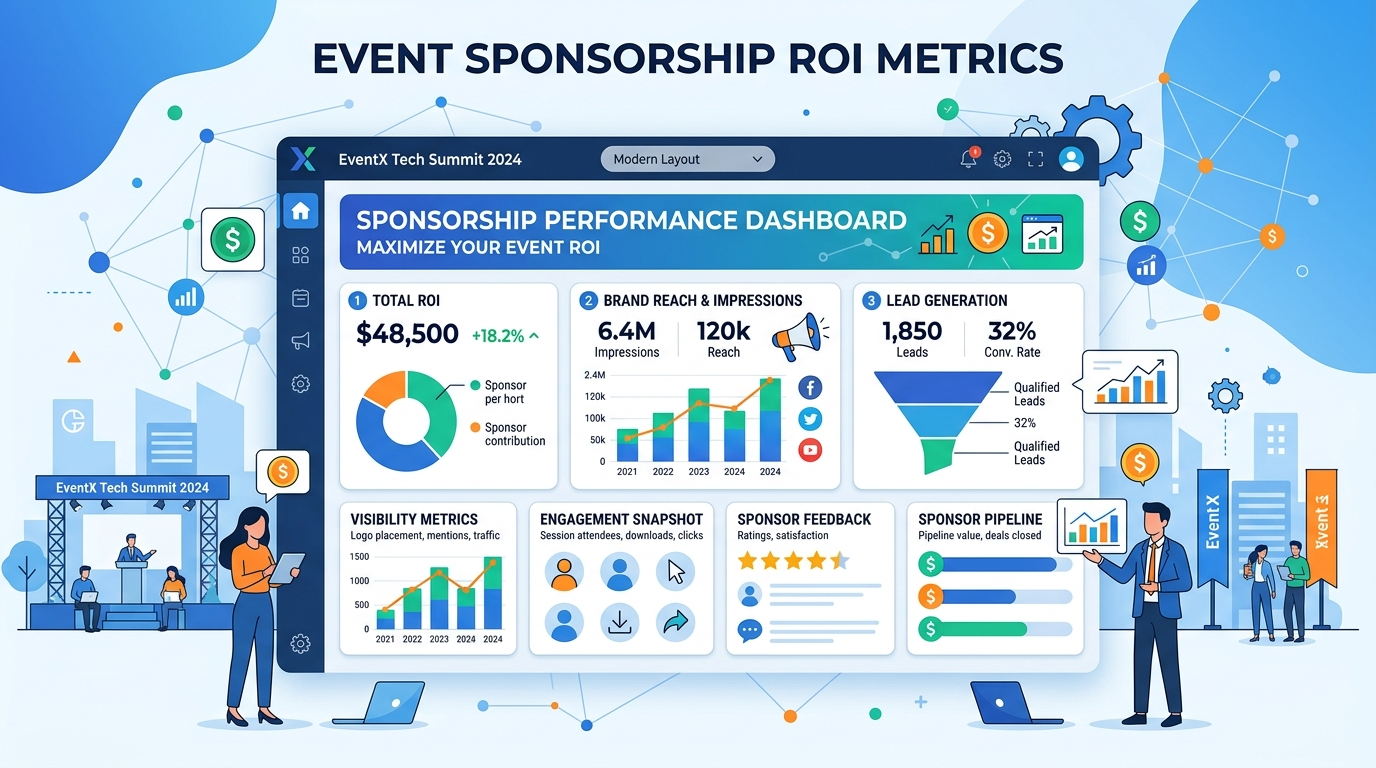
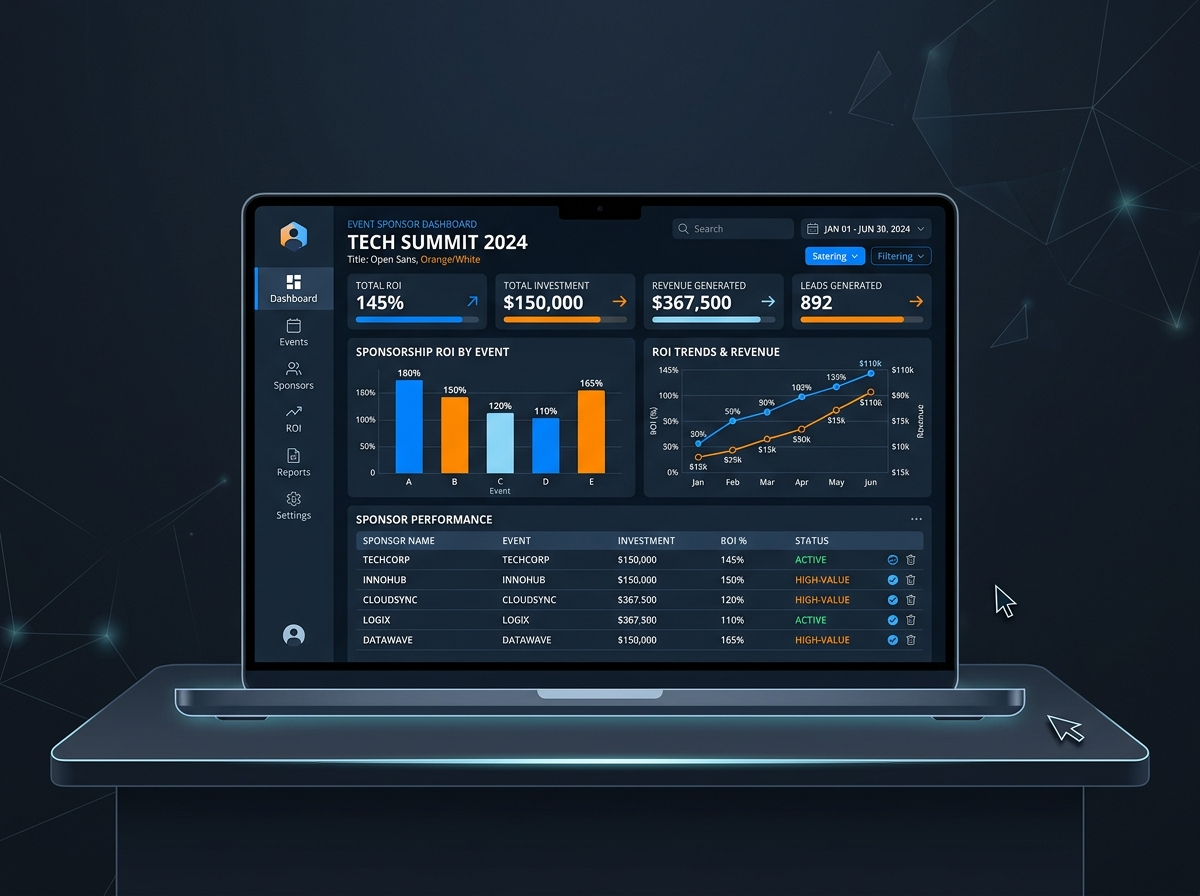
The final step is the most critical: delivery. Sponsors do not want to wait weeks for a poorly formatted slide deck. They need a clean, professional, and visually compelling breakdown of their performance while the event is still fresh in their minds. Providing a dedicated, branded PDF report that outlines their total unique impressions, link clicks, lead quality, and engagement metrics turns a stressful data collection chore into a seamless, automated workflow.
Beyond Logo Placement: High-Value Event Sponsorship Metrics to Track
If you want to command premium rates for your packages, you must move beyond counting “impressions” and begin tracking deep engagement metrics that corporate marketers actually care about. Here are the key digital metrics that define modern event sponsorship success:
- Digital Logo Impressions: The exact number of times a sponsor’s logo was rendered on high-traffic event website pages, checkout screens, confirmation emails, and digital signage.
- Mobile App Engagement & CTR: Total views of the sponsor’s profile in the attendee mobile app, and the click-through rate (CTR) on their external links, session listings, and banner advertisements.
- Session & Speaker Analytics: For sponsored keynotes or panels, tracking the exact number of attendees present, average dwell time (how long they stayed), and engagement with live polls or Q&As.
- Exhibitor Lead Quality: The number of hot, warm, and cold leads captured by booth staff using digital badge scanning, complete with enriched attendee profiles (job titles, company size, contact details).
- Sponsor Spotlight CTR: The performance of dedicated sponsor spotlight features or premium pop-up placements on the event frontend, compared to standard listings.
The EventHex Solution: Frictionless Sponsor Management and Proven ROI
Executing this level of tracking manually is practically impossible for busy event teams. That is where EventHex comes in. As an AI-first “Attendee Experience Suite,” EventHex is engineered from the ground up to maximize attendee engagement and make proving sponsor ROI entirely effortless.
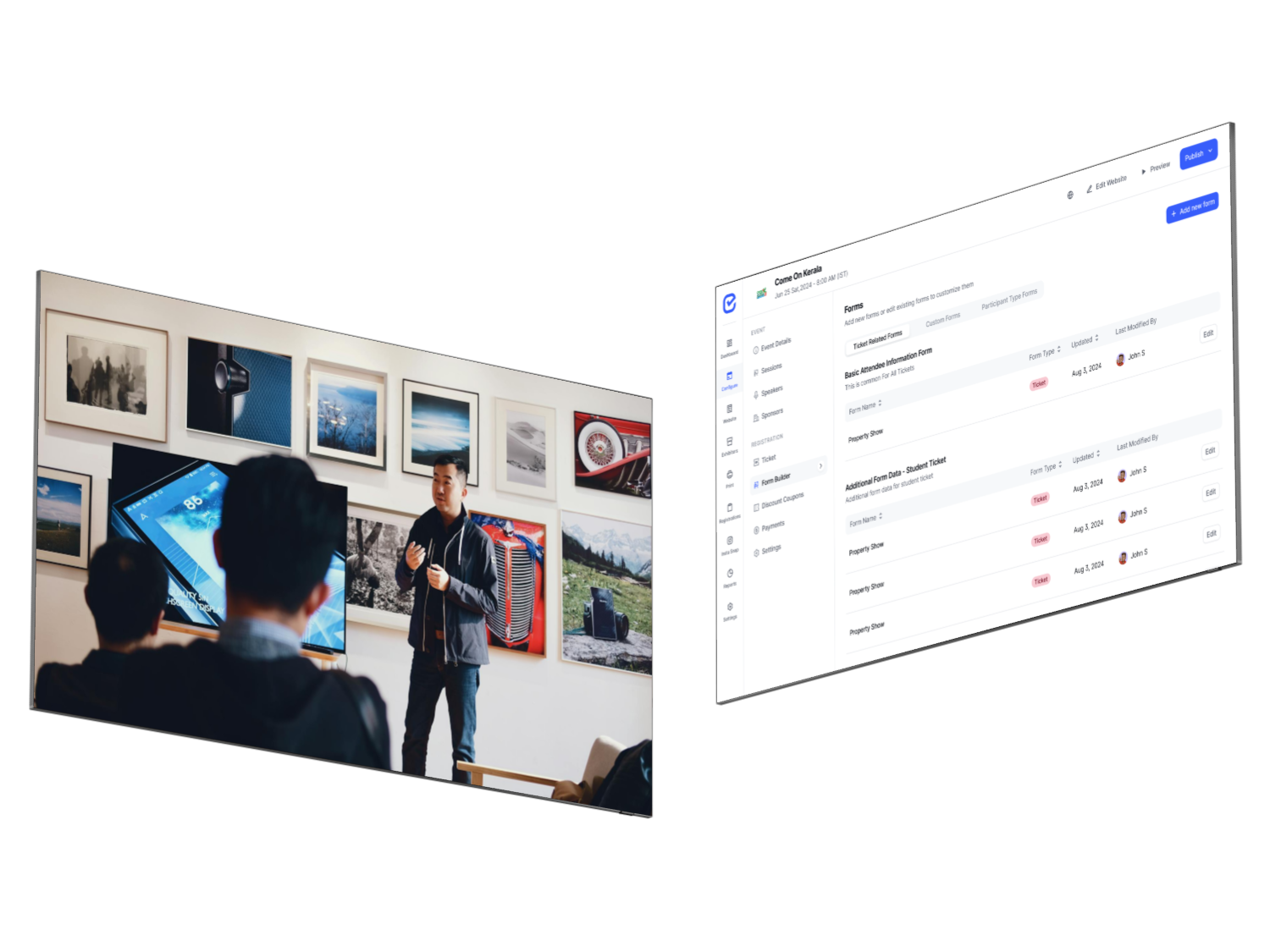
Through the unified EventHex Sponsor Management Software, organizers can say goodbye to fragmented spreadsheets and chaotic manual reporting. The platform digitizes the entire sponsorship lifecycle, delivering a polished, enterprise-grade experience for both your team and your premium partners.
Automated Tiered Category Management
Easily configure Gold, Silver, Bronze, and custom sponsorship tiers with built-in benefits and visibility levels. Once packages are set, EventHex automatically applies branding rules across all attendee touchpoints—from the online Event Registration checkout flow, to customized badge designs, email templates, and the mobile app interface. This ensures complete brand consistency without requiring manual design adjustments for every sponsor.
Multi-Channel Digital Placements
EventHex moves your sponsors’ brands beyond static physical banners. Place interactive sponsor logos in high-visibility digital real estate, including transaction confirmation screens, the centralized attendee app, session detail pages, and automated emails. Because these placements are entirely digital, every single view and click is captured automatically on our backend, giving you a complete paper trail of brand exposure.
Real-Time Analytics from a Centralized Dashboard
Monitor your entire event’s performance from the unified Centralized Event Dashboard. Track registration velocity, check-in speeds, and sponsor impression metrics in real time. If a premium partner’s digital placement is underperforming, you can spot the trend instantly and optimize their visibility on the fly, ensuring they hit their performance targets before the event ends.

End-to-End Attendee Attribution Loop
The true power of EventHex lies in its fully integrated ecosystem. Because ticketing, registration, on-site badge printing, attendee matchmaking, and photo galleries all run on a single database, we build a complete attendee attribution loop. We can show a sponsor exactly how many ticket-holders registered through co-branded campaigns, checked in at the venue, engaged with their speaker sessions, and downloaded co-branded photos from our AI photo gallery. This level of granular, end-to-end attribution is a massive competitive moat that makes your event packages irresistible to corporate sponsors.
Conclusion: Turn Sponsorship Proving into Your Unfair Competitive Advantage
In a highly competitive B2B landscape, continuing to sell event sponsorship based on vague “brand exposure” is a recipe for high sponsor churn and stagnant revenue. To scale your recurring events, you must treat your sponsors as true business partners. This means giving them the precise, digital attribution and data-driven proof of value they need to justify their investment to their executive teams.
By transitioning to an integrated, AI-powered platform like EventHex, you eliminate the stress, guesswork, and manual labor of sponsor reporting. You provide your partners with real-time analytics, automated logo placements, and beautiful, high-fidelity ROI reports that prove their renewal was the easiest decision of their year.
Ready to eliminate sponsor churn and prove undeniable event ROI with a unified, modern tech stack? Discover how EventHex can elevate your attendee experience and drive sponsor repeat deals by exploring our AI-Powered Event Management Platform or booking a custom platform walkthrough today.
Frequently Asked Questions
Why do B2B event sponsors typically fail to return for recurring events?
The primary reason for sponsor churn is a lack of clear attribution and proof of ROI. Sponsors are under tight budget constraints and require verifiable data—such as digital impressions, click-through rates, and qualified lead metrics—to justify their investment. Vague post-event surveys and estimated physical foot traffic are no longer sufficient to secure repeat deals.
What is the difference between ROI and ROO in event sponsorship?
ROI (Return on Investment) focuses on direct financial metrics, such as the volume of qualified sales leads generated, cost-per-lead, or direct pipeline revenue. ROO (Return on Objectives) focuses on non-transactional goals, such as elevating brand awareness, launching a new product, establishing industry thought leadership, or driving employee recruitment.
How does EventHex track sponsor impressions across different channels?
EventHex runs on a unified, single-database architecture. When an attendee views a sponsor logo on the registration page, opens a co-branded confirmation email, clicks a sponsor profile in the mobile app, or checks in at the venue, our backend automatically records the unique digital interaction. This provides 100% accurate, real-time tracking of impressions and engagement.
Can organizers optimize underperforming sponsor placements during the live event?
Yes. Because EventHex provides a live, centralized dashboard, organizers can monitor sponsor impressions and mobile app CTR on-the-fly. If a premium partner’s placement is underperforming on day one, you can instantly adjust app banner configurations, increase digital signage rotations, or send targeted push notifications to boost engagement in real time.