Short answer: To promote an event, start with one clear event page and a reason to register now, then run a timed plan: announce to the people who already know you (past attendees, subscribers, partners), widen reach with social posts, speakers, sponsors and community listings, and close with deadline-driven reminders. Most of your registrations will come from warm audiences and the last two weeks, so plan the calendar backwards from event day and measure which channel each sign-up came from.
This guide gives you a week-by-week promotion plan, the channels worth your time, message templates that work, and the mistakes that quietly cost registrations. It works for conferences, workshops, community meetups, awards nights and online sessions alike.
Event promotion at a glance
| When | Main job | Channels | What to measure |
|---|---|---|---|
| 8–10 weeks out | Build the foundation | Event page, registration form, ticket types | Page live, tracking links ready |
| 6–8 weeks out | Announce to warm audiences | Email to past attendees and subscribers, partner newsletters | Early registrations, open and click rates |
| 4–6 weeks out | Widen reach | Social posts, speaker and sponsor sharing, community listings, paid tests | Registrations by source |
| 2–4 weeks out | Create urgency | Early-bird deadline, agenda reveals, attendee share posts | Daily registration pace vs target |
| Final 2 weeks | Convert the undecided | Reminder emails and messages, last-call posts, retargeting | Registrations, then show-up rate |
| After the event | Promote the next one | Recap content, photos, “save the date” | Returning attendees next time |
Before launch: build the foundation (8–10 weeks out)
1. Start with a clear goal and audience
Promotion is easier when you know exactly who you want in the room and how many. Write down three things before you post anything:
- The number: how many registrations you need, and how many attendees. If you usually see a gap between the two (common for free events), set the registration target higher.
- The audience: job titles, interests or community you are trying to reach. “Marketing managers at mid-size B2B companies” leads to better channel choices than “professionals”.
- The reason to come: one sentence on what attendees get that they can’t get from a recording or a blog post. Speakers, people they will meet, a skill they will leave with, or an experience.
That one-sentence promise becomes your headline, your email subject lines and your social captions. If you can’t write it, fix the programme before you spend on promotion.
2. Build an event page that converts
Every channel you use will send people to one place, so that page has to do the selling. A good event page answers the basics in the first screen (what, when, where, who it’s for, price) and puts the register button above the fold. Below that, add the agenda, speaker photos and bios, venue or joining details, and a short FAQ that removes doubts about parking, recordings, refunds or dress code.
Keep registration short. Every extra required field loses people, so ask only what you need to run the event and follow up. If you are still collecting sign-ups in a shared spreadsheet or a free form, our guide to using Google Forms for event registration shows where that setup starts to break. With EventHex, your event website and the registration form sit together, so every promotional link points at a page where people can sign up straight away.
Finally, create a tracked link (UTM parameters) for every channel and partner before launch. Without them, you can’t tell which post, email or sponsor actually filled seats.
3. Give people a reason to register now
Interest without a deadline turns into “I’ll sign up later”, and later often never comes. Build urgency into the offer itself:
- Early-bird pricing or a free early-bird tier that ends on a fixed date.
- Limited seats for workshops, dinners or VIP sessions, and say so honestly.
- Promo codes for partners, speakers, members or past attendees, so each group feels it has its own invitation and you can see which group converts.
- Group tickets for teams that want to attend together.
In EventHex you can set up separate ticket types such as an Early Bird ticket with its own sales end date, and create discount coupon codes that attendees enter at checkout.
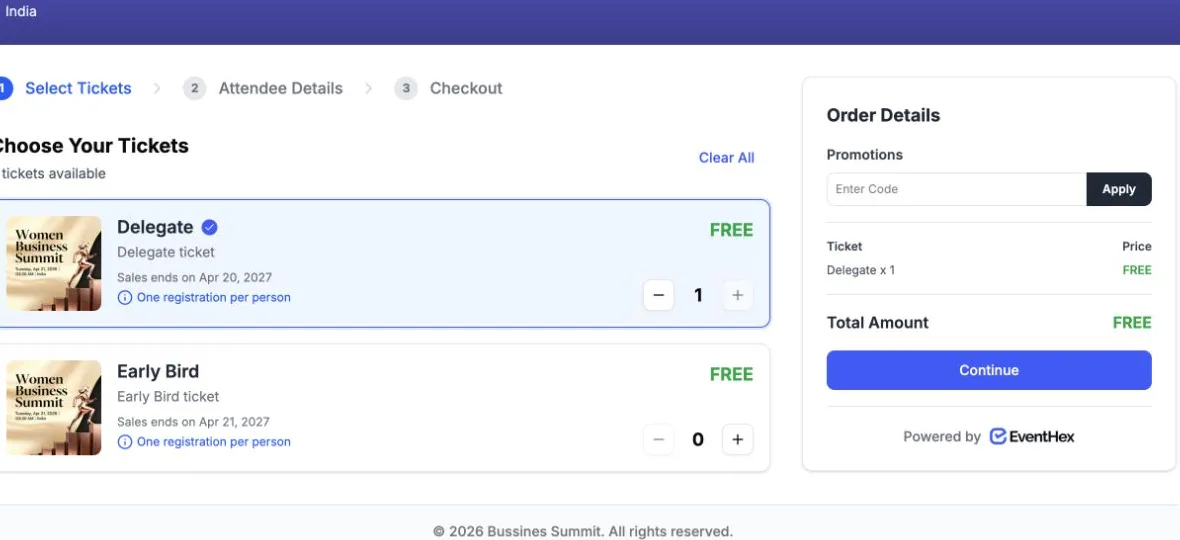
Whatever tool you use, put the deadline in every message: “Early-bird ends Friday” beats “Register now” almost every time.
Launch: reach warm audiences first, then widen (4–8 weeks out)
4. Start with your warm audience
The people most likely to register are the ones who already know you: past attendees, newsletter subscribers, customers, members and partners. Announce to them first, before any public push, and make them feel like insiders with first access or a better price.
Segment the list rather than blasting everyone the same email. Past attendees respond to “here’s what’s new this year”, first-timers need more context about why the event matters, and people who registered before but didn’t show up may need a different hook entirely. A short personal note from the organiser or a speaker often beats a heavily designed template.
EventHex event marketing campaigns let you build an email or WhatsApp audience from the current event’s registrants, specific ticket types, people from your past events, or attendee lifecycle segments such as first-timers, returning, loyal and lapsed attendees, and schedule the send for later. For more on mixing channels, see our post on email and WhatsApp campaigns for events.
5. Use social media without shouting into the void
Posting “Register now!” with a link once a week rarely moves the numbers. Social works better when each post gives people something useful and the event is the natural next step:
- Speaker spotlights: one speaker per post, with a quote or a question they will answer on stage. Tag them so their followers see it.
- Behind the scenes: venue walk-throughs, stage builds, swag being packed. These feel real and get shared.
- Last year’s highlights: short clips and photos of a full room do more than any description.
- Topic posts: a tip or opinion from your programme, ending with “we’ll go deeper on this at the event”.
- Native event listings: create the event on platforms your audience uses (for example LinkedIn Events for B2B, Facebook Events for local and community events) so people can mark interest and get reminders.
Pick the two networks where your audience actually spends time and post consistently there, rather than spreading thin across five.
6. Turn speakers, sponsors, partners and attendees into promoters
Your biggest reach is other people’s audiences. Make it effortless for them to share:
- Speakers: send each one a ready-made kit with their personal graphic, two or three suggested captions and a tracked link. Ask them to post twice: once at announcement and once in the final week.
- Sponsors and exhibitors: they want a full room too. Add promotion asks to your packages, such as a newsletter mention or a post to their followers. Our guide on how to get sponsors for an event covers how to build those asks into the deal.
- Partners and communities: associations, user groups, universities and local business networks often share relevant events with members if you offer them a discount code or a free community ticket.
- Attendees: people who just registered are your most credible promoters. Give them an “I’m attending” image they can post in one tap.
EventHex advocacy posters handle that last step: you design a poster, connect it to your ticket registration fields, and a personalised version with the attendee’s details is generated when someone registers, ready for them to share. Here’s how organisers use attendee posters to spread the word.
7. List the event where people look for things to do
Free listings take an afternoon and keep sending small but steady traffic. Depending on your audience, consider industry event calendars, association and chamber of commerce listings, university and community boards, local news “what’s on” pages, meetup groups and relevant forums or Slack and Discord communities (read their rules first and contribute rather than spam).
Keep a simple spreadsheet of where you listed, the link used and the date, so you can update details if anything changes and see which listings were worth the effort next time.
Final push: paid tests and the last two weeks
8. Test paid promotion carefully
Paid ads can work, but they are rarely where to start. Spend first on audiences that already showed interest: people who visited your event page (retargeting), lookalikes of past attendees, or targeted job titles on LinkedIn for B2B events. Set a small test budget, run two or three creative variations, and judge them on cost per registration, not clicks.
If a channel can’t bring in registrations at a cost below your ticket price (or the value of an attendee for a free event), stop and put the budget back into speakers, partners or email.
9. Plan the final two weeks
A large share of registrations for most events arrives late, so the final stretch deserves its own plan:
- 14 days out: agenda finalised and published; “two weeks to go” email to everyone who hasn’t registered.
- 10 days out: last-chance pricing or seat-limit message; speakers and sponsors post their second share.
- 7 days out: highlight one standout session or networking moment; retargeting ads on.
- 3 days out: final call for registrations; logistics email to registrants (venue, timings, what to bring).
- 1 day out: reminder to registered attendees to reduce no-shows; last-call social post if seats remain.
Remember that promotion doesn’t end at registration. Reminders and clear joining details are what turn registrations into a full room. If your event is online, our virtual event checklist covers the reminder and joining-link steps in more detail.
After the event: measure, then promote the next one
After the event, compare registrations by source against the effort each channel took. You will usually find that two or three channels did most of the work. Note them, along with the date your registration pace picked up, and start there next time.
Then use the event itself to promote the next one: share photos and session highlights while people are still talking about it, thank speakers and sponsors publicly, and send attendees a “save the date” while the experience is fresh. Repeat attendees are the cheapest registrations you will ever get, which is why marketing recurring events starts with the people who came last time.
Event promotion message templates
Adapt these to your voice. Keep each one specific to the person reading it.
- Announcement email subject: “[Event name] is back on [date]: first look for past attendees”
- Speaker post: “[Speaker] will show how [specific outcome] at [Event name] on [date]. Early-bird ends [day]. [link]”
- Partner ask: “Could you share this with your members? Here’s a code that gives them [benefit], plus a short blurb and image you can use as-is.”
- Last call: “Final [number] seats for [session or event]. Registration closes [day and time].”
- Attendee share caption: “I’m attending [Event name] on [date] for [reason]. Who else is going?”
Common event promotion mistakes
- Starting too late. For most in-person events, promotion needs at least six weeks; larger conferences need months.
- One message for everyone. Past attendees, new prospects and partners need different reasons to act.
- No deadline. Without an early-bird date or seat limit, people postpone.
- Sending traffic to a weak page. If the page doesn’t answer “why should I go?”, more promotion just means more bounces.
- Not tracking sources. You can’t repeat what worked if you don’t know what worked.
- Stopping at registration. Reminders and logistics messages protect the attendance you worked for.
FAQ
How far in advance should you promote an event?
For a small local event or webinar, two to four weeks is usually enough. For a one-day conference or ticketed in-person event, start six to eight weeks out, and for multi-day conferences or events where people travel, start three to six months ahead with a save-the-date.
How do you promote an event for free?
Focus on your own channels and other people’s audiences: email to past attendees and subscribers, consistent social posts, speaker and sponsor sharing, partner newsletters, community calendars and event listing sites. Attendee share posts and referral codes also cost nothing and add credible reach.
What is the best way to promote an event?
For most events, email to a warm, well-segmented audience combined with speaker and partner sharing brings more registrations than any single paid channel. Social media and listings widen reach, and a clear deadline turns interest into sign-ups.
How do you promote an event on social media?
Create the event on the platforms your audience uses, then post useful content: speaker spotlights, behind-the-scenes, past highlights and topic tips that lead to the event. Tag speakers and partners, use a tracked link, and increase posting frequency in the final two weeks.
How do you get more people to actually show up?
Send reminders a week before, a day before and on the day, include clear logistics (location, time, joining link), and give registrants a reason not to miss the start, such as an opening announcement or limited-capacity session.
How do you know which promotion channels worked?
Use a different tracked link or promo code for each channel and partner, then compare registrations by source after the event. Weigh the results against the time or money each channel took.
Put your promotion plan on one platform
Promoting an event is mostly about timing and follow-through: one good page, a reason to act now, and the right message to the right people at each stage. When your event page, tickets, promo codes, email and WhatsApp campaigns and attendee share posters all run from the same event data, it’s easier to keep that rhythm and see what’s working. Book a demo to see how EventHex can support your next event.