
Short answer: To get sponsors for an event, treat sponsorship as a sale, not a favour. Know exactly who your audience is, build a short list of companies that want to reach those people, offer a few clear packages tied to what each sponsor is trying to achieve, reach the right decision-maker months ahead, and deliver a short report after the event so the sponsor renews. Most failed sponsor searches skip the first step: the organizer cannot describe the audience in numbers a marketing team can approve.
This guide walks through that process step by step, from audience data to the renewal conversation. It works for conferences, trade shows, community events, galas and sports events. If your event is a charity run, our separate guide on pitching sponsorship for local charity runs covers that format in more depth.
At a glance: the sponsor-finding process
| Step | What you do | What you hand the sponsor | When |
|---|---|---|---|
| 1. Audience profile | Pull real numbers from past registrations and check-ins | A one-page audience summary | 6–9 months out |
| 2. Sponsor goals | Decide whether you need cash, in-kind or media partners | Nothing yet; this shapes the list | 6–9 months out |
| 3. Prospect list | List companies that sell to your audience; find the right contact | Nothing yet | 5–8 months out |
| 4. Packages | Build 3–4 tiers plus a few add-ons | A short sponsorship deck | 5–7 months out |
| 5. Outreach | Short first message, then a discovery call | A tailored proposal | 4–6 months out |
| 6. Agreement | Confirm deliverables, dates and payment in writing | A signed agreement | 3–4 months out |
| 7. Delivery and report | Run the activations and collect proof | A post-event report | Within 2 weeks after |
1. Start with audience data sponsors can approve
Sponsors do not buy logo space. They buy access to a specific group of people. The person who signs off on a sponsorship usually has to justify it to a manager, so give them numbers they can repeat in that meeting.
A useful audience summary answers five questions:
- How many people attend? Use actual check-in numbers from your last edition, not registration totals. Sponsors know the difference.
- Who are they? Job roles, seniority, industries and company sizes for B2B events; age range, location and interests for consumer events.
- Why do they come? Learning, buying, networking, a cause or entertainment. This tells a sponsor what kind of activation will work.
- How engaged are they? Session attendance, app usage, repeat attendance, social reach.
- How do you reach them before and after the event? Email list size, social following, community channels.
The easiest way to get this data is to ask for it at registration. Add one or two optional questions (job role, industry, company size, or main interest) to your event registration form. Keep the list short: every extra required field costs you sign-ups. Then export the answers and turn them into percentages for your sponsorship deck.
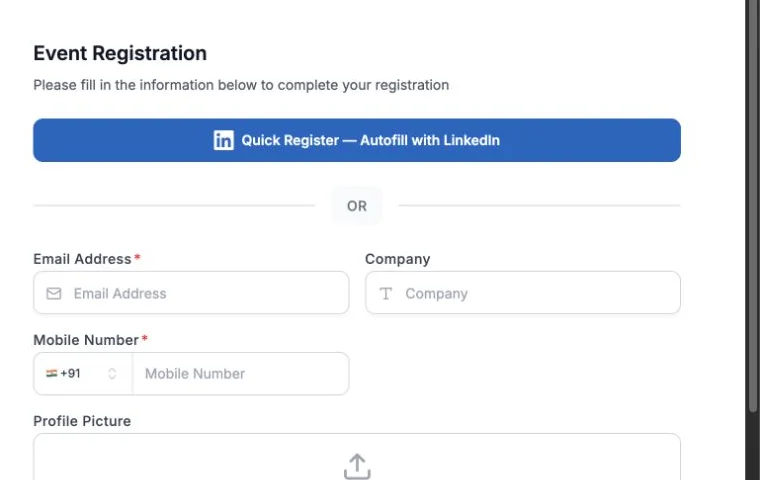
If this is your first edition and you have no history, use proxies: the size and make-up of your mailing list, your community or membership data, or the audience of a similar event you have run. Say clearly that these are estimates. Overstating numbers in year one is the fastest way to lose a sponsor in year two.
2. Decide what kind of sponsorship you actually need
Not every sponsor pays cash, and not every event needs cash most. Before you build a list, decide which mix you are after:
- Financial sponsors pay money in return for visibility, access or leads. These fund the budget gap.
- In-kind sponsors supply goods or services instead of cash: venue space, catering, drinks, printing, AV, prizes, transport or software. In-kind deals are often easier to close because they cost the sponsor less in real terms.
- Media partners promote your event to their audience in exchange for exposure. They help ticket sales more than the budget. Our guide to promoting your event shows how to time their posts alongside your own.
- Community and nonprofit partners lend credibility and reach, especially for cause-led or local events.
Look at your budget line by line. Every cost that a company could supply directly (coffee, lanyards, Wi-Fi, a stage) is a possible in-kind deal. Our corporate event budget template is a good place to spot those lines.
3. Build a target list of the right companies
A short, well-researched list beats a long cold one. Aim for 30 to 60 companies for a mid-sized event, and expect to close a fraction of them.
Where to find sponsor prospects
- Last year’s sponsors and exhibitors. Renewals are your cheapest sponsors. Contact them first.
- Sponsors of similar events. Look at the sponsor pages and exhibitor lists of comparable events in your sector or city. Those companies already budget for events like yours.
- Your own suppliers and partners. Venues, caterers, agencies and software vendors you already pay often sponsor in kind.
- Your attendees’ employers and vendors. Look at registration data: which companies send people, and which companies sell to them?
- Local businesses. For community, school and charity events, local banks, estate agents, gyms, restaurants and car dealers are common sponsors.
- Corporate giving programmes. Many large companies accept sponsorship or grant requests through a corporate social responsibility or community page. These have their own timelines, so apply early.
Find the person, not the inbox
Generic contact forms rarely reach a decision-maker. For B2B events, look for titles such as field marketing manager, events manager, partnerships manager, brand manager or demand generation lead. For consumer and local events, the owner, the marketing manager or the community relations lead is usually right. LinkedIn and the company’s own news page help you find names.
Score each prospect on two things: how closely their customers match your audience, and whether they have sponsored similar events before. Work the high-fit, proven sponsors first.
4. Create sponsorship packages around sponsor goals
Every sponsor wants one or more of four things: brand visibility, leads or sales conversations, credibility with a specific audience, or a hospitality experience for their own clients. Your packages should make it obvious which goal each option serves.
Tiers plus add-ons
Three or four tiers keep the decision simple. Name them however suits your event; Platinum, Gold and Silver are common, but “Headline Partner” and “Community Partner” work too. Then offer a short menu of add-ons that a sponsor can buy on top of any tier.
| Sponsor goal | Assets that serve it |
|---|---|
| Visibility | Logo on the website, app, badges and stage screens; naming rights for a stage, lounge or session track; branded lanyards or Wi-Fi |
| Leads | Exhibition booth, sponsored session or workshop, hosted roundtable, lead scanning at the booth, opt-in attendee meetings |
| Credibility | Speaking slot, panel seat, co-branded research or report, award category sponsorship |
| Hospitality | VIP passes, private dinner, reserved seating, meet-the-speakers reception |
Price each tier from your costs and the audience value, not from what you hope to raise. A tier that includes a booth must at least cover the space, furniture and power. A speaking slot should be limited and clearly labelled as sponsored so your programme keeps its credibility with attendees.
Leave room to customise
Large sponsors rarely buy a package exactly as printed. Present the tiers as a starting point and invite a conversation. A sponsor who shapes their own package is more invested in making it work.
5. Write a pitch that gets a reply
Your first message has one job: get a 15-minute call. Keep it short, specific and about the sponsor.
A first email that works usually has four parts:
- One line on the event: name, date, format and location.
- One line on the audience fit: “Last year 420 operations managers from mid-sized manufacturers attended; most of them buy the kind of tooling you sell.”
- One idea specific to them: a session, a booth position or an activation that fits their current campaign.
- One clear ask: a short call next week, not a cheque.
Send the full deck after the call, tailored to what you heard. A tailored proposal that names the sponsor’s own goals will outperform a generic PDF sent to 200 companies.
Follow up, politely and on a schedule
Most replies come after the second or third message. Follow up after about a week, then again a week or two later with something new: a confirmed speaker, a new audience figure or an early-bird deadline. Stop after three or four touches and move on.
6. Close the deal and put it in writing
Once a sponsor says yes, confirm everything in a short written agreement before you announce them. It should list:
- The package and every deliverable, with quantities (for example, two exhibitor passes, one 30-minute session, logo on the website and badges)
- Deadlines for logos, copy, booth details and speaker names
- The fee, payment schedule and what happens if the event is postponed or cancelled
- Any exclusivity (for example, the only bank sponsor)
- Who owns attendee data collected at the booth, and how it may be used
Then send a short onboarding note with deadlines and one named contact on your team. Sponsors who know exactly what to send, and by when, cause far fewer last-minute problems.
7. Deliver value on event day and prove it afterwards
Renewals are decided during the event, not after it. A sponsor who sees steady booth traffic and good conversations will come back; one who stands in an empty corner will not, whatever the report says.
Help sponsors and exhibitors capture leads
If a sponsor’s package includes a booth, make lead capture simple for their staff. With the EventHex exhibitor portal, exhibitor teams scan an attendee’s badge QR code to save the contact as a lead, and they can review the leads they captured in their own portal. That gives the sponsor a list they can act on the next day, instead of a bowl of business cards. Our guide to exhibitor lead retrieval covers that workflow in detail.
Send a short post-event report
Within two weeks of the event, send each sponsor a one- to two-page report. Include:
- Final attendance, based on check-ins rather than registrations (an event check-in app gives you an exact count)
- The audience breakdown you promised in the pitch
- Photos of their branding and activation in use
- Session attendance for any sponsored talks
- Leads captured at their booth, if they had one
- Website clicks, social mentions or email results that featured them
- What you would suggest for next year
For a deeper look at which numbers matter to sponsors, read how to prove event sponsorship ROI.
Common mistakes that cost organizers sponsors
- Starting too late. Many companies set event budgets a year ahead. Two months out, the money is usually spent.
- Selling logos instead of outcomes. “Logo on the banner” is easy to cut from a budget. “Thirty booked meetings with procurement leads” is not.
- One deck for everyone. A bank and a beverage brand want different things from the same audience.
- Overpromising numbers. Inflated attendance claims are discovered on the day, and they end the relationship.
- Going silent after the event. No report means no renewal conversation.
- Too many sponsors in one category. Five competing software vendors in one hall dilutes value for each of them.
Frequently asked questions
How far in advance should I look for event sponsors?
Start six to nine months before the event for conferences and trade shows, and at least three to four months ahead for smaller local events. Larger companies often plan sponsorship budgets a year in advance, so contact past and high-value prospects as soon as your date is confirmed.
How much should I charge for event sponsorship?
There is no standard rate. Price each package from your real costs for the assets included, then add a margin based on how valuable and hard to reach your audience is. Check what comparable events in your sector charge, and test your pricing with one or two friendly past sponsors before publishing it.
How do I get sponsors for a first-time event?
Lead with your audience source: your mailing list, community, membership or partner network. Offer lower-priced or in-kind packages, start with suppliers and local businesses you already know, and promise a transparent post-event report. A sponsor who takes a small risk in year one is your best renewal prospect for year two.
What is the difference between a sponsor and a partner?
A sponsor usually pays cash or supplies goods in return for defined benefits such as visibility, leads or hospitality. A partner usually contributes promotion, content, credibility or audience reach, often with no money changing hands. Many events list both groups separately on their website. Our glossary explains what event sponsorship means in more detail.
What should a sponsorship proposal include?
A good proposal includes a short event summary, the audience profile with real numbers, the packages and prices, an idea tailored to that sponsor, key dates and deadlines, and a clear next step. Keep the core deck to a handful of pages and attach detail only if asked.
How do I keep sponsors coming back every year?
Deliver what you promised, make it easy for their team on the day, and send a clear report within two weeks. Then book a renewal call while the event is still fresh and offer returning sponsors first choice of next year’s best positions.
Make your next sponsor conversation easier
Sponsors renew when they can see who they met and what it produced. EventHex brings registration, check-in and the exhibitor portal together, so the audience profile in your pitch and the attendance and lead numbers in your report come from the same event data. If you want to see how that would work for your next event, book a demo with the EventHex team.